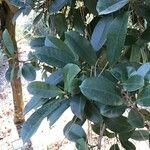
Baloghia inophylla
Description
Source: leafsnapBaloghia inophylla is a rainforest tree of eastern Australia. It is also known as the brush bloodwood, as it occurs in brushes, (a nineteenth-century term for rainforest), as well as bloodwood, as the clear sap is blood red. Other common names include ivory birch and scrub bloodwood.
Care Guide
💧 Water
☀️ Light Partial sun
Ivory birch naturally occurs in habitats like forest understories and rocky areas, where it grows in natural shade. It prefers partial sun but can also adapt to full sun or full shade, demonstrating its versatile and hardy nature.
🌡️ Temperature 20–37.8°C
Ivory birch has good temperature adaptability, being able to tolerate higher temperatures and larger temperature fluctuations. When temperatures are high, attention should be paid to watering and suitable shade should be provided to prevent sunburn. However, ivory birch is relatively poorly tolerant of low temperatures; while it can endure some cold, excessively cold conditions can cause frost damage.
💨 Humidity
🪴 Soil 6-7
🌱 Fertilizer
Fertilize your Ivory birch in early spring to encourage healthy growth. Regular feeding improves its overall health, leading to vigorous growth, better tolerance of difficult conditions, and stronger resistance to diseases and pests. Keep a specific, consistent fertilization schedule for your Ivory birch to preserve vibrant, deeply colored foliage and a lush appearance.
🪴 Pot & Repot
✂️ Pruning
🌿 Propagating
🐛 Diseases & pets
☠️ Toxicity
Characteristics
- Plant Type
- Tree
- Life Cycle
- Perennial
- Genus
- Baloghia
- Family
- Euphorbiaceae
- Hardiness Zone
- 9-11
- Mature Height
- 4.88 m to 10.06 m
- Mature Spread
- 3.05 m to 4.88 m
- Leaf Color
- Dark Green, Forest Green
- Leaf Type
- Evergreen
- Flower Color
- White
- Flower Size
- 1.02 cm to 2.03 cm
- Bloom Time
- Mid spring, Late spring, Early summer
- Planting Time
- Spring, Summer, Autumn
- Harvest Time
- Mid summer, Late summer, Early fall