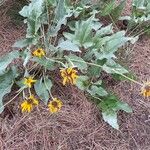
Balsamorhiza sagittata
Arrowleaf balsamroot · Arrow-leaved balsamroot · Arrowleaf balsam root
Description
Source: leafsnapBalsamorhiza sagittata, commonly known as arrowleaf balsamroot, is a perennial plant native to western North America. As a member of the sunflower family, it can grow up to 3 feet tall. It features large, arrow-shaped leaves and bright yellow flowers that bloom in the spring. The plant's deep taproot allows it to thrive in dry conditions, often appearing in open grasslands or on rocky slopes. Native American tribes traditionally used various parts of the plant for medicinal purposes, such as treating wounds and respiratory issues. Today, Balsamorhiza sagittata is frequently utilized for erosion control and as an ornamental plant because of its striking appearance when in bloom.
Care Guide
💧 Water Every 7 days
Arrowleaf balsamroot flourishes in dry meadows and on hillsides. It adapts well to infrequent rainfall, thanks to its deep taproot that provides excellent drought resistance. When watering, try to mimic its natural conditions by doing so about once a week. The occasional rain during the growing season is typically sufficient to meet its minimal water requirements.
How should I water my Arrowleaf balsamroot plant?
To properly water the Arrowleaf balsamroot, it is recommended to use filtered water at room temperature. This is because tap water may contain harmful particles. It is important to use water that is not too cold, as the plant is accustomed to a warm environment and cold water could be a shock. Instead of watering from above, it is advised to apply the filtered room temperature water directly to the soil until it is fully soaked. This helps to moisten the roots and facilitate nutrient absorption.
What should I do if I give my Arrowleaf balsamroot plant too much or too little water?
Overwatering can harm your Arrowleaf balsamroot more than underwatering. When this species gets too much water, its stems and leaves may wilt and turn yellow. Overwatering for a long time can also cause diseases like root rot, mold, and mildew, which can kill the plant. Underwatering is less common because the Arrowleaf balsamroot can tolerate drought. But if it happens, the leaves will become brittle and brown. It's important to recognize the signs of overwatering early when taking care of your Arrowleaf balsamroot. Some diseases caused by overwatering, like root rot, may not be fixable if you wait too long. If you see early signs of overwatering, reduce watering and check the soil. If the soil doesn't drain well, replace it with loose, well-draining potting mix. If your Arrowleaf balsamroot shows signs of not getting enough water, simply water more regularly until the signs go away.
How many times should I water my Arrowleaf balsamroot?
If your Arrowleaf balsamroot plant is in a pot, the most accurate way to determine if it needs water is by sticking your finger into the soil. If the top two to three inches of soil feels dry, it's time to water it. For Arrowleaf balsamroot grown outdoors, the same method can be used. If the first few inches of soil have dried out, water the plant. In spring and early fall, you'll usually need to water about once a week. During extremely hot weather, watering frequency may need to be increased to about twice a week or more. However, it's worth noting that mature, well-established Arrowleaf balsamroot plants have a remarkable ability to tolerate drought.
How much water does my Arrowleaf balsamroot plant need?
When watering your Arrowleaf balsamroot, don't be afraid to give it plenty of water. Make sure the first two to three inches of soil are dry, and then water it thoroughly until the entire soil is soaked. It's important to add enough water so that excess water drains out of the pot through the drainage holes. If you don't see any excess water draining, it means you haven't watered enough. However, be careful not to let water accumulate in the soil, as this can harm the plant. On the other hand, if water doesn't drain through the pot, it could indicate poorly draining soil, which is not good for the plant's health. If the plant is outside, receiving about 1 inch of rain per week is enough.
How should I water my Arrowleaf balsamroot at different times when it is growing?
The water needs of the Arrowleaf balsamroot vary depending on its growth stages. In the early years and after transplanting, the plant requires more water to support root development and future growth. As the plant matures, it requires less water. Additionally, during the bloom period, the plant may need additional water as flower development uses up a significant amount of moisture.
☀️ Light Full sun
Arrowleaf balsamroot grows best in abundant light, like in its native habitat, and cannot survive in lower light conditions. Its health depends on uninterrupted exposure throughout its different growth stages: too little light can inhibit flowering, while too much can scorch the leaves.
What are the sunlight requirements for Arrowleaf balsamroot?
Arrowleaf balsamroot requires full sun, which is defined as above 6 hours of sunlight per day, to thrive well. It's crucial to observe your garden's sunlight exposure over time to ensure that plants are placed in locations offering a harmonious balance of light and shade. This balance is essential for the plants' health, promoting their happiness and growth. Arrowleaf balsamroot, in particular, thrives under conditions that mimic its native habitat's ample sunlight, as insufficient light through its growth stages could prevent blooming, and too much direct exposure might lead to leaf scorching.
How does artificial lighting support indoor growing of Arrowleaf balsamroot?
Indoor plants, including Arrowleaf balsamroot, require adequate lighting for optimal growth. In conditions where natural sunlight is scarce, especially during winter or in less sunny spaces, artificial lighting becomes essential. LED lights, favored for their customizable wavelengths, are recommended. The intensity required varies with the plant’s natural sunlight needs: full sun plants need 30-50W/sq ft, partial sun 20-30W/sq ft, and full shade plants 10-20W/sq ft. Positioning the light 12-36 inches from the plant and ensuring it receives 8-12 hours of light per day mimics natural conditions and promotes healthier growth.
What are the symptoms of inadequate lighting for Arrowleaf balsamroot?
Symptoms of inadequate lighting in Arrowleaf balsamroot include the development of smaller leaves compared to older ones, leggy or sparse growth, premature leaf drop, halted growth, and the emergence of lighter-colored or yellow new leaves due to chlorosis. Excessive sunlight exposure can also cause symptoms like sunscald, leaf curling, wilting, and leaf scorching, highlighting the plant's struggle with improper light conditions.
What solutions can help with lighting problems for Arrowleaf balsamroot, both indoors and outdoors?
To address lighting problems, gradually transitioning your Arrowleaf balsamroot to sunnier spots can be helpful. For indoor plants, moving them closer to a south-facing window or utilizing artificial light, such as grow lights for at least 8 hours a day, can improve conditions. Outdoors, it's vital to select the best sunlight spots, increasing exposure over weeks to avoid shock. Additionally, minimizing obstructions like pruning nearby trees and considering transplanting during the dormant period can enhance sunlight access. Unfortunately, parts of the plant that have suffered due to low light may not recover, but new growth should be healthier with adjusted light.
🌡️ Temperature 5–32.2°C
Arrowleaf balsamroot naturally grows in temperatures of 32 to 50°F (0 to 10°C) and prefers temperatures of 41 to 90°F (5 to 32°C). During the summer months, it is recommended to provide some shade and water to help it cope with higher temperatures.
What is the native temperature range for Arrowleaf balsamroot, and what temperatures does it prefer?
Arrowleaf balsamroot thrives in its native temperature range of 32 to 50°F (0 to 10°C) but prefers a broader temperature spectrum of 41 to 90°F (5 to 32°C). This indicates that while it can survive in cooler temperatures, it grows best in moderate to warm conditions.
How should Arrowleaf balsamroot be cared for in summer?
During the summer months, it's advisable to provide Arrowleaf balsamroot with some degree of shade and to water it, assisting the plant in adjusting to higher temperatures. This extra care helps in maintaining its health and vitality even when temperatures rise.
Is Arrowleaf balsamroot cold-tolerant, and how should it be prepared for winter?
Arrowleaf balsamroot is indeed highly cold-tolerant and does not require special frost protection measures during winter. However, to prepare for the first freeze in autumn, it is recommended to water the plant generously. This ensures the soil stays moist and enters a frozen state, which helps prevent drought and water scarcity for the plant during the colder months.
What should be done if the winter temperature drops below Arrowleaf balsamroot's cold tolerance?
Despite Arrowleaf balsamroot's significant cold tolerance, if winter temperatures fall below -30°C, it could impact the plant's ability to sprout in spring. In such cases, removing any parts that fail to sprout in the spring is the suggested course of action.
How does Arrowleaf balsamroot react to high temperatures, and what measures should be taken?
Arrowleaf balsamroot struggles with high temperatures above 32°C, as its growth halts and it becomes more prone to rot. To protect the plant, removing sunburned and dry parts is recommended, as well as relocating it to a shaded area or using a shade cloth to minimize direct sun exposure. Watering in the morning and evening is also beneficial to keep the soil adequately moist.
💨 Humidity
🪴 Soil 6-7
🌱 Fertilizer
The ideal time to fertilize an Arrowleaf balsamroot is in early spring, when it is coming out of dormancy and entering active growth. Fertilization supplies key nutrients needed for healthy growth. Although Arrowleaf balsamroot has relatively low fertilizer needs, annual application can improve its survival and promote better, longer-lasting flowers.
Why is it important to fertilize my Arrowleaf balsamroot?
Fertilization is important for the growth of Arrowleaf balsamroot and other plants as it provides essential nutrients above and below the ground. While the overall fertilization needs for Arrowleaf balsamroot are low, annual fertilization can be highly beneficial. It helps the plant thrive, improves flower quality, and promotes longevity. Therefore, those wanting their Arrowleaf balsamroot to look its best should prioritize annual fertilization.
When should I fertilize my Arrowleaf balsamroot to get the best results?
The best time to fertilize an Arrowleaf balsamroot is in late winter to early spring when it is coming out of dormancy and starting to actively grow. Fertilizing at this time promotes healthy growth and helps the plant get off to a good start for the season. Fertilizing in fall is also an option, but it's not recommended during summer or winter.
When is it best to not use fertilizer on my Arrowleaf balsamroot?
To successfully fertilize the Arrowleaf balsamroot plant, it is important to only do so during the late winter and early spring. This plant has low fertilization needs, so a single annual feeding is sufficient. Fertilizing during spring, summer, and fall can result in overfertilization and its associated complications. However, if you missed fertilizing in spring, it is acceptable to feed the plant in fall. It is unnecessary to fertilize during winter as the plant is in a dormant phase and does not experience new growth.
What kind of fertilizer does my Arrowleaf balsamroot plant require?
When it comes to fertilizing Arrowleaf balsamroot, any general-purpose fertilizer with a balanced amount of the main plant nutrients will work well. However, there are a few nutrient blends that can be even more beneficial. Many gardeners believe that higher levels of phosphorus can strengthen roots and improve flower quality. Considering that Arrowleaf balsamroot is a flowering plant, a phosphorus-rich fertilizer may be the best choice. Whether you use granular or liquid fertilizer, make sure there are plenty of nutrients. In addition to manufactured fertilizers, you can also enhance the soil for your Arrowleaf balsamroot using organic methods such as compost and manure. These materials can greatly improve the growth conditions for your plant.
How can I fertilize my Arrowleaf balsamroot?
To fertilize an Arrowleaf balsamroot, the most common method is to use granular or pellet fertilizer applied to the soil surrounding the plant. The best time to fertilize is when the plant is transitioning from its dormant phase to active growth, usually in early spring. Wait for the plant to sprout shoots before applying the fertilizer. Alternatively, some people prefer using liquid fertilizer, which should be diluted with water before application. Regardless of the type of fertilizer used, it is important to moisten the soil before, during, and after applying the fertilizer.
🪴 Pot & Repot
✂️ Pruning
Arrowleaf balsamroot is characterized by its large, arrow-shaped leaves and bright yellow flowers. It is best to conduct minimal pruning, ideally from early to late spring, concentrating on removing dead or damaged parts. Light pruning can improve air circulation, reduce the risk of disease, and promote healthy growth and blooming.
🌿 Propagating
🐛 Diseases & pets
☠️ Toxicity
Characteristics
- Plant Type
- Herb
- Life Cycle
- Perennial
- Genus
- Balsamorhiza
- Family
- Compositae
- Hardiness Zone
- 4-7
- Mature Height
- 20 cm to 61 cm
- Mature Spread
- 49 cm to 61 cm
- Leaf Color
- Green, White, Silver, Bronze
- Leaf Type
- Deciduous
- Flower Color
- Yellow
- Flower Size
- 10.16 cm to 12.70 cm
- Bloom Time
- Late spring, Early summer
- Planting Time
- Winter
- Harvest Time
- Early summer, Mid summer
- Native Area
- Canada