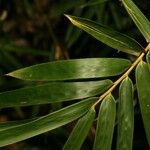
Bambusa multiplex
Chinese dwarf bamboo · Chinese-goddess bamboo · Hedge Bamboo · Oriental hedge bamboo · Chinese bamboo
Description
Source: leafsnapBambusa multiplex, commonly known as Hedge Bamboo or Buddha's Belly Bamboo, is a species of bamboo native to Southeast Asia. This clumping bamboo can grow up to 20 feet tall and 10 feet wide. Its culms (stems) are thin and green, featuring occasional yellow stripes, while the leaves are long and narrow. During the summer, the plant produces small flowers, followed by fruits that attract birds. Hedge Bamboo is favored as an ornamental plant due to its attractive appearance, rapid growth rate, and its ability to form dense hedges or privacy screens. It is also useful for erosion control on slopes and can serve as a windbreak in coastal areas. This species prefers well-drained soil with regular watering but can tolerate drought conditions once established. While it thrives best in full sun, it can also grow in partial shade. In summary, Bambusa multiplex is an excellent choice for those seeking an attractive ornamental plant that provides privacy and is low-maintenance once established.
Care Guide
💧 Water Every 7 days
Hedge bamboo thrives in moist, humid conditions and can tolerate moderate drought. To keep it lush, water it weekly. If you are growing it outdoors, make sure the soil drains well to prevent root rot, particularly during the rainy season when water availability can fluctuate.
☀️ Light Partial sun
Hedge bamboo is native to habitats like forest understories and rocky areas, where it is exposed to natural shade. It favors partial sun but can tolerate full sun or complete shade, showing that it is adaptable and hardy.
🌡️ Temperature 15–37.8°C
Hedge bamboo comes from tropical areas where the climate is typically warm and humid. As a result, it is well suited to high temperatures and moisture. It does not tolerate sudden temperature shifts and prefers a steady thermal environment, so avoiding indoor temperature fluctuations is important. It generally cannot withstand cold conditions and needs higher temperatures to grow. If the surrounding temperature falls too low, the plant may stop growing or even die.
💨 Humidity
🪴 Soil 6-8
🌱 Fertilizer
Hedge bamboo needs extra nutrients to encourage healthy new growth. In spring, spreading compost around the base of the plant will effectively supply the nutrition it requires. Fertilizing supports vigorous growth and helps the plant resist diseases and pests.
🪴 Pot & Repot 2-3 years
When repotting hedge bamboo, use a medium to large container that has good drainage. This should be done every 2-3 years during the spring. After repotting, maintain consistent moisture and provide partial shade to help the plant recover, but be careful not to overwater it. Although hedge bamboo is hardy, handle it gently during the repotting process.
✂️ Pruning
Hedge bamboo is a fast-growing type of clumping bamboo that is ideal for creating hedges. To keep it healthy and attractive, prune it in early spring by removing any dead or weak culms. This will improve air circulation and encourage vigorous growth. Regularly thin out the bamboo and manage its height to enhance its appearance. Be sure to use sharp, clean tools for pruning to prevent infections and promote healthier growth.
🌿 Propagating
🐛 Diseases & pets
☠️ Toxicity
Characteristics
- Plant Type
- Grass
- Life Cycle
- Perennial
- Genus
- Bambusa
- Family
- Poaceae
- Hardiness Zone
- 8-11
- Mature Height
- 3.05 m to 7.62 m
- Mature Spread
- 1.22 m to 1.83 m
- Leaf Color
- Light Green, Dark Green
- Leaf Type
- Evergreen
- Bloom Time
- Early summer, Mid summer
- Planting Time
- Spring, Summer, Autumn
- Harvest Time
- Late summer, Early fall, Mid fall