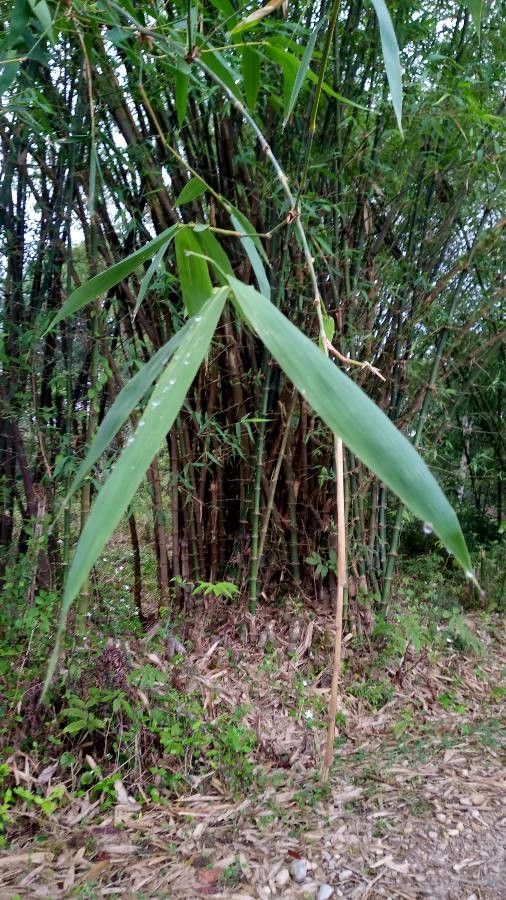
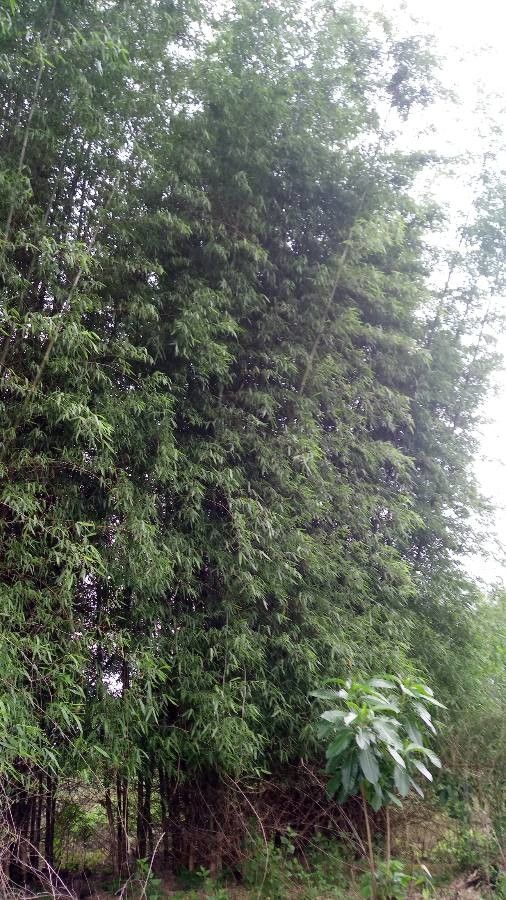
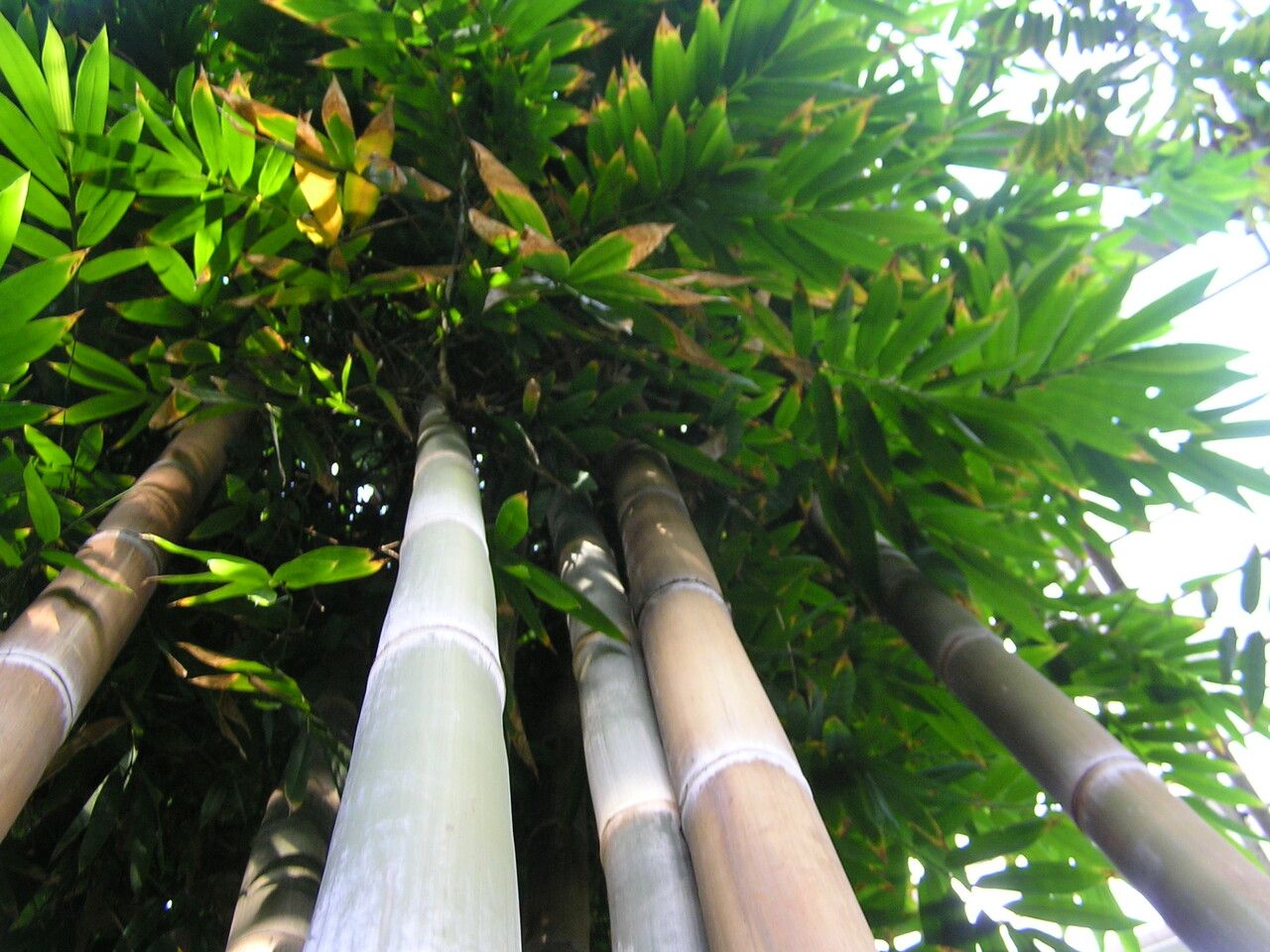
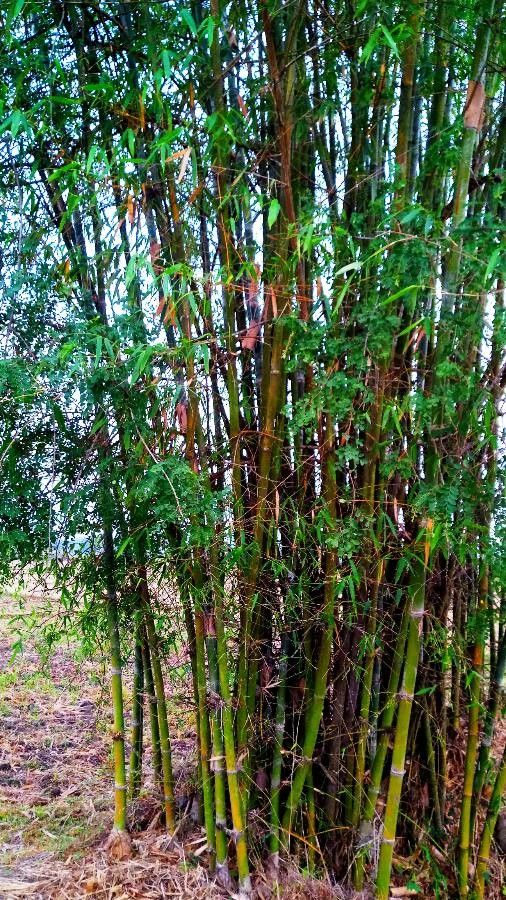
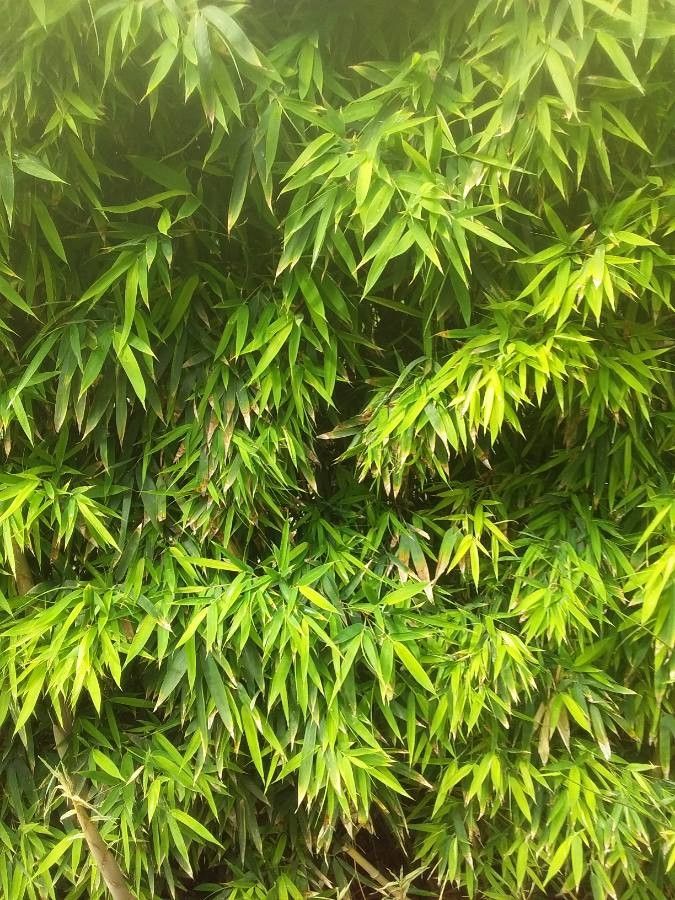
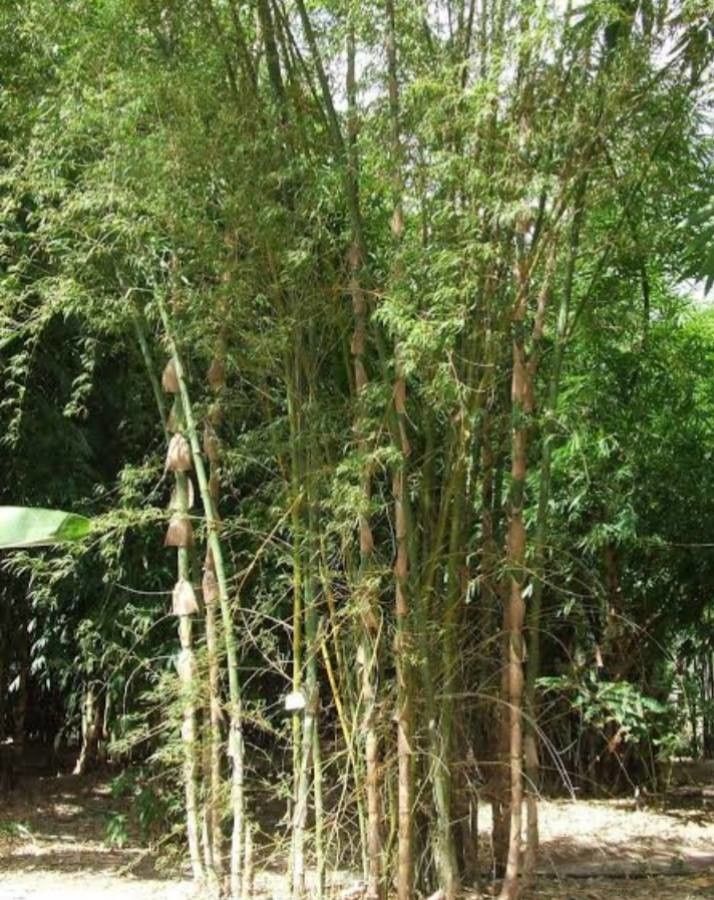
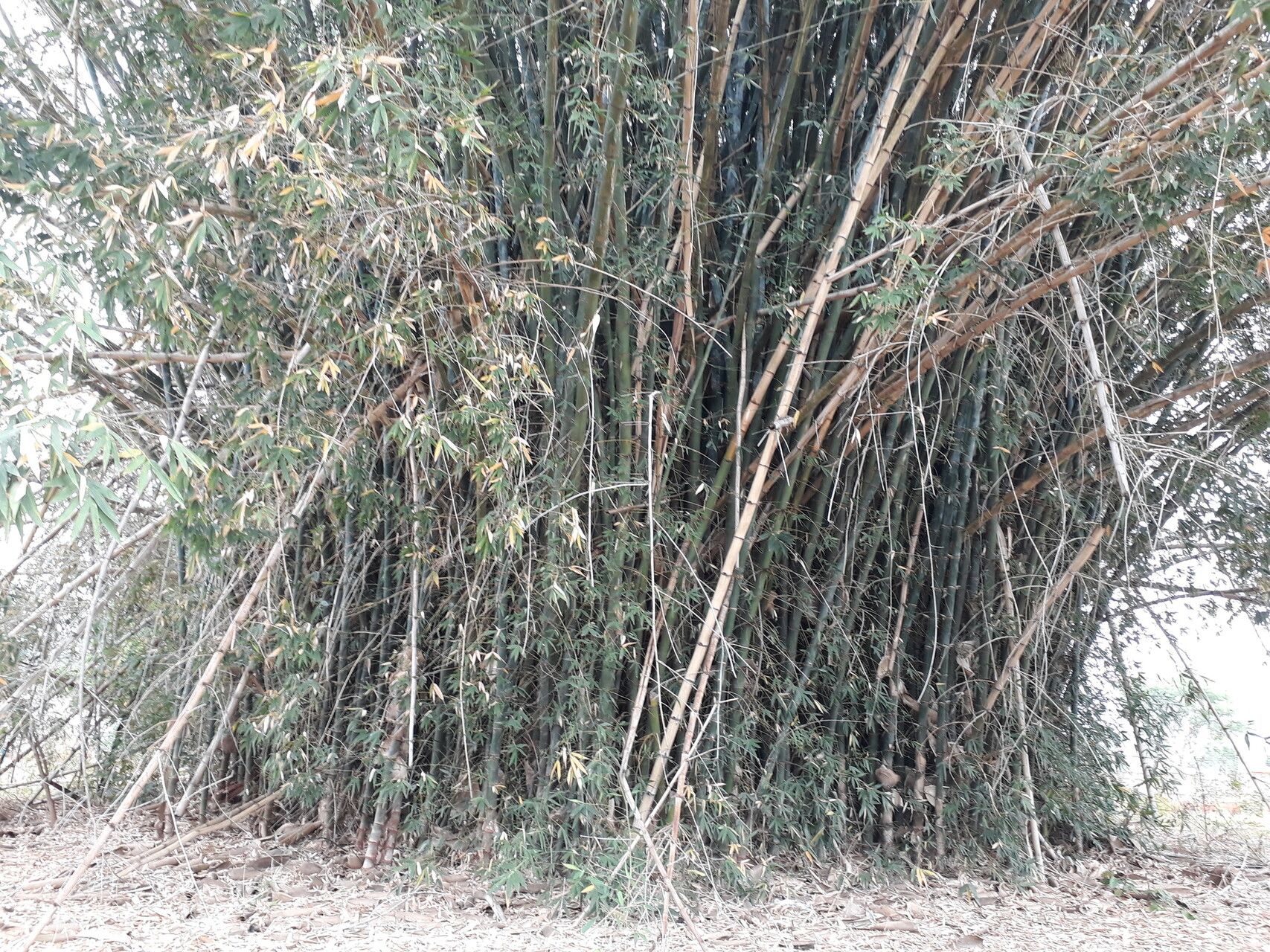
Bambusa tulda, or Indian timber bamboo (alternatively spineless Indian bamboo or Bengal bamboo), is considered to be one of the most useful of bamboo species. It is native to the Indian subcontinent, Indochina, Tibet, and Yunnan, and naturalized in Iraq, Puerto Rico, and parts of South America.B. tulda is used extensively by the paper pulp industry in India. It can grow to a height of 15 m and a thickness of 8 cm. The single most important fact about Bambusa tulda is its incredible tensile strength; up to 60,000 pounds (27,000 Kg) per square inch. It is commonly found in southeastern Asia
Buddha's belly bamboo is resistant to disease and generally not susceptible to illnesses. Regarding care, this species is fairly low-maintenance. When grown outdoors it needs only modest watering, and larger plants typically do not require pruning. Smaller specimens, however, should be pruned after they have finished blooming. Buddha's belly bamboo is well suited to anyone with outdoor space, such as a garden or deck, and does not demand extensive plant-care experience.
How to keep Bambusa Tulda.
Light
Buddha's belly bamboo thrives in environments with plenty of sunlight, reflecting its inherent affinity for its native sunny habitat. Still, it has the ability to acclimate to places with lower sun exposure. Insufficient amounts of sunlight can hinder its development, and overexposure might lead to damage.
Temperature
Buddha's belly bamboo demonstrates an impressive ability to adapt to temperature, having the capacity to withstand heated conditions and major shifts in temperature. It requires careful watering and sufficient shade to prevent sun exposure during hot conditions. Despite this, Buddha's belly bamboo isn't particularly resistant to icy temperatures. While it can bear a certain amount of cold, extremely cold conditions have been known to cause frost damage.
Fertilizer
To foster healthy new growth of Buddha's belly bamboo, extra nourishment is required. Distributing some compost around the plant's base during the spring can sufficiently supply the essential nutrients it requires. Fertilization assists in bolstering robust growth and strengthens the plant's resistance to diseases and pests.
Pruning
Bamboo grows quickly and produces dense, tall canes. To keep it healthy and looking its best, it’s advisable to prune it in early spring. This will help remove dead canes, improve air circulation, and encourage new growth. Additionally, thinning out crowded areas can help prevent disease. When pruning, be sure to use sharp, sterile tools to ensure clean cuts. This will make it easier to manage the height and spread of the bamboo in your garden.
Botanical profile.
- Plant Type
- Grass
- Life Cycle
- Perennial
- Genus
- Bambusa
- Family
- Poaceae
- Hardiness Zone
- 8-11
- Mature Height
- 6.1 m to 10.06 m
- Mature Spread
- 4.57 m to 6.1 m
- Leaf Color
- Green
- Leaf Type
- Evergreen
- Bloom Time
- Early summer, Mid summer
- Planting Time
- Spring, Summer, Autumn
- Harvest Time
- Late summer, Early fall, Mid fall
- Native Area
- Malaysia, Vietnam, Myanmar, Laos, China
Other names.