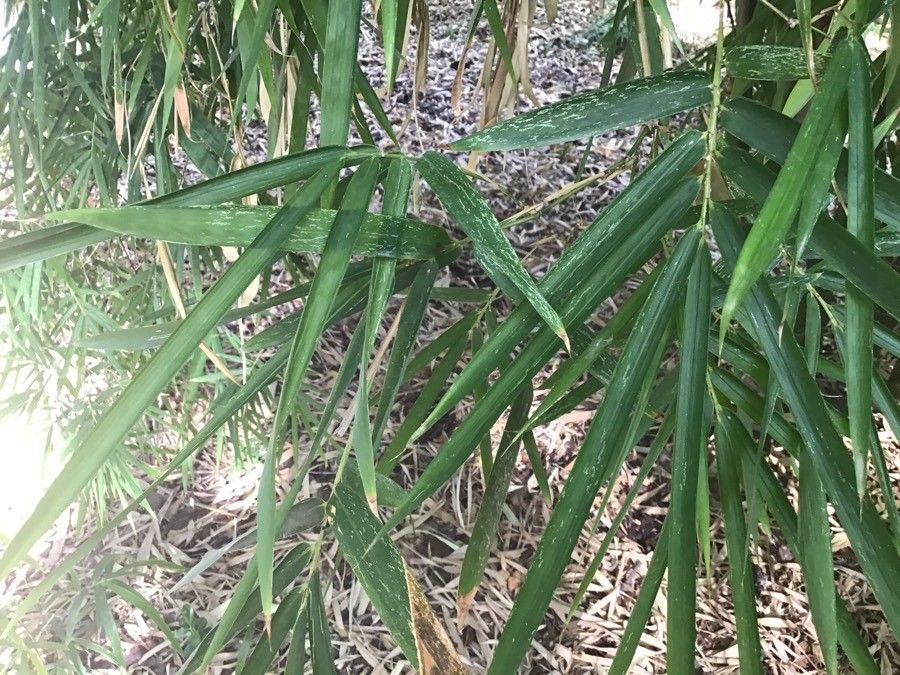
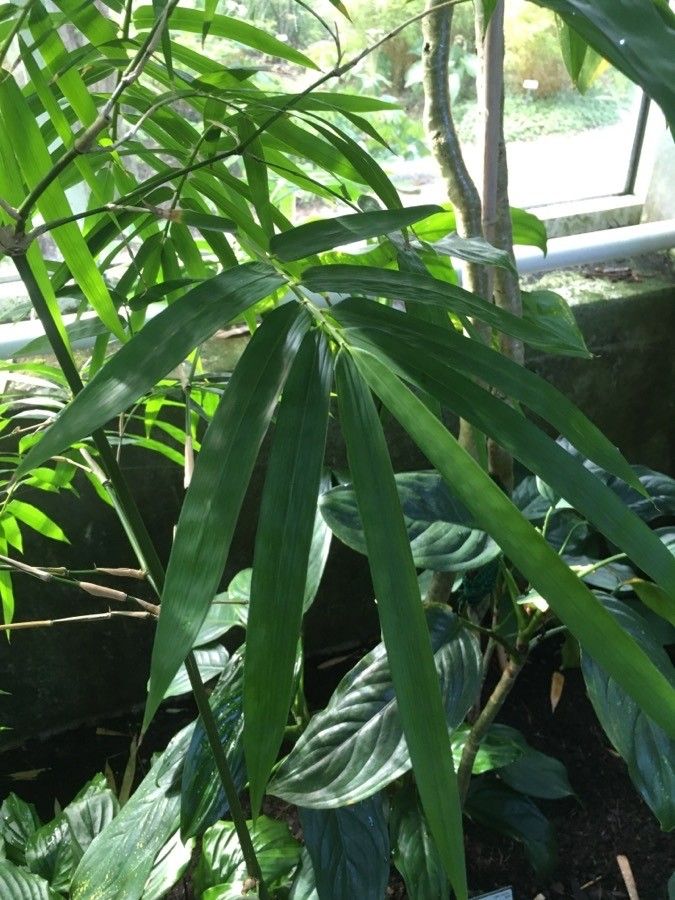
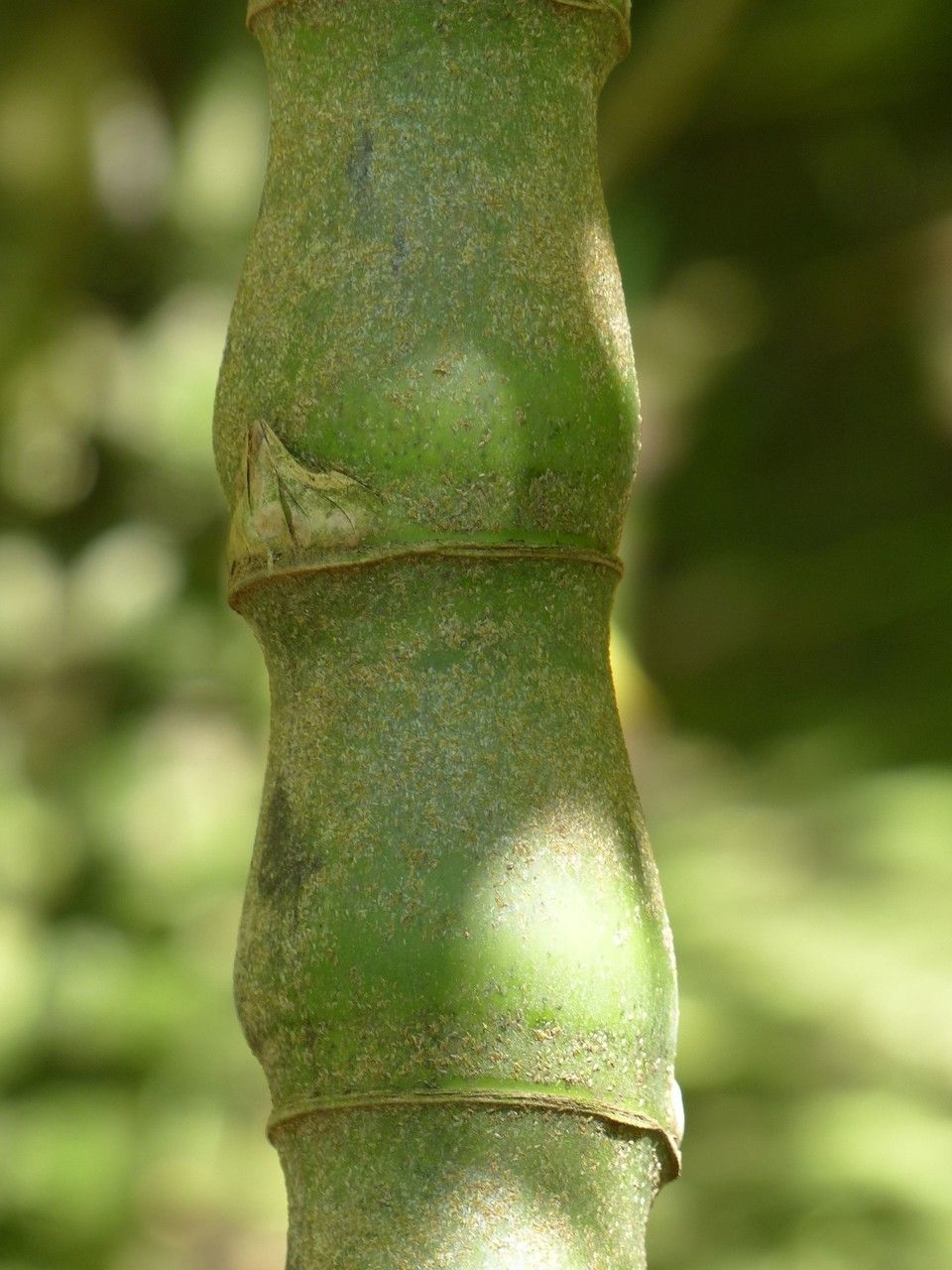
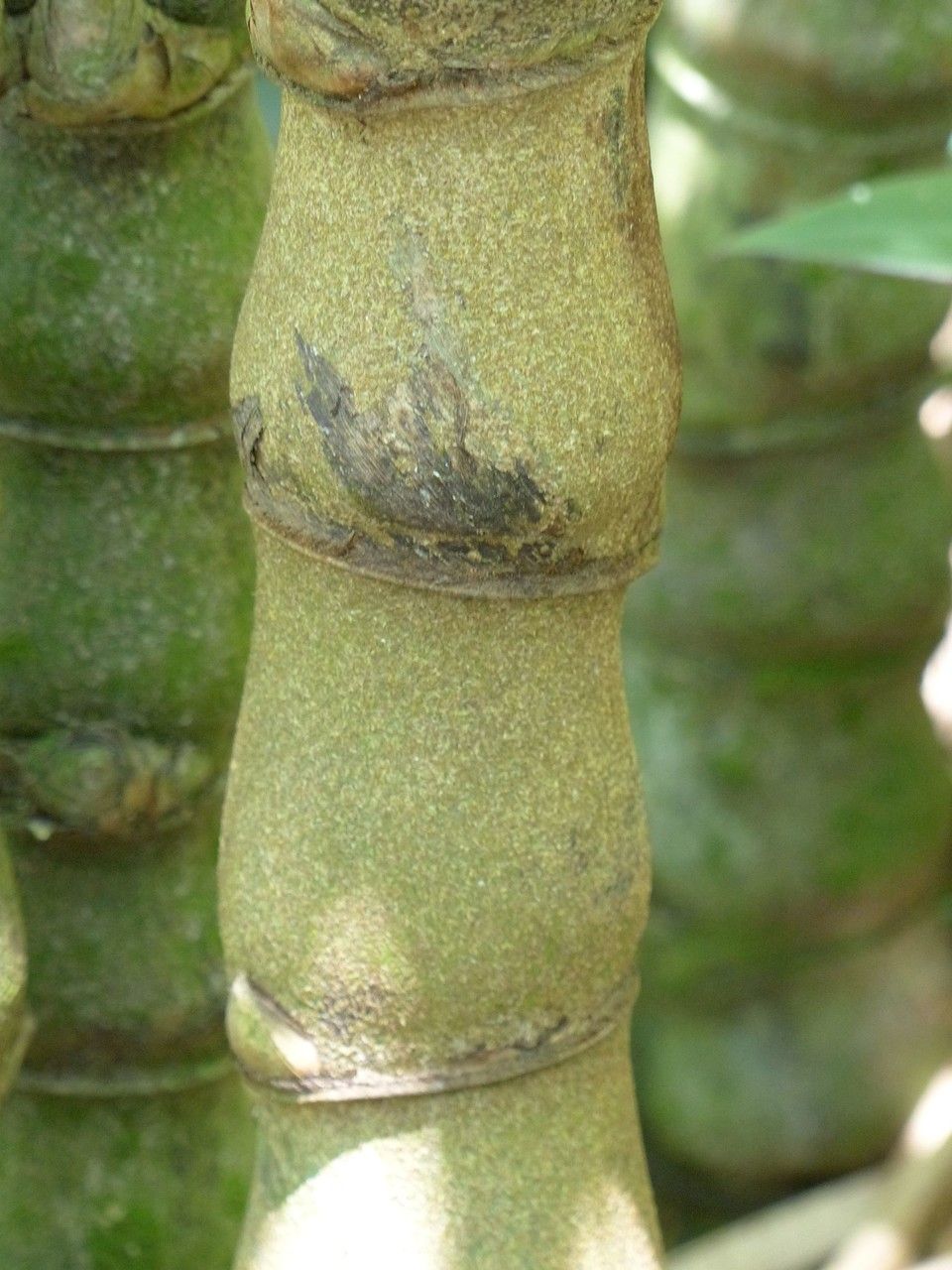
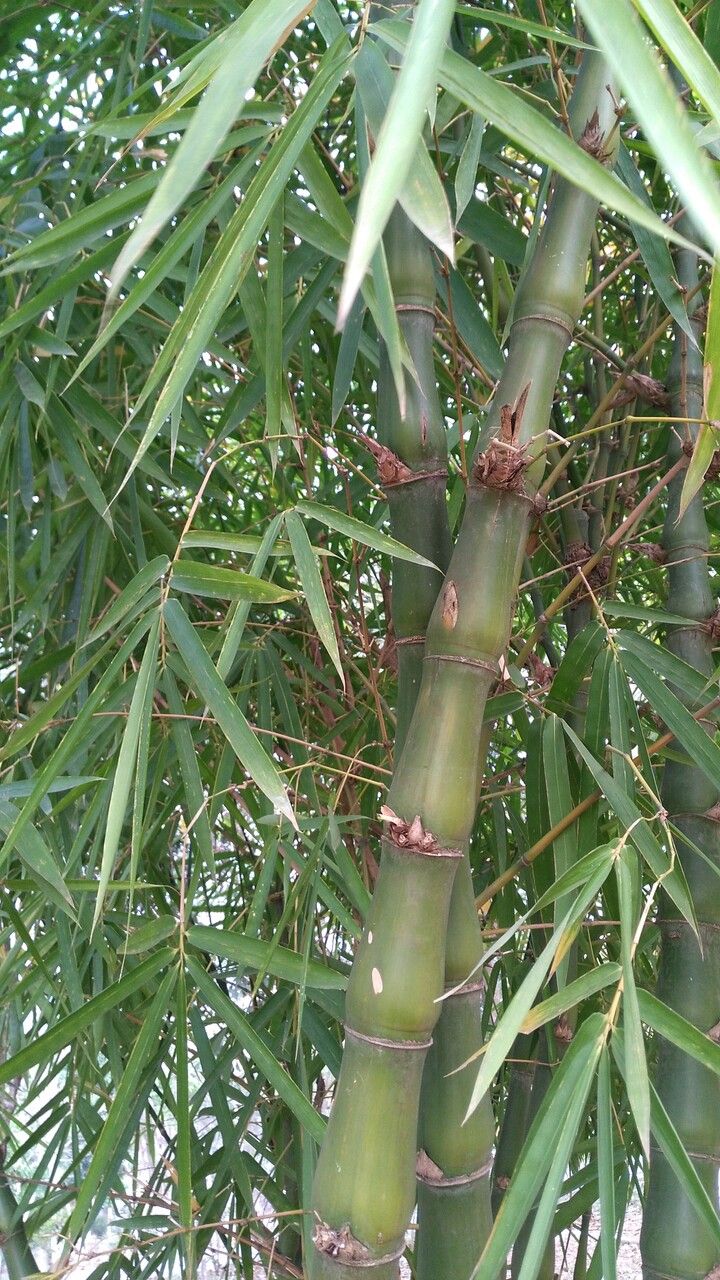
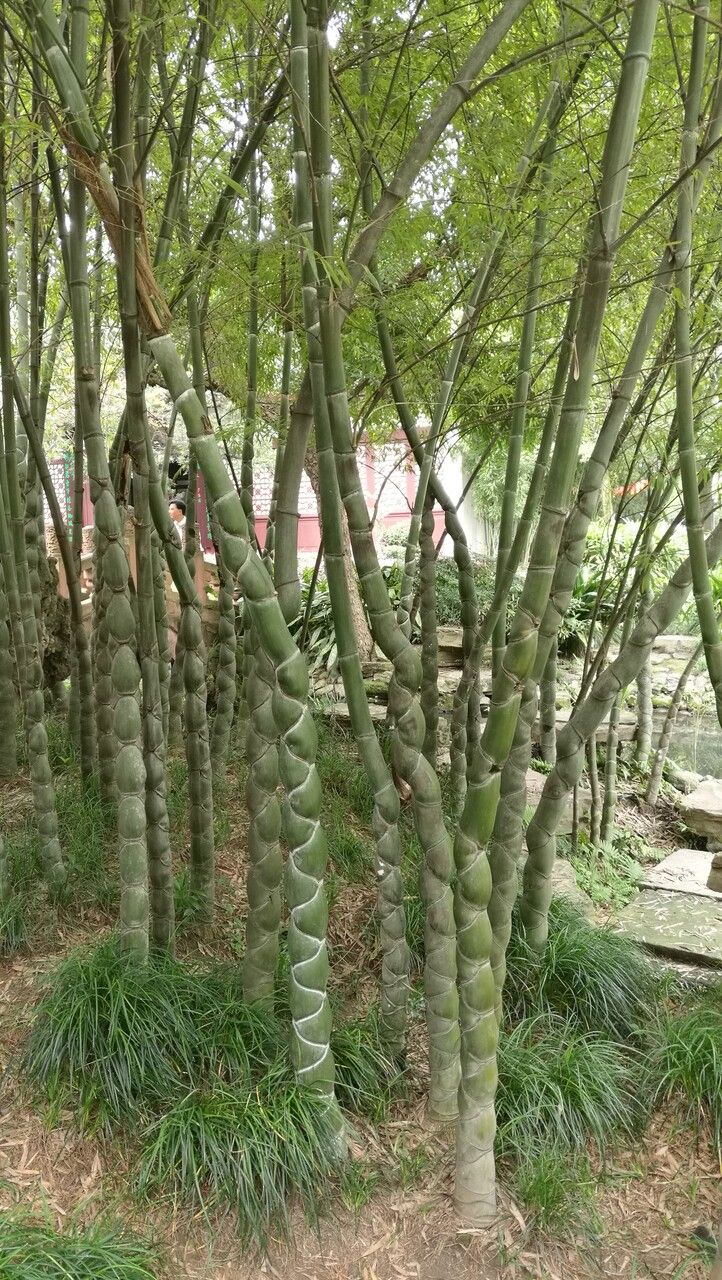
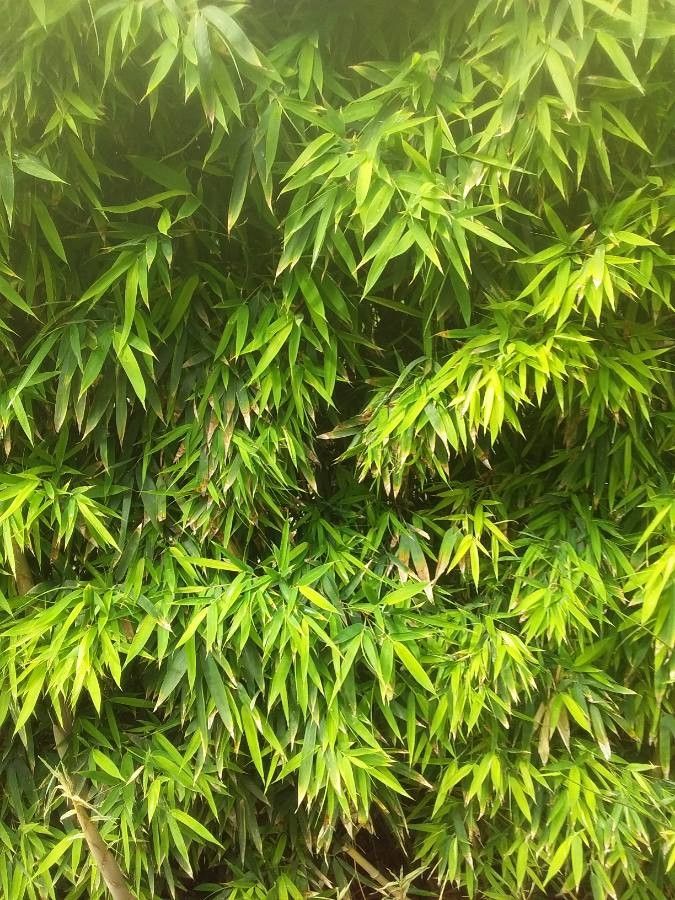
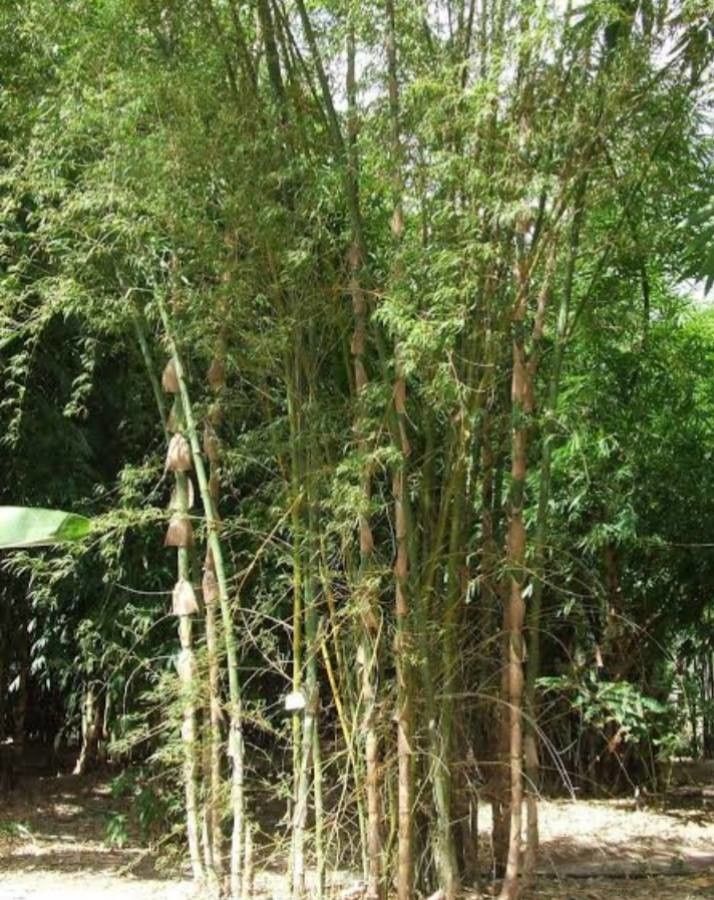
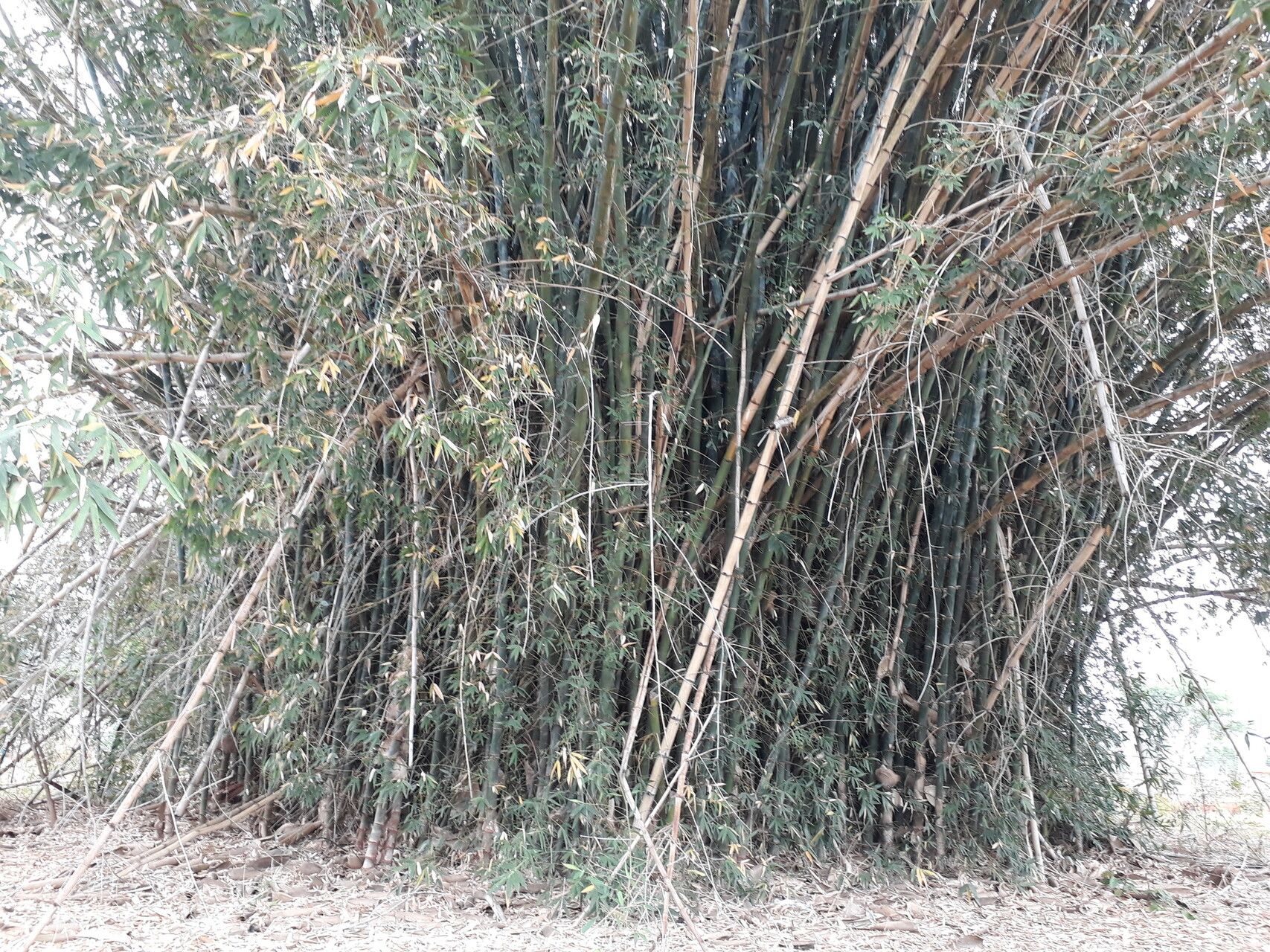
Bambusa tuldoides, commonly known as Chinese timber bamboo, is a species of bamboo native to China. This fast-growing and tall plant can reach heights of up to 30 meters and diameters of 10 centimeters. The culms (stems) are straight and green when young, turning yellow as they age. The leaves are long, narrow, and pointed.
Bambusa tuldoides is widely cultivated for its strong timber, which has a variety of uses, including construction material, furniture making, paper production, and even musical instruments. Additionally, its attractive appearance gives it ornamental value, making it suitable for landscaping purposes.
This species thrives in warm climates with high humidity but can also tolerate colder temperatures if adequately protected from frost. It requires well-drained soil rich in organic matter for optimal growth.
Overall, Bambusa tuldoides is an important plant due to its economic value and environmental benefits, such as erosion control and carbon sequestration. These attributes make it an essential part of many ecosystems around the world.
Buddha's belly bamboo is resistant to disease and generally not susceptible to illnesses. Regarding care, this species is fairly low-maintenance. When grown outdoors it needs only modest watering, and larger plants typically do not require pruning. Smaller specimens, however, should be pruned after they have finished blooming. Buddha's belly bamboo is well suited to anyone with outdoor space, such as a garden or deck, and does not demand extensive plant-care experience.
How to keep Bambusa Tuldoides.
Light
Buddha's belly bamboo thrives in environments with plenty of sunlight, reflecting its inherent affinity for its native sunny habitat. Still, it has the ability to acclimate to places with lower sun exposure. Insufficient amounts of sunlight can hinder its development, and overexposure might lead to damage.
Water
Buddha's belly bamboo originates from regions with consistent rainfall and thrives when watered weekly. It prefers evenly moist soil but can tolerate periods of dryness. For optimal growth, it is best grown outdoors in well-draining soil, which mimics the drainage conditions of its native environment.
Temperature
Buddha's belly bamboo demonstrates an impressive ability to adapt to temperature, having the capacity to withstand heated conditions and major shifts in temperature. It requires careful watering and sufficient shade to prevent sun exposure during hot conditions. Despite this, Buddha's belly bamboo isn't particularly resistant to icy temperatures. While it can bear a certain amount of cold, extremely cold conditions have been known to cause frost damage.
Fertilizer
To foster healthy new growth of Buddha's belly bamboo, extra nourishment is required. Distributing some compost around the plant's base during the spring can sufficiently supply the essential nutrients it requires. Fertilization assists in bolstering robust growth and strengthens the plant's resistance to diseases and pests.
Pruning
Buddha's belly bamboo benefits from pruning in early spring when sap flow begins. To promote healthy growth, it is important to cut dead or crowded culms at the base and thin out older stems every 3 to 5 years. Regular pruning helps maintain the plant's health and control its height. For the best results, always use clean, sharp tools.
Pot & Repot
Spring repotting every 2-3 years is essential for Buddha's Belly Bamboo, which is an upright variety of bamboo. When repotting, use well-draining pots that are at least 20% larger than the previous ones. Water the plant thoroughly and ensure the soil remains moist. Place the bamboo in a spot with dappled sunlight to support its growth and preserve its sculptural form in the garden.
Botanical profile.
- Plant Type
- Grass
- Life Cycle
- Perennial
- Genus
- Bambusa
- Family
- Poaceae
- Hardiness Zone
- 8-11
- Mature Height
- 6.1 m to 10.06 m
- Mature Spread
- 4.57 m to 6.1 m
- Leaf Color
- Green
- Leaf Type
- Evergreen
- Bloom Time
- Early summer, Mid summer
- Planting Time
- Spring, Summer, Autumn
- Harvest Time
- Late summer, Early fall, Mid fall
- Native Area
- Malaysia, Vietnam, Myanmar, Laos, China
Other names.
Reader questions.
What are the sunlight requirements for Buddha's belly bamboo?
Buddha's belly bamboo requires full sun, which means it needs more than 6 hours of sunlight a day, but it can also thrive in partial sun, receiving about 3-6 hours of sunlight. It is critical to monitor the movement of sunlight in your garden to find a location that offers a suitable mix of light and shade. In its natural, sun-drenched environment, Buddha's belly bamboo grows best under abundant sunlight, but it is adaptable and can grow in areas with less sun. However, insufficient sunlight may impede its growth, and too much direct sunlight could be harmful.
How can artificial lighting be used for Buddha's belly bamboo?
Indoor Buddha's belly bamboo plants may require artificial lighting to ensure optimal growth, especially in spaces not sufficiently lit by natural sunlight, like during winter. Artificial light can significantly aid their growth, and LED lights are often recommended because they can be customized to provide specific light wavelengths necessary for the plant. The general guidance for artificial lighting is 30-50W per square foot for full sun plants, 20-30W per square foot for partial sun plants, and 10-20W per square foot for full shade plants. The light should be placed 12-36 inches above the plant for about 8-12 hours a day to mimic natural daylight conditions.
What are the signs of inadequate lighting for Buddha's belly bamboo?
Symptoms that Buddha's belly bamboo is receiving inadequate light include smaller new leaves, leggy or sparse growth, rapid leaf drop, slowed or halted new growth, and leaves that are lighter in color or exhibit chlorosis, a condition where leaves lose their green color and turn yellow. Excessive sunlight can cause sunscald, leaf curling, wilting, and leaf scorching. These symptoms indicate either too much or too little light, stressing the plant and affecting its health.
What solutions can address light-related issues for Buddha's belly bamboo?
Addressing light-related issues involves gradual adjustments to the plant's lighting conditions. For indoor plants, gradually increase the duration of direct sunlight or use artificial light, ensuring the plant receives at least 6 hours of light daily. Positioning the plant near a south-facing window or using grow lights can provide sufficient light if natural sunlight is lacking. For outdoor plants, moving them to sunnier spots gradually helps prevent shock. Pruning nearby trees can reduce obstructions and increase sunlight exposure. If necessary, transplanting the plant during its dormant period to a location with better sunlight and drainage can also be beneficial. It's important to note that parts of the plant affected by inadequate light may not recover, but new growth should be healthy with improved lighting conditions.