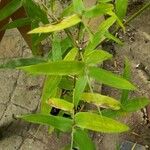
Bambusa ventricosa
Buddha bamboo · Buddha's-Belly bamboo · Punting-pole bamboo · Verdant bamboo · Dwarf bamboo
Description
Source: leafsnapBambusa ventricosa, commonly known as Buddha's Belly Bamboo, is a bamboo species native to China and Taiwan. It is a clumping bamboo that can grow up to 30 feet tall and 3 inches in diameter. The most distinctive feature of this plant is its swollen internodes, which resemble the belly of Buddha, hence the name. The leaves of Bambusa ventricosa are long and narrow with pointed tips, growing up to 10 inches in length. The culms, or stems, are green when young but turn yellow with age. This plant prefers full sun or partial shade and thrives in well-drained soil. Bambusa ventricosa has many uses in landscaping. It can serve as an effective screen or as an ornamental feature in gardens or parks. Additionally, it holds cultural significance in Chinese folklore, symbolizing good luck and prosperity. Once established, this plant requires minimal maintenance but should be watered regularly during dry periods. Pruning dead culms regularly is also important for optimal growth. Overall, Bambusa ventricosa is an attractive bamboo species with unique features that make it a popular choice for landscaping projects around the world.
Care Guide
💧 Water Every 7 days
Buddha bamboo flourishes in humid environments, needing consistent moisture without becoming waterlogged. Watering it weekly is ideal to replicate its natural conditions. As an evergreen plant, Buddha bamboo maintains its leaf hydration throughout the year, making it a great choice for outdoor landscaping in regions that do not experience freezing temperatures.
☀️ Light
🌡️ Temperature
💨 Humidity
🪴 Soil
🌱 Fertilizer
🪴 Pot & Repot
✂️ Pruning
🌿 Propagating
🐛 Diseases & pets
☠️ Toxicity
Characteristics
- Plant Type
- Grass
- Life Cycle
- Perennial
- Genus
- Bambusa
- Family
- Poaceae
- Hardiness Zone
- 9-12
- Native Area
- South Asia