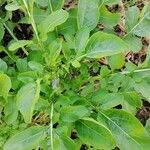
Barbarea vulgaris
Wintercress · Bittercress · Cressy-greens · Garden Yellow Rocket · Garden Yellowrocket
Description
Source: leafsnapBarbarea vulgaris, commonly known as yellow rocket or winter cress, is a biennial or perennial herbaceous plant belonging to the Brassicaceae family. Native to Europe and Asia, it has also been introduced and naturalized in North America. The plant can grow up to 60 cm tall and features a basal rosette of deeply lobed leaves with toothed edges. Its stem is erect, branched, and covered with fine hairs. From April to June, yellow rocket produces bright yellow flowers in clusters at the top of its stem. These small, yet numerous flowers have four petals arranged in a cross shape, a characteristic typical of the Brassicaceae family. The leaves and young shoots of Barbarea vulgaris are edible, whether raw or cooked, and possess a slightly bitter taste due to their high mustard oil content. In traditional medicine, this plant has been used as an anti-inflammatory agent for treating rheumatism. Yellow rocket thrives in moist soils along roadsides, field edges, and disturbed areas such as waste grounds. It can also tolerate partial shade, making it adaptable to various environments. Overall, Barbarea vulgaris is an intriguing herbaceous species that provides food for wildlife such as bees and possesses medicinal properties historically used by humans.
🌳 Common wintercress plays a distinctive ecological role as a bioindicator of heavy metals in soil because it is a hyperaccumulator. Its hardiness makes it a useful plant for restoring disturbed land. It also functions as an important host for the larvae of certain butterfly species, supporting biodiversity conservation.
🎭 Cleansing, protection against disease, perseverance
Care Guide
💧 Water Every 7 days
Yellow rocket flourishes in moist environments and requires weekly watering to stay hydrated. Although it prefers consistent moisture, it can withstand short dry spells. Usually grown outdoors, yellow rocket adapts well to changing rainfall patterns, which boosts its resilience throughout the growing season.
When should I water my Yellow Rocket?
Timely watering is crucial for the health and growth of Yellow Rocket (Barbarea vulgaris). The plant needs water when the top 2-3 inches of soil are dry, as indicated by dry soil or changes in leaf condition such as wilting, curling, or color changes to yellow or brown edges. However, watering should be done carefully to prevent over or under-watering, both of which can harm the plant by causing root rot or stress. Monitor the plant's growth, as stunted growth may also indicate a lack of water.
How should I water my Yellow Rocket?
The best method for watering Yellow Rocket is misting, which maintains humidity around the plant without causing water stagnation. Use a spray bottle or atomizer for an even water distribution, focusing on the foliage rather than the soil or plant base. A moisture meter can help gauge when the plant needs water, ensuring the soil’s moisture is appropriate without being excessive. Avoid over-watering to prevent conditions that can lead to root rot.
How much water does Yellow Rocket really need?
The amount of water Yellow Rocket requires varies by pot size, root depth, plant size, and other environmental factors. It's crucial to water thoroughly, ensuring moisture reaches the deep roots, especially for plants in containers where water should drain out the bottom. Monitor leaf conditions for signs of under or over-watering. Large plants and those in bigger pots will generally need more water. Maintaining a balance in watering is key to avoiding dry, brittle leaves or root rot.
What kind of water is best for Yellow Rocket?
Rainwater is the best option for Yellow Rocket due to its natural composition and balanced pH level. If unavailable, distilled or filtered water are good alternatives, ensuring harmful contaminants are removed. Tap water can be used but let it sit for 24 hours to dechlorinate as the plant is moderately sensitive to chlorine and fluoride. The ideal water temperature is room temperature, about 68-72°F (20-22°C), within a pH range of 6.0-7.0.
How do Yellow Rocket's watering needs change with the seasons?
Yellow Rocket’s watering needs vary seasonally. In spring's active growth phase, keep the soil evenly moist. Summer's natural dormancy means less frequent watering, allowing the soil to dry slightly between waterings. In autumn, reduce watering frequency as the plant prepares for dormancy, maintaining lightly moist soil. During winter's dormancy, water sparingly, letting the topsoil dry out between waterings to meet the plant’s minimal moisture requirements.
☀️ Light Full sun
Common wintercress, in its native habitat, is adapted to thrive best in places where it can receive continuous sunlight throughout the day. However, it also does well in settings with reduced light, as long as it still gets enough to remain healthy. An imbalance, especially a shortage of light, can hinder its growth and development.
What are the sunlight requirements for Yellow Rocket plants?
Yellow Rocket (Barbarea vulgaris) plants need a significant amount of sunlight to thrive, with full sun exposure being above 6 hours of direct sunlight daily, and partial sun exposure around 3-6 hours of sunlight daily. It's essential to watch how sunlight moves through your garden to choose spots that balance light and shade for your plants' happiness. Yellow Rocket is adaptable and can still fare well with less light, but too little light may hinder its growth and development.
How does artificial lighting support plant growth?
When natural sunlight is insufficient for indoor plants, especially during winter or in less sunny spaces, artificial lighting can be a vital solution. Artificial lights, particularly LED lights recommended for their customization to specific plant wavelengths, promote faster and healthier growth. The requirements vary with full sun plants needing 30-50W/sq ft, partial sun plants 20-30W/sq ft, and full shade plants 10-20W/sq ft of artificial light. The light source should be placed 12-36 inches above the plant, mimicking natural sunlight with 8-12 hours of light per day.
What are some common symptoms of inadequate light in Yellow Rocket plants?
Yellow Rocket plants show several symptoms when they don't receive enough light, including smaller new leaves, leggy or sparse growth, faster leaf drop, slower or no new growth, and lighter-colored or chlorotic leaves. Excessive sunlight can also cause problems like sunscald, leaf curling, wilting, leaf scorching, and chlorosis, indicating a significant stress response and affecting the plant's ability to photosynthesize.
What solutions can help Yellow Rocket plants receiving insufficient light?
For Yellow Rocket plants struggling with insufficient light, a gradual relocation to sunnier spots can ensure they receive at least 6 hours of direct sunlight daily. Using a south-facing window or, for larger plants, artificial grow lights for at least 8 hours a day can provide necessary light. Outdoors, gradual adaptation to brighter areas prevents sunburn. Pruning obstructions or transplanting can also increase sunlight exposure. However, parts of the plant already affected may not recover, but new growth will be healthy with improved light conditions.
🌡️ Temperature 0–35°C
Common wintercress originates from temperate zones and thrives at temperatures between 68 and 95°F (20 to 35℃). For optimal growth, check temperatures regularly and make adjustments as needed, especially when the seasons change.
What is the native climate for Yellow Rocket?
Yellow rocket, scientifically known as Barbarea vulgaris, is native to temperate regions. It thrives in a temperature range of 68 to 95°F (20 to 35°C). To ensure optimal growth, it is crucial to regularly monitor and adjust the temperature, especially during seasonal transitions. Although it possesses strong cold resistance and typically does not require special frost protection measures, it is vital to provide additional cold protection if temperatures are expected to drop below the plant's growth tolerance limit. This protection can be accomplished by covering the plant with soil or straw. Before the onset of the first freeze in autumn, watering the plant abundantly to maintain moist soil can help prevent drought and water scarcity during the winter and early spring months.
What should I do if the Yellow Rocket is exposed to low temperatures?
Yellow rocket is well adapted to cold conditions and grows best when temperatures remain above its suitable growth minimum. However, during winter, ensuring the temperature stays above the tolerable growing minimum is crucial. If temperatures fall below the growth limit temperature, you may not notice any immediate changes, but there could be a decrease in or absence of sprouting in spring. To address this, you should remove any parts of the plant that failed to sprout in the spring.
How do high temperatures affect Yellow Rocket, and what are the solutions?
During the summer, it's important to keep Yellow rocket's exposure to temperatures below its suitable growth maximum. If the temperature surpasses the tolerable growing maximum, the plant's leaves might begin to lighten, curl, become susceptible to sunburn, and in severe cases, the plant may wilt and dry out. To mitigate these issues, trim away any sunburned and dried-up parts of the plant. Relocate the plant to a shaded area during the midday and afternoon sun, or use a shade cloth for protection. Additionally, watering the plant in the morning and evening can help maintain soil moisture and protect the plant from extreme heat.
💨 Humidity
🪴 Soil 6-7
🌱 Fertilizer
Common wintercress are regarded as heavy feeders when it comes to nutrients. They require frequent, low-dose applications of nitrogen and potassium fertilizers and periodic applications of phosphorus, micronutrients, sulfur, and magnesium to sustain good growth and bright coloration. Continuous fertilization throughout the growing season is necessary to prevent deficiency symptoms and maintain optimal growth.
🪴 Pot & Repot
✂️ Pruning
Yellow Rocket should be trimmed regularly to keep it contained and in shape. Yellowed, dying, or dead leaves should be removed as necessary. This plant can also be pinched and deadheaded.
🌿 Propagating
🐛 Diseases & pets
☠️ Toxicity
Characteristics
- Plant Type
- Herb
- Life Cycle
- Biennial, Perennial
- Genus
- Barbarea
- Family
- Brassicaceae
- Hardiness Zone
- 3-10
- Mature Height
- 30 cm to 91 cm
- Mature Spread
- 30 cm
- Leaf Color
- Green
- Leaf Type
- Deciduous
- Flower Color
- Yellow
- Flower Size
- 0.15 cm to 0.20 cm
- Bloom Time
- Mid spring, Late spring, Early summer
- Planting Time
- Summer, Autumn
- Harvest Time
- Early summer, Mid summer
- Native Area
- Europe, Asia