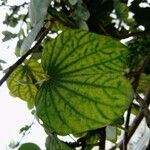
Bauhinia variegata
Mountain ebony · Orchidtree · Butterfly tree · Poor man's orchid · Buddhist bauhinia
Description
Source: leafsnapBauhinia variegata, commonly known as the orchid tree or mountain ebony, is a deciduous tree native to Southeast Asia and belongs to the Fabaceae family. It can grow to a height of 10-12 meters. The leaves of this plant are uniquely shaped, resembling butterflies or hearts, with two lobes joined at the base. Its flowers are large and showy, featuring five petals that range in color from pink and purple to white. These flowers bloom from late winter through early summer and attract bees, butterflies, and hummingbirds. Bauhinia variegata is widely cultivated as an ornamental plant due to its beautiful flowers and distinct foliage. It thrives in full sun or partial shade and prefers well-draining soil with regular watering during its growing season. In traditional medicine, various parts of this plant have been used to treat fever, inflammation, coughs, and colds. Overall, Bauhinia variegata is an attractive ornamental tree that adds beauty to any landscape. Additionally, its medicinal properties make it not only aesthetically pleasing but also practically beneficial for health purposes.
🌳 The versatile orchid tree possesses a range of uses that surprise many. Its bark is unexpectedly used to make a deep red dye, a staple in fabric dyeing. The plant’s flowers are delicate and fragrant, and their scents are employed in the production of Asian perfumes. A notable application is in sweetener production: boiling the leaves produces a sweet sap, enabling a novel, low-cal sugar substitute, a practice rooted in local traditions in Bangladesh.
🎭 Affection, Attractiveness
Care Guide
💧 Water Every 7 days
The orchid tree, native to the monsoon regions of South Asia, thrives in moderate humidity and can tolerate short periods of drought. It should be watered every 1-2 weeks, allowing the soil to partially dry out between waterings. As an ornamental plant, it needs careful watering during its growing season to ensure vibrant blooms.
☀️ Light Full sun
The orchid tree prefers locations with abundant light, enjoying the sky's generous rays. In its native range it commonly grows in such bright environments. It can tolerate moderate to somewhat lower light levels, but excessive shade can impair its health and growth. Insufficient lighting may result in reduced flowering and a weakened structure.
What are the sunlight requirements for an Orchid Tree?
The Orchid Tree, or Bauhinia variegata, thrives best in areas of full sunlight where it can enjoy more than 6 hours of direct sunlight a day, but it can also tolerate partial sun environments, receiving about 3-6 hours of sunlight. It's vital to observe the movement of sunlight through your garden to find spots that offer a mix of light and shade, ensuring the plants' well-being. In its natural habitat, the Orchid Tree is accustomed to abundant sunlight, which significantly benefits its growth and health. However, excessive shade can inhibit its growth, decrease flowering, and weaken its structure. For indoor plants, artificial lighting can be employed during less sunny months or in spaces that don't receive enough natural light. Proper lighting, set up at the correct intensity and duration, is crucial for sustaining growth and maintaining health.
How to use artificial lighting for indoor plants?
Indoor Orchid Trees can benefit significantly from artificial lighting, especially when natural sunlight is insufficient. LED lights are recommended for their ability to mimic the specific wavelengths of light needed by plants. Full sun plants require around 30-50W/sq ft of artificial light, partial sun plants call for 20-30W/sq ft, and full shade plants need about 10-20W/sq ft. The light source should be placed 12-36 inches above the plant to simulate natural sunlight, and most plants will thrive with 8-12 hours of light per day. This approach helps in promoting healthier and faster growth during winter or in less sunny locations.
What are the signs of insufficient light in an Orchid Tree?
Orchid Trees show several signs when exposed to insufficient light, especially during winter indoor cultivation. New leaves may grow smaller, and the plant may exhibit leggy or sparse growth due to longer spaces between leaves or stems. This results in a stretched-out appearance and can make the plant appear weak. Additionally, the plant might shed leaves earlier than usual or exhibit slower or no new growth as it enters survival mode. Leaves may also display lighter colors or irregular patterns, indicating a lack of chlorophyll. Other symptoms include chlorosis or yellowing of leaves, sunscald, leaf curling as a defensive mechanism against excessive sunlight, wilting due to increased water loss, and leaf scorching, characterized by brown or crispy leaf edges.
How can you ensure optimal growth for an Orchid Tree facing insufficient light?
Ensuring optimal growth for an Orchid Tree suffering from insufficient light involves a few strategies. For indoor plants, gradually moving them to sunnier locations or using artificial lighting can help. Artificial lights like desk or ceiling lamps should be on for at least 8 hours a day, while professional plant grow lights provide the best results for large plants or those that are not easily movable. Outdoors, choosing the best sunlight spot and adjusting the plant's location gradually to avoid sunburn is key. If light is obstructed, consider pruning trees or bushes that cast shade or transplanting smaller plants to sunnier spots during their dormant period. It's important to note that parts of the plant already affected may not recover, but new growth should be healthier with improved light conditions.
🌡️ Temperature 20–37.8°C
The orchid tree tree, like most tropical plants, comes from tropical and subtropical areas. It prefers temperatures from 68 to 100 ℉ (20 to 38 ℃) and can tolerate some temperature variation. In winter, it is recommended to cut back on watering and keep the plant in slightly cooler temperatures to promote healthy growth.
What are the ideal growing conditions for an Orchid tree?
The Orchid tree, scientifically known as Bauhinia variegata, thrives in tropical and subtropical climates. It prefers temperatures between 68 to 100°F (20 to 38°C) and enjoys a significant amount of heat. Although it can handle some temperature fluctuations, it's important to protect the tree from cold by reducing watering in winter and keeping it in cooler conditions to promote health. During autumn and winter, especially in regions that experience colder temperatures, it's advised to bring outdoor Orchid trees indoors, positioning them near a bright window but not too close to heaters, ensuring the temperature stays above 20°C to encourage growth. Exposing the tree to temperatures near 0°C or lower is harmful and should be avoided.
What should I do if my Orchid tree experiences low temperatures?
In case your Orchid tree is exposed to low temperatures, it's crucial to act quickly to mitigate damage. For temperatures dipping below -5°C, resulting in leaf color lightening and potential browning or blackening from frost damage, along with signs of wilting and drooping, you should trim away the frost-damaged parts and move the tree indoors to a warmer environment. Placing the tree near a south-facing window will ensure it receives ample sunlight. To prevent further stress from dry air, avoid placing it near heaters or air conditioning vents.
How can I protect my Orchid tree from high temperatures?
During the summer, when temperatures can soar, it's vital to protect the Orchid tree from extreme heat, particularly keeping it below 38°C. If temperatures exceed 43°C, the leaves may lighten in color and the tree can suffer from sunburn. To address this, trim away any sunburned or dried-up parts and relocate the plant to a shaded area during the hottest parts of the day. Ensuring the soil remains moist by watering in the morning and evening can also help mitigate the impacts of high temperatures.
💨 Humidity
🪴 Soil 6-7
🌱 Fertilizer
The best time to fertilize an Orchid tree is in early spring, when it comes out of dormancy. This encourages overall growth and flower development. Fertilizing improves the foliage, stems, and branches, and supports the production of large, bright, long-lasting flowers. It also helps transport nutrients from the roots to the flowers and enhances the plant’s health and resistance to disease.
🪴 Pot & Repot 2-3 years
When repotting an Orchid tree, select a pot 1-2 inches (2.5–5 cm) larger that has good drainage. Use a well-draining potting mix. Repot in spring or fall, making sure the root ball sits slightly lower than the rim of the flower pot. Water thoroughly after repotting and place the pot in a warm spot with indirect sunlight.
✂️ Pruning
To ensure a healthy and well-shaped orchid tree, it's important to prune it in early spring. Regularly remove any dead or crossed branches to improve air circulation and allow more sunlight to reach the tree. Pruning not only enhances the blooms but also prevents overcrowding, promoting strong growth and prolonged flowering. For best results, always use sterile tools to reduce the risk of disease.
🌿 Propagating
🐛 Diseases & pets
☠️ Toxicity
Characteristics
- Plant Type
- Tree
- Life Cycle
- Perennial
- Genus
- Bauhinia
- Family
- Fabaceae
- Hardiness Zone
- 9-11
- Mature Height
- 6.1 m to 10.06 m
- Mature Spread
- 7.62 m to 10.36 m
- Leaf Color
- Green
- Leaf Type
- Semi-evergreen
- Flower Color
- Pink, White, Purple
- Flower Size
- 7.62 cm to 11.43 cm
- Bloom Time
- Spring, Early summer
- Planting Time
- Spring, Autumn
- Harvest Time
- Early summer, Mid summer
- Native Area
- Nepal, India, Indonesia, Cambodia, Vietnam, Myanmar, Bhutan, Bangladesh, Pakistan, Laos, Thailand, China