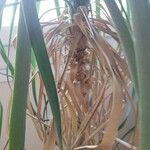
Beaucarnea recurvata
لیندا · Ponytail · Bottle-palm · Elephant-foot-tree · Stripy Ponytail
Description
Source: leafsnapBeaucarnea recurvata, commonly known as the Ponytail Palm or Elephant's Foot, is a distinctive and eye-catching plant native to Mexico. Despite its name, it is not a true palm but belongs to the Asparagaceae family. The plant is characterized by a thick, bulbous trunk that can grow several meters tall, with long, narrow leaves that resemble cascading ponytails. The Ponytail Palm is an easy-to-care-for houseplant, requiring minimal watering and able to thrive in bright indirect light or even low light conditions. It prefers well-draining soil and should be allowed to dry out between waterings. In its natural habitat, Beaucarnea recurvata can live for hundreds of years. As an indoor plant, it typically lives for several decades with proper care. It has gained popularity in recent years due to its unique appearance, which adds character to any room or garden space. Overall, Beaucarnea recurvata is an excellent addition for indoor garden enthusiasts seeking a low-maintenance yet visually appealing houseplant.
💡 The Elephant's-foot plant gets its name from its distinctive appearance: it has swollen roots and straight stems that resemble wine bottles and an elephant's feet. As the plant matures, the surface of its "skin" develops cracks, making it look even more like the feet of an elephant.
🌳 Ponytail palm's distinctive appearance goes beyond mere decoration, since it is used to make gardening sands. Its durability and notable qualities help form 'plant sands,' which serve as an essential component in garden soil, terrariums, and botanical arrangements. Its varied applications, including use in organic compost, are still being researched for additional uses.
🎭 Unforced and elegant
Care Guide
💧 Water Every 7 days
The Ponytail Palm thrives in arid conditions, requiring minimal watering—about once every three weeks—and prefers low humidity. This evergreen plant is commonly grown indoors and can retain moisture to stay lush year-round, even with infrequent watering. It adapts well to low-water indoor environments.
When Should I Water My Ponytail Palm?
Watering your Ponytail Palm at the correct time is crucial for its health, vigorous growth, and aesthetic appeal. It's important to wait until the top few inches of the soil feel dry to the touch before watering again, since the plant's bulbous trunk stores water, enabling it to survive droughts. Dehydration is indicated by brown leaf tips or wilting, firm leaves, while overwatering symptoms include yellow, mushy leaves. Always ensure the soil is dry before watering to prevent root rot, and adjust your watering schedule based on the plant's hydration signals to maintain its wellbeing.
How Should I Water My Ponytail Palm?
Watering a Ponytail Palm properly involves allowing the soil to dry out completely between waterings and avoiding overwatering to protect its sensitive roots. Initially, soak the soil thoroughly and let excess water drain. Utilize a moisture meter for accuracy, and consider bottom-watering to ensure the roots receive moisture without over-saturating the soil surface. Focus on watering the root area while avoiding the bulb and foliage, which could lead to diseases. Additionally, perform a flushing technique several times a year to clear out salt build-up and adjust your watering method according to seasonal growth patterns, with less watering needed during winter.
How Much Water Does Ponytail Palm Really Need?
The amount of water needed for a Ponytail Palm varies with pot size, root depth, and plant size, typically ranging from 250ml to 500ml per session. This plant, originating from dry, rocky areas in Mexico, stores water in its trunk, allowing it to endure droughts. It's advised to let the soil dry completely before watering again. Proper hydration is characterized by green, upright leaves and a plump trunk. Overwatering or underwatering can lead to yellow or drooping leaves, soft trunk, and potentially stunted growth or disease. Ensure the plant isn't kept in wet conditions and reduce watering in winter.
What Kind of Water is Best for Ponytail Palm?
Ponytail Palm thrives best when watered with distilled water, rainwater, or filtered water to avoid the harmful effects of minerals and chemicals such as chlorine and fluoride found in tap water. Chlorine sensitivity is high, so if tap water is used, let it sit out for 24 hours to allow chlorine to evaporate or use a filter. The optimal water temperature is moderate, around 68-72°F (20-22°C). Avoid extreme temperatures to prevent shocking the plant.
How Do Ponytail Palm's Watering Needs Change with the Seasons?
The watering needs of a Ponytail Palm change with the seasons. During spring, the plant's active growth phase, maintain consistent soil moisture with regular watering. In the summer, reduce watering as the plant may enter dormancy. Autumn sees a continuation of reduced watering, with the aim of keeping the soil lightly moist. Winter requires minimal moisture, so water sparingly, allowing the topsoil to dry out between sessions. Adjusting watering habits according to these seasonal needs helps promote a healthy Ponytail Palm.
☀️ Light Partial sun
Ponytail palm is generally adapted to environments with consistent moderate sunlight and can tolerate both full sun and shaded conditions. Too much sun can cause sunburn, while insufficient light can result in pale foliage and stopped growth.
What are the sunlight requirements for Ponytail Palm?
Ponytail Palm (Beaucarnea recurvata) thrives in environments that balance between moderate to full sunlight exposure. It usually requires about 3-6 hours of sunlight daily (partial sun) but can also handle more than 6 hours of sunlight (full sun), or thrive in full shade conditions. It's essential to observe how sunlight moves through your garden to ensure your plant receives the ideal mix of light and shade, fostering a happy and healthy growth environment.
How should I care for my Ponytail Palm indoors?
Indoor care for Ponytail Palm involves ensuring it gets enough light, which is crucial for its growth. In spaces with limited natural sunlight, especially during winter or in less sunny areas, artificial lighting becomes critical. LED lights are recommended for their ability to be tailored to the specific light needs of your plants, providing the intensity required for photosynthesis. For optimal growth, full sun plants need 30-50W per square foot, partial sun plants 20-30W per square foot, and full shade plants 10-20W per square foot of artificial light, keeping the source 12-36 inches away and mimicking the natural daylight hours necessary for your plant species, which is typically 8-12 hours.
What are the signs of inadequate lighting in Ponytail Palms?
Inadequate lighting can trigger several symptoms in Ponytail Palms, indicating the plant is not receiving enough sunlight for healthy growth. These symptoms include lighter-colored new leaves or irregular color patterns due to insufficient chlorophyll, indicating a halt in growth or the plant entering survival mode due to poor light conditions. Additionally, chlorosis, where leaves lose their green color and turn yellow, sunscald showing as pale or necrotic areas, leaf curling as a defense against excessive sunlight, wilting from increased water loss, and leaf scorching indicated by brown, dry edges are other critical signs to watch for.
How can I address light-related issues for my Ponytail Palm?
To combat light-related issues in Ponytail Palm, a gradual adaptation to changing light conditions is key. For indoor plants, gradually moving them to sunnier spots each week or using artificial lighting like desk or ceiling lamps for at least 8 hours daily can help. Outdoor plants also benefit from gradual moves to sunnier locations. Additionally, removing obstructions that block sunlight or transplanting smaller plants during their dormant periods to areas with better light and drainage can significantly improve their health and growth. However, be mindful that parts of the plant already damaged by insufficient light may not recover, but new growth should be healthy with proper light exposure.
🌡️ Temperature 20–41.1°C
The ponytail palm favors a natural growing environment with temperatures between 21 and 29 ℃ (70 to 85 ℉). Its usable temperature range is 20 to 41 ℃ (68 to 106 ℉), allowing it to tolerate a wide span of temperatures. In colder months, temperature adjustments may be required to keep conditions within 15 to 23 ℃ (59 to 73 ℉).
What are the ideal temperature conditions for growing a Ponytail Palm?
The Ponytail Palm (Beaucarnea recurvata) thrives in a wide range of temperatures, making it quite adaptable. It prefers temperatures between 21 to 29°C (70 to 85°F) for native growth. However, it can adapt to temperatures ranging from 20 to 41°C (68 to 106°F). To maintain its health, adjustments may be necessary during cooler months to keep the temperature within 15 to 23°C (59 to 73°F). It loves heat, slowing down in growth and entering a dormant state in winter. If outdoor temperatures fall below 0°C, it's advised to move the plant indoors and position it near a south-facing window for maximum sunlight, or use supplemental lighting if natural light is insufficient. Reduced watering or complete cessation is recommended when temperatures drop below 20°C to prevent root rot.
How should I care for my Ponytail Palm in low temperatures?
Ponytail Palms are not tolerant of low temperatures and grow best above 20°C. Winter care is crucial to prevent damage; keep the plant above 0°C to avoid becoming weak, wilting, or prone to root rot. If exposed to temperatures below -5°C, the plant may show no initial symptoms but can gradually wither after about a week. To care for a frostbitten Ponytail Palm, trim off affected areas, check for root rot—cutting off any rotted roots if necessary—and consider propagation through cuttings. Immediately move the plant to a warm, indoor environment and place it near a south-facing window to ensure it receives ample sunlight. Use supplemental lighting if natural light is insufficient.
What should I do if my Ponytail Palm experiences high temperatures?
During the hot summer months, it's important to ensure that your Ponytail Palm does not get exposed to temperatures above 41°C as it can halt the plant's growth and lead to water loss, wilting, and increased susceptibility to sunburn. If the temperature exceeds 45°C, the plant may stop growing and sustain sunburn. In such cases, remove the sunburned and rotten parts of the plant immediately. To aid recovery and encourage resumed growth, protect the plant from direct afternoon sunlight and do not water until signs of new root growth appear, especially if there's any indication of root rot.
💨 Humidity dry (<40%)
This plant prefers dry conditions, so don't mist it. However, watering it less often can also thrive in higher humidity.
🪴 Soil 6-7
🌱 Fertilizer Every 30 days
For Ponytail palm, light applications of fertilizer once or twice a year during the growing season are sufficient. Avoid feeding in winter and in summer when the plant is dormant. Cut back on fertilizer for repotted plants and wait a couple of months after repotting before applying fertilizer. Fertilizing supports healthy growth and helps encourage blooms.
Why should I put fertilizer on my Ponytail palm?
Applying plant food to the Ponytail palm during the growing season helps promote healthy growth because it adds nutrients to the growing medium, even though the plant already stores water and nutrients. Fertilizing can also stimulate mature Ponytail palms to produce blooms during the growing season.
When should I fertilize my Ponytail palm tree?
Ponytail palm, like all plants, can benefit from extra nutrients. However, it only needs a small amount of fertilizer during its growing season. You should fertilize it 1-2 times a year, ideally in the spring and autumn. Avoid fertilizing in the winter and summer when it is dormant. If you have recently repotted your plant, be cautious with the amount of fertilizer you use. It's recommended to wait a few months after repotting before applying any fertilizer.
When should I not put fertilizer on my Ponytail palm?
The Ponytail palm, like other plants, goes through a period of dormancy. During this time, it is best to avoid applying fertilizer. The plant stops growing in both summer and winter, so fertilizer should also be stopped during these seasons. Additionally, it is recommended to wait a few months after repotting in the spring before resuming fertilizer applications.
What kind of fertilizer does my Ponytail palm plant need?
When fertilizing your Ponytail palm, it is recommended to use a liquid plant food made specifically for succulents and cacti. To prevent the fertilizer from accumulating in the soil, dilute it with water to half-strength. Apply the fertilizer to the base of the plant and make sure to water thoroughly, allowing any excess moisture to drain away.
How can I give nutrients to my Ponytail palm?
When fertilizing Ponytail palm, it's recommended to use liquid plant food, although granules can also be used. Be sure to follow the instructions on the packaging and dilute liquid fertilizers to half-strength. Whether you choose granules or liquid plant food, always apply it to the soil. Remember to cover granules with a thin layer of soil and water, regardless of the type of plant food used.
🪴 Pot & Repot Every 2 years
When repotting a Ponytail palm, choose a pot just slightly larger than the current one that provides good drainage. Use a gritty, well-draining succulent or cactus mix. Gently remove the plant from its old pot, brush off excess soil, and place it at the same depth in the new container. Wait several days before watering so any root damage can heal. Repot in spring or fall, and set the plant in a brightly lit spot.
✂️ Pruning
Trim off the tips of any damaged leaves until the healthy tissue. If you grow your ponytail palm as a tree, you can remove offsets that send up secondary shoots to maintain a central trunk. Leave them alone if you want a multi-stemmed tree.
🌿 Propagating
🐛 Diseases & pets
☠️ Toxicity
The ponytail palm is non-toxic to humans, dogs, cats, and horses. This versatile houseplant is completely safe, even with the risk of ingestion by pets. Ponytail palms are excellent for bringing visual interest to any household.
Characteristics
- Plant Type
- Succulent, Shrub, Tree
- Life Cycle
- Perennial
- Genus
- Beaucarnea
- Family
- Asparagaceae
- Hardiness Zone
- 9-13
- Mature Height
- 3.96 m to 14.94 m
- Mature Spread
- 0.91 m to 1.52 m
- Leaf Color
- Green
- Leaf Type
- Evergreen
- Flower Color
- White
- Flower Size
- 1.02 cm to 1.52 cm
- Bloom Time
- Mid summer
- Planting Time
- Spring, Summer, Autumn
- Harvest Time
- Mid summer, Late summer
- Native Area
- Mexico