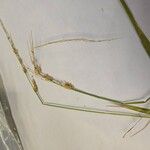
Beckmannia syzigachne
Slough grass · American slough grass · American sloughgrass · Beckmann's Grass
Description
Source: leafsnapBeckmannia syzigachne, the American sloughgrass, or slough grass, is an annual or short-lived perennial bunchgrass in the grass family, Poaceae, found in shallow marshes or sloughs.Beckmannia syzigachne is widespread across much of Europe, Asia, and North America.Beckmannia syzigachne is one of only two species in the genus Beckmannia; the other being Beckmannia eruciformis.
Care Guide
💧 Water
American slough grass thrives in wetland habitats, where it prefers high moisture and can tolerate soggy conditions. For the best growth, it requires weekly watering. Typically cultivated outdoors, this grass is perfect for rain gardens as it benefits from natural rainfall and supports the ecosystem's water cycle.
☀️ Light Full sun
American slough grass does best when exposed to strong, uninterrupted sunlight for most of the day, although it can tolerate situations where light is less consistent. Originating in sun-rich habitats, its growth is impaired by poor light, resulting in suboptimal development.
What are the sunlight requirements for American slough grass?
American slough grass requires a rich span of solar intensity for most of the day to thrive, ideally suited to environments abundant in sunlight. It is important to ensure the plant gets more than 6 hours of sunlight daily for 'full sun' conditions, while 'partial sun' conditions involve about 3-6 hours of sunlight. Inadequate light conditions can compromise the plant's growth. Observing the sunlight's movement through your garden will help in choosing spots that offer a good balance of light and shade, ensuring the plant's success.
How do artificial lights support plant growth?
Indoor plants, including American slough grass, may require artificial lighting for optimal growth when natural sunlight is insufficient, especially in winter or less sunny spaces. Artificial lights, such as LED lights, are beneficial as they can be customized to provide specific wavelengths of light needed by the plants. For full sun plants, 30-50W/sq ft of artificial light is recommended, 20-30W/sq ft for partial sun plants, and 10-20W/sq ft for full shade plants. The light source should be placed 12-36 inches above the plant to mimic natural sunlight, and most plants need 8-12 hours of light per day.
What are the symptoms of light deficiency in American slough grass?
Light deficiency in American slough grass can lead to several noticeable symptoms including smaller new leaves, leggy or sparse growth, faster leaf drop, slower or no new growth, and lighter-colored new leaves. These symptoms suggest the plant is struggling with insufficient light, affecting its development and overall health. Chlorosis, sunscald, leaf curling, wilting, and leaf scorching are conditions that can also occur due to inappropriate light exposure, showing the plant's negative response to excessive sunlight or inadequate light.
How can I support my plant's light needs indoors and outdoors?
To support American slough grass's light needs indoors, gradually move the plant to a sunnier location each week, aiming for at least 6 hours of direct sunlight daily. Utilizing a south-facing window and keeping curtains open during the day can maximize sunlight exposure. Artificial light sources can also supplement light for the plant if it's large or not easily movable, with at least 8 hours of light daily recommended. Outdoors, it's crucial to move plants gradually to sunnier spots to avoid sunburn, allowing them to adapt to the increase in light intensity. Ensuring no obstructions block sunlight and considering transplantation during the plant's dormant period can also aid in providing ample sunlight for ground-planted specimens.
🌡️ Temperature 0–25°C
American slough grass is native to temperate climates and does best at 68 to 95 °F (20 to 35 ℃). To ensure healthy growth, modify its environment as needed to keep it within this temperature range across the seasons.
What is American slough grass and where does it thrive best?
American slough grass, botanically known as Beckmannia syzigachne, is native to temperate climates, thriving best within the temperature range of 68 to 95 °F (20 to 35 °C). It is well-adapted to these conditions and requires adjusting its surroundings to this temperature range across different seasons for healthy growth.
Does American slough grass require frost protection in winter?
No, American slough grass is highly cold-tolerant and does not require additional frost protection measures during winter. However, it is recommended to water the plant generously before the first freeze in autumn to ensure the soil remains moist and enters a frozen state. This helps prevent drought and water scarcity for the plant during the colder months.
What should be done if the winter temperature drops below -40°C?
American slough grass is extremely cold-tolerant, but it may struggle when winter temperatures drop below -40°C. Though there might not be noticeable changes during winter, a decrease in sprouting or even no sprouting can occur in spring. If this happens, you should remove any parts of the plant that have failed to sprout.
How does American slough grass react to high temperatures?
American slough grass does not tolerate high temperatures well. Growth will halt and the plant becomes susceptible to rot when temperatures exceed 35°C. To manage this, trim away sunburned and dried parts. Then, move the plant to a shaded location or use a shade cloth to protect it from midday and afternoon sun. Watering in the morning and evening is also recommended to keep the soil consistently moist.
💨 Humidity
🪴 Soil 6-7
🌱 Fertilizer
🪴 Pot & Repot
✂️ Pruning
To promote healthy growth and manage its spread, prune American slough grass from early to late spring. Remove dead stems, thin out dense areas, and shape the grass as needed. Regular pruning improves air circulation, lowers the risk of disease, and ensures clean cuts when using sharp tools. Be sure to dispose of clippings properly.
🌿 Propagating
🐛 Diseases & pets
☠️ Toxicity
Characteristics
- Plant Type
- Grass
- Life Cycle
- Annual, Biennial, Perennial
- Genus
- Beckmannia
- Family
- Poaceae
- Hardiness Zone
- 2-6
- Mature Height
- 20 cm to 91 cm
- Mature Spread
- 15 cm to 30 cm
- Leaf Color
- Green, Light Green
- Leaf Type
- Semi-evergreen
- Flower Color
- Green
- Flower Size
- 7.62 cm to 30.48 cm
- Bloom Time
- Early summer, Mid summer
- Planting Time
- Spring, Summer, Autumn
- Harvest Time
- Late summer, Early fall
- Native Area
- Russia, Kyrgyzstan, Kazakhstan, Denmark, Japan, Mongolia, Koppen, Azerbaijan, South Korea, China