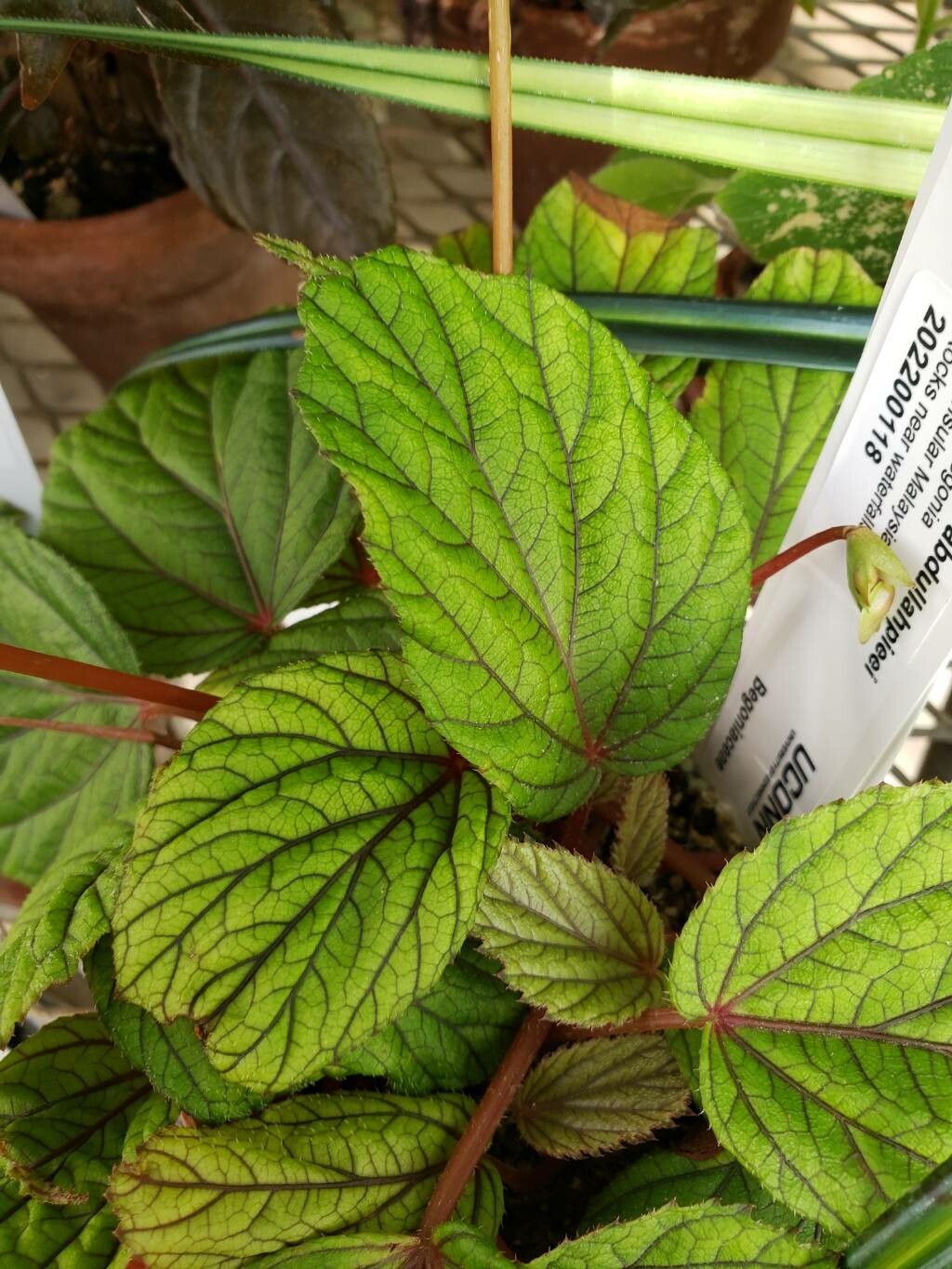
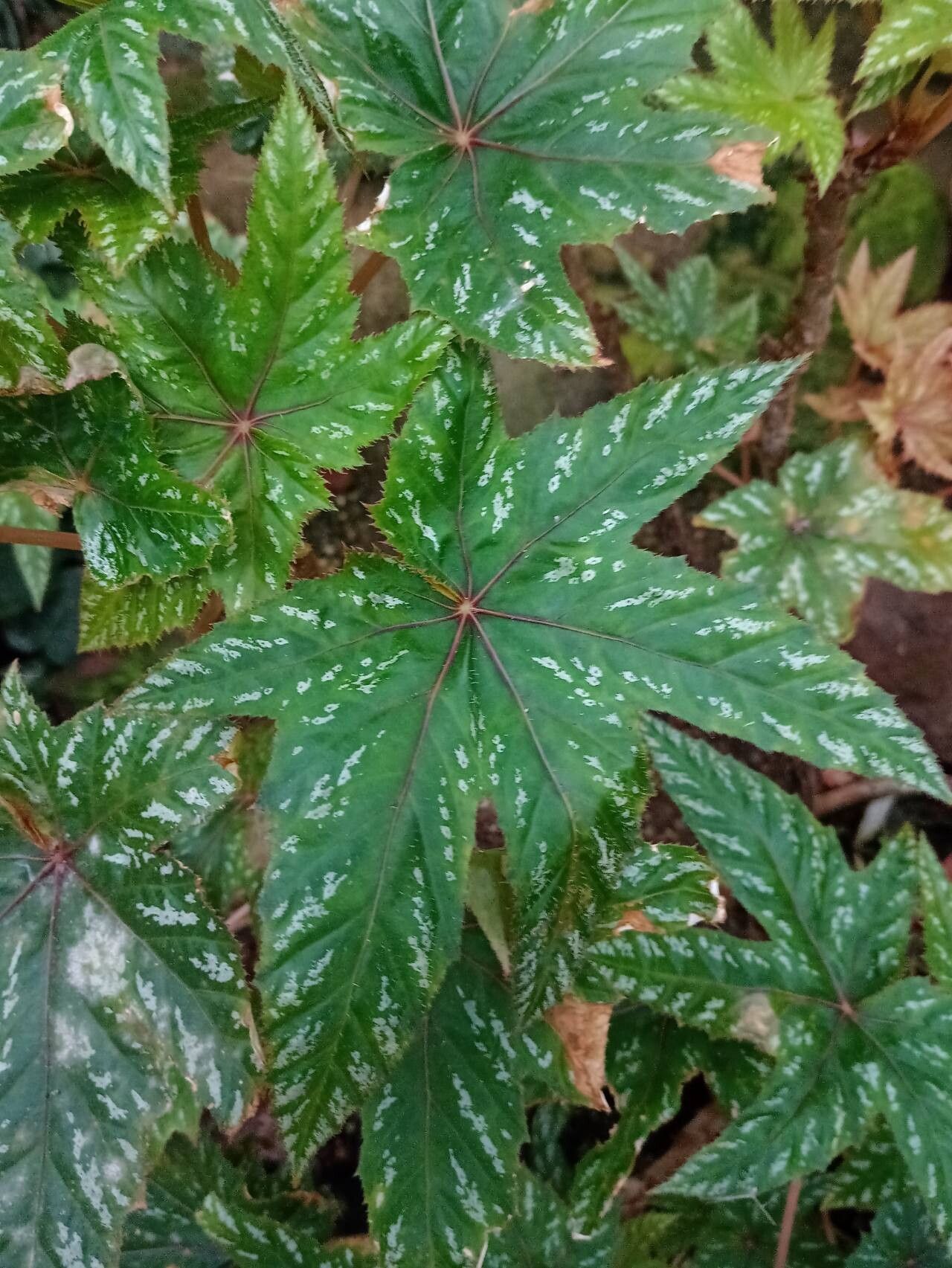
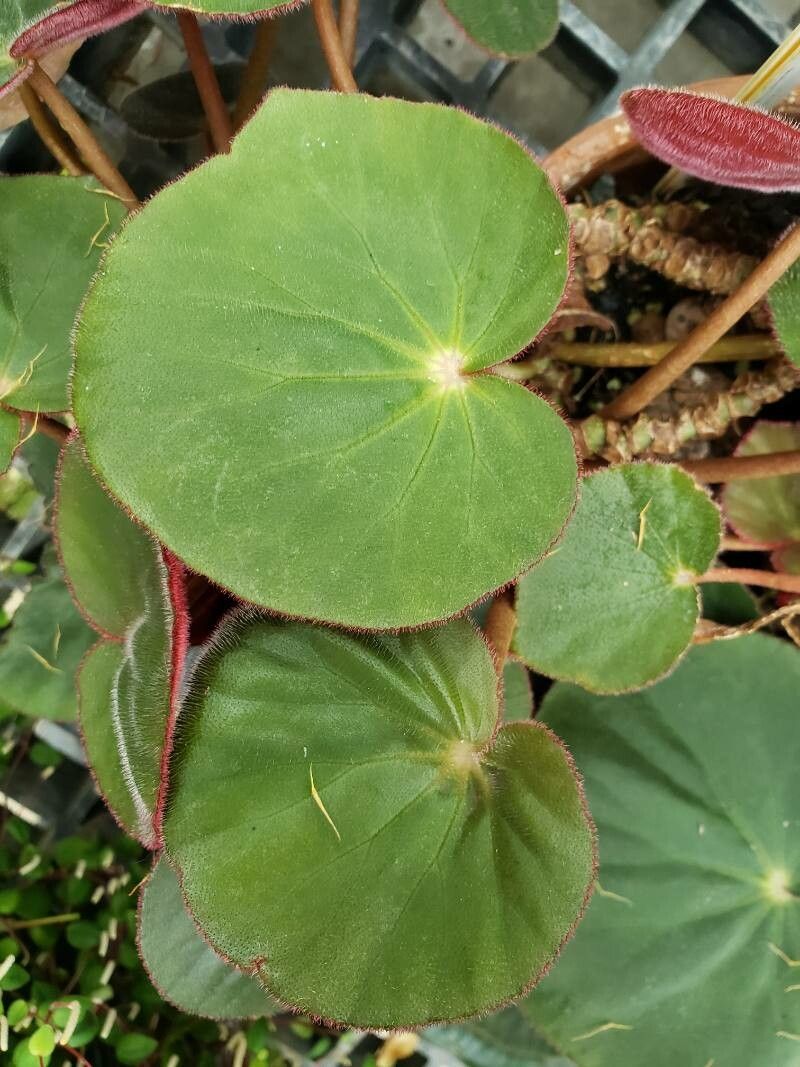
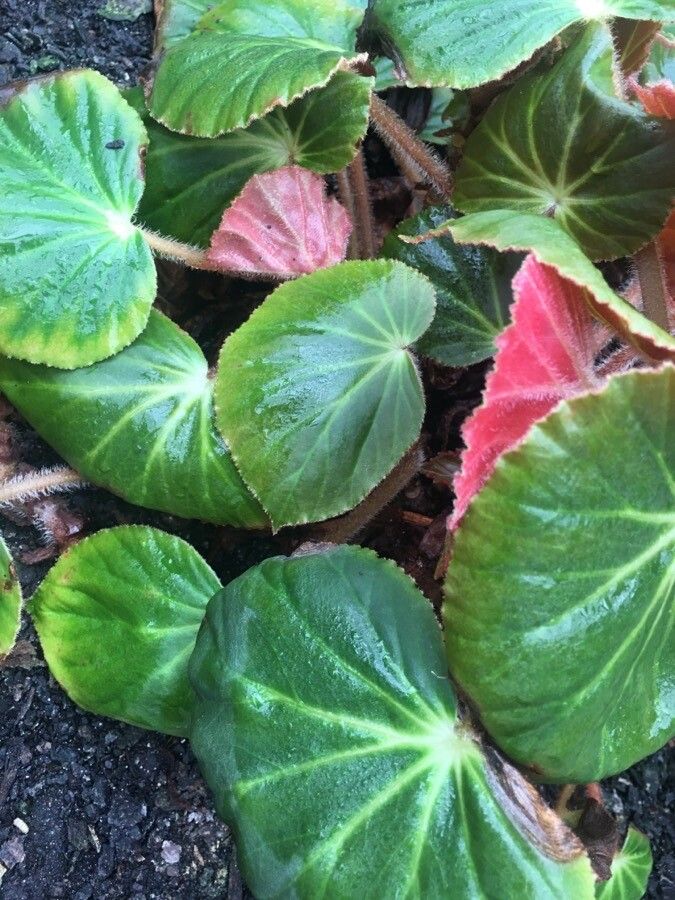
Begonia bogneri is a species of flowering plant in the family Begoniaceae, native to a single 1 ha locality on the Masoala Peninsula of Madagascar. Josef Bogner first discovered the species on January 23, 1969 in the Hiarka area, at an elevation of 50 meters (165').
Begonia bogneri is generally disease-resistant and is typically not prone to illness. However, it can develop leaf spots if light and ventilation are poor and if it is overwatered. Its care requirements are considered easy: it mainly needs regular watering and little else. Begonia bogneri is suitable for people who lack the time and energy for regular upkeep.
How to keep Begonia Bogneri.
Light
Begonia bogneri thrives in its natural habitats like the undergrowth of forests or rocky terrains where it is partially shaded. It favors the condition of partial sunlight, yet it is flexible enough to adjust to either complete sunlight or complete shade, highlighting its robust and adaptable characteristics.
Temperature
Begonia bogneri has its roots in tropical areas known for their hot and moist climate conditions. This has made it acclimatized to deal well with high heat and humidity. It has a negative response to abrupt changes in temperature, favouring a consistent temperature surrounding. Therefore, it is vital to avert oscillations in temperature when growing it indoors. It generally has a low tolerance for chilly weather, needing warm conditions to grow effectively. If the temperature of its surroundings dips excessively, the plant's growth could potentially halt, or the plant could even perish.
Fertilizer
Begonia bogneri necessitates the highest amount of fertilizer during its main growth period, primarily found in the spring, summer and the beginning of autumn. The application of fertilizer is required to supplement crucial nutrients that might be deficient in the ground, facilitating vigorous stem and root growth and enhancing the appearance of the leaves, a significant characteristic of this specific plant.
Pot & Repot
When transplanting Begonia bogneri, opt for a pot that is 1-2 inches (2.5-5 cm) larger and that has sufficient drainage. Utilize a potting mix that drains adequately. Transplant either during the spring or autumn, and make sure the root ball is positioned somewhat lower than the pot's rim. After transplanting, ensure the plant is fully watered and situated in a warm location with indirect sunlight.
Botanical profile.
- Plant Type
- Herb
- Life Cycle
- Perennial
- Hardiness Zone
- 10-12
- Mature Height
- 15 cm to 30 cm
- Mature Spread
- 20 cm to 40 cm
- Leaf Color
- Dark Green, Forest Green
- Leaf Type
- Evergreen
- Flower Size
- 1.02 cm to 2.03 cm
- Bloom Time
- All year round
- Planting Time
- Spring, Summer
- Harvest Time
- All year round
- Native Area
- Madagascar