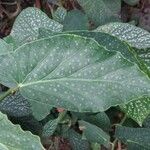
Begonia dichroa
Care Guide
💧 Water
☀️ Light Partial sun
The polka dot begonia typically needs a balance of sunlight and shade to grow properly. It does well in lower-light spots, reflecting its native setting beneath taller plants. Excessive sunlight can cause leaf burning, while too little light may impede growth and diminish leaf vigor.
🌡️ Temperature 20–37.8°C
The polka dot begonia's native growing conditions involve specific temperature needs. It does best in temperatures of 68 to 100 ℉ (20 to 38 ℃). In summer it can withstand higher heat, but should be kept out of direct sunlight. In winter it prefers 60 to 70 ℉ (15.5 to 21 ℃) and may need a humidifier to keep humidity at the right level.
💨 Humidity
🪴 Soil 6-7
🌱 Fertilizer
Polka dot begonia needs the most fertilizer during its active growth period, which takes place mainly in spring, summer, and early fall. Fertilizing supplies essential nutrients that the soil might lack, supporting healthy root and stem growth and encouraging the attractive foliage that defines this plant.
🪴 Pot & Repot 2-3 years
When repotting Polka dot begonia, choose a pot 1–2 inches (2.5–5.1 cm) larger with ample drainage. Use a well-draining potting mix. Repot in spring or fall, ensuring that the root ball is slightly lower than the rim of the flower pot. Water thoroughly after repotting and place in a warm spot with indirect sunlight.
✂️ Pruning
🌿 Propagating
🐛 Diseases & pets
☠️ Toxicity
Characteristics
- Plant Type
- Herb
- Life Cycle
- Perennial
- Genus
- Begonia
- Family
- Begoniaceae
- Hardiness Zone
- 10-12
- Mature Height
- 49 cm to 91 cm
- Mature Spread
- 10 cm to 49 cm
- Leaf Color
- Green, Red, White
- Leaf Type
- Evergreen
- Flower Color
- White, Pink
- Flower Size
- 2.54 cm
- Bloom Time
- Late spring, Early summer, Mid summer
- Planting Time
- Spring, Summer, Autumn
- Harvest Time
- Summer
- Native Area
- Brazil