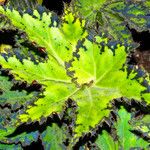
Begonia heracleifolia
بگونیا ستاره ای · Starleaf begonia · Star begonia · Star-leaf begonia · Dwarf wild begonia
Description
Source: leafsnapBegonia heracleifolia, a member of the Begoniaceae family, is a species of flowering plant native to Mexico and Central America. This perennial herbaceous plant can grow up to 1 meter tall and is known for its large, deeply lobed leaves that resemble those of the Hercules club. The leaves are dark green with red undersides and feature prominent veins. The flowers of Begonia heracleifolia are small and come in shades of pink or white. They grow in clusters on long stems that rise above the foliage, blooming from late spring to early fall. This plant thrives in partial shade or filtered sunlight and prefers well-draining soil that is kept moist but not waterlogged. It can be propagated through stem cuttings or by dividing its rhizomes. Begonia heracleifolia is popular as an ornamental houseplant due to its attractive foliage and flowers. It can also be grown outdoors in tropical regions, where temperatures do not fall below freezing. Overall, Begonia heracleifolia is an easy-to-grow plant that enhances any indoor or outdoor space with its unique foliage and delicate blooms.
Care Guide
💧 Water Every 7 days
Starleaf begonia, native to tropical forest understories, flourishes in environments with high humidity and consistently moist soil. To mimic its natural habitat, weekly watering is essential. As a popular indoor plant prized for its lush foliage, it requires careful moisture management to prevent waterlogging and maintain vibrant leaves.
What should I do if I give my Starleaf begonia too much or too little water?
If you carefully observe your plant, you can determine if it has watering issues. Overwatering can cause the leaves to turn yellow or develop yellow-brown patches at the tips. In severe cases, the leaves may droop and curl due to root rot. Indoor Starleaf begonias are particularly susceptible to overwatering, so it's important to catch it early. If you see standing water or leaf changes, stop watering and let the soil dry out for 3-5 days. To address root rot, remove the plant from its pot or the ground, wash off the roots, remove any dead roots, and replant with fresh soil. Underwatering is also a concern for Starleaf begonias. Signs include curled, pendulous, lifeless leaves; yellowing from the bottom; and browning of leaf edges. To fix underwatering, increase watering frequency and consider increasing humidity or changing the plant's location to prevent the soil from drying out too quickly.
How frequently should I water my Starleaf begonia plant?
To properly water your Starleaf begonia, it is generally recommended to water it once per week during spring. However, during the summer, you should increase the watering frequency compared to spring, and decrease it during winter. Keep in mind that the timing may vary depending on factors such as humidity, temperature, and soil type. To determine the appropriate watering schedule, use your finger or a Soil Moisture Meter to check the soil condition more frequently. The soil should be moist but not soggy. Water the plant after the top 1.5-2 inches of soil has dried out, and adjust the watering schedule based on regular soil tests. Be cautious with potted plants, as they are more susceptible to overwatering. Ensure that your pot has proper drainage holes and well-draining soil. Check the plant tray for any excess water before watering. If your Starleaf begonia is planted in the ground, rainfall will help with its growth. Aim for approximately 1 inch of rain per week. If rainfall is insufficient, additional watering once a week may be necessary. Humidity also plays a role in keeping the plant adequately watered. While the plant can tolerate normal room humidity, it prefers higher humidity, ideally around 40 to 60 percent. Increased humidity helps the soil retain moisture for longer periods. For indoor plants, consider placing a small humidifier nearby. For outdoor plants, misting the plant throughout the day can help increase humidity.
How should I water my Starleaf begonia correctly?
There are various ways to water your Starleaf begonia. If you have it in a small indoor pot, you can take it to the kitchen sink and use the faucet to water it. Hold the pot and stop watering when the excess water starts running out of the drainage holes. Avoid doing this during winter or in cold climates, as the cold water can harm the plant's roots. If your tap water has high levels of fluorine, chlorine, or salts, consider using rainwater or lake water instead. The Starleaf begonia also responds well to overhead watering or watering directly into the soil, so you can use a watering can, hose, or any other watering tool. For Starleaf begonias planted in the ground, aim the hose at the root system and let it run for more than 10 minutes to ensure proper watering. Keep in mind that the water quality is important for the Starleaf begonia, as it prefers soft, acidic water. If you have hard water, use an at-home water filter to remove minerals and salts, or let tap water sit out for 24 hours to dissipate chemicals. You can also purchase filtered water or collect rainwater, which is the preferred choice for the plant.
When is the best time to water my Starleaf begonia?
Starleaf begonias thrive in humid conditions that keep the soil consistently moist. However, it's important to prevent overwatering, which can lead to root rot. To determine when to water, wait until the top 1.5-2 inches of soil has dried out. The depth at which you should test the soil depends on the overall depth of the container. For example, if the soil depth is around 5 inches, test about 1.5 inches (about one-third of the soil depth). Increase the testing depth for larger pots. If you have a Soil Moisture Meter, use it by inserting it in the same spot. When the meter reading is around 3, it's time to water. If the reading is still higher than 3, wait for the soil to dry further before watering. Following these guidelines will help you avoid overwatering and keep your plants healthy.
☀️ Light Partial sun
Healthy development of the starleaf begonia is aided by days with ample sunlight, so long as the plant is not subjected to intense rays. Its typical growing environment is places where light is filtered through tree canopies. Too much sun can cause leaf burn, while too little light may lead to poor growth.
What are the sunlight requirements for Starleaf Begonia?
Starleaf Begonia thrives in conditions that mimic its natural environment, which includes generous sunlight exposure filtered through tree canopies. It requires about 3-6 hours of sunlight (partial sun) for optimal growth, but can also grow in full shade, with less than 3 hours of sunlight. However, too much direct sunlight can cause leaf burn, while insufficient sunlight may lead to poor growth. Observing how sunlight moves through your garden helps in choosing spots that offer a balance of light and shade, ensuring the plants' well-being.
How can artificial lighting be used for Starleaf Begonia?
When natural sunlight is insufficient, especially during winter or in less sunny spaces, artificial lighting plays a crucial role in the healthy growth of Starleaf Begonia indoor plants. LED lights are recommended because they can provide specific wavelengths of light needed by the plants. For full sun plants, 30-50W per square foot of artificial light is needed; partial sun plants require 20-30W per square foot, and full shade plants need 10-20W per square foot. The light source should be placed 12-36 inches above the plant to imitate natural sunlight, and most plants will benefit from 8-12 hours of light per day.
What symptoms indicate insufficient light for Starleaf Begonia?
When Starleaf Begonia grows in insufficient light, several symptoms can manifest, including smaller new leaves, leggy or sparse growth, faster leaf drop, slower or no new growth, lighter-colored new leaves, chlorosis, sunscald, leaf curling, wilting, and leaf scorching. These symptoms range from reduced leaf size and stretched-out appearance due to extended spaces between leaves or stems, to physical damage like bleached or necrotic areas from excessive sunlight. Addressing these symptoms early by adjusting light exposure can promote healthier plant growth.
What are the solutions for addressing light-related issues in Starleaf Begonia?
To optimize Starleaf Begonia's exposure to sunlight, it's recommended to gradually shift the plants to sunnier spots, aiming for 3-6 hours of direct sunlight daily. For indoor plants that are large or not easily movable, supplementing with artificial light for at least 8 hours daily can be effective. For outdoor plants, a gradual transition to sunnier locations helps prevent sunburn. If plants are in the ground and sunlight is obstructed, consider pruning obstructing branches or transplanting smaller plants during their dormant period to spots with more sunlight and good drainage. While parts of the plant that suffered from insufficient sunlight might not recover, new growth will be healthier with improved light conditions.
🌡️ Temperature 15–41.1°C
Starleaf begonia is native to temperate regions where temperatures range from 59 to 106 °F (15 to 41 °C). The plant favors warmth and light. For optimal growth, seasonal adjustments that align with these temperatures are recommended.
What are the essential care instructions for Starleaf begonia?
Starleaf begonia (Begonia heracleifolia) thrives in temperate regions with temperatures ranging between 59 to 106 °F (15 to 41 °C). This plant loves warmth and light, requiring seasonal adjustments to maintain optimal growth conditions. It's important to protect it from cold by bringing it indoors during autumn and positioning it near a bright window, but away from direct heat sources like heaters. To promote healthy growth, especially in winter, keeping the temperature above 15°C is key. Ensure it's never exposed to temperatures nearing -5°C as cold conditions can significantly harm the plant.
How should I care for my Starleaf begonia in low temperatures?
Starleaf begonia prefers warm environments and is susceptible to damage in low temperatures. It thrives when temperatures are kept above 15°C, and it's critical to protect it from conditions colder than -5°C. Exposure to temperatures below -10°C can lighten the leaves, which may turn brown or black and exhibit wilting or drooping after frost damage. To mitigate frost damage, remove the affected parts and move the plant to a warmer indoor space, preferably near a south-facing window for sufficient sunlight. However, remember to avoid placing it too close to heaters or air conditioning vents to prevent air dryness.
What should I do if my Starleaf begonia experiences high temperatures?
During the hotter months, it's vital to ensure the Starleaf begonia doesn't get exposed to temperatures above 41°C, as it may cause the leaves to lighten and increase susceptibility to sunburn. If temperatures climb above 45°C, immediately trim away any sunburned or dried parts of the plant. Relocate the plant to a shade especially during the intense midday and afternoon sun. Enhance the moisture of the soil by watering the plant in the early morning and evening. This will help keep the plant in a healthy state despite the high temperatures.
💨 Humidity normal (40-60%)
This plant will thrive in moderate humidity, which is probably the level in your home. However, misting it a few times a week can be very beneficial. Make sure the room has good ventilation.
🪴 Soil 5-6
🌱 Fertilizer
Proper fertilization is vital for the health and appearance of Starleaf begonia. Fertilize Starleaf begonia in summer, repeating the application monthly throughout the season. Nutrients supply the energy for growth and help maintain the plant's parts. Fertilization improves the Starleaf begonia's flower display, helping to ensure the best blooms.
Why should I add fertilizer to my Starleaf begonia?
Fertilizer and soil nutrients play a crucial role in fueling the growth of your Starleaf begonia. Plants, including the Starleaf begonia, rely on these nutrients found in the soil to develop new plant material and maintain their existing components. Specifically for the Starleaf begonia, fertilization is necessary to promote vibrant and attractive flowers. As the main attraction of this plant, gardeners typically strive to enhance the appearance of the flowers. Fertilization is a dependable method to ensure that your Starleaf begonia produces the most impressive blooms.
When should I fertilize my Starleaf begonia?
The Starleaf begonia goes through two main phases each year. The first phase is the dormant phase, which occurs during the winter. During this phase, the plant has minimal new growth. The second phase is the active growth phase, which happens in the spring and fall. This is when your Starleaf begonia will need fertilization the most. It's generally recommended to start fertilizing your Starleaf begonia in the spring and continue once a month throughout the rest of spring and most of the summer. As fall approaches, you can gradually reduce the frequency of fertilization.
When is it better not to give fertilizer to my Starleaf begonia?
To support the growth of your Starleaf begonia without causing root burn, it's important to understand its growth patterns. During the spring and summer, when the plant is actively growing, it will benefit from additional nutrients. However, in the fall and winter, the plant enters a dormancy stage, during which no fertilization is required.
What kind of fertilizer should I use for my Starleaf begonia?
To properly nourish your Starleaf begonia, it's best to use a fertilizer that has a well-balanced mix of the three main plant nutrients, with slightly more phosphorus. Another option is to enhance the soil by incorporating organic materials like compost, worm castings, and manure. You have various choices when it comes to fertilizers, all of which can effectively benefit your Starleaf begonia. However, liquid and powdered forms are among the most recommended. Regardless of your choice, remember to dilute the fertilizer and apply it when watering your Starleaf begonia.
How can I make my Starleaf begonia grow better?
First, find a suitable fertilizer and determine the ideal fertilization schedule for your Starleaf begonia. Once you have this information, you can learn how to apply the fertilizer. The most reliable method is to mix your liquid fertilizer with water before applying it to the soil. Each fertilizer may have different feeding instructions, so it's best to follow the manufacturer's guidance. These instructions should also include how to properly dilute the fertilizer to avoid overfertilization. Mixing the fertilizer with water is a simple process. Once you've completed this step, all you have to do is pour the mixture into the soil where your Starleaf begonia is planted.
🪴 Pot & Repot 2-3 years
When repotting Starleaf begonia, select a pot 1-2 inches (2.5–5.1 cm) larger that offers good drainage. Use a well-draining potting mix. Repot in spring or fall, making sure the root ball sits slightly lower than the rim of the flower pot. Water thoroughly after repotting and keep it in a warm spot with indirect sunlight.
✂️ Pruning
To maintain the shape and encourage growth of a Starleaf Begonia, regular pruning is essential, ideally from early to late spring. Start by removing any dead stems and thinning out congested areas to improve air circulation. Using clean, sharp tools helps minimize stress on the plant, prevents disease, and supports healthy blooms.
🌿 Propagating
🐛 Diseases & pets
☠️ Toxicity
Characteristics
- Plant Type
- Herb
- Life Cycle
- Perennial
- Genus
- Begonia
- Family
- Begoniaceae
- Hardiness Zone
- 8-13
- Mature Height
- 46 cm
- Mature Spread
- 91 cm
- Leaf Color
- Green, Red
- Leaf Type
- Semi-evergreen
- Flower Color
- Pink, White
- Flower Size
- 1.02 cm to 2.03 cm
- Bloom Time
- Late winter, Spring
- Planting Time
- Spring, Autumn
- Harvest Time
- Late spring, Summer
- Native Area
- Belize, Honduras, Mexico, Guatemala, El Salvador, Costa Rica