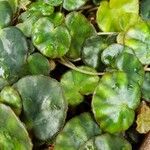
Begonia hydrocotylifolia
Fire King Begonia · Begonia
Description
Source: leafsnapThe Pennywort Begonia (Begonia hydrocotylifolia), also known as the Miniature Pond Lily, Cane Begonia, Water Pennywort, Dollarweed, or Marsh Pennywort, is a little rhizomatous Begonia found only in Mexico's damp woodlands. On the upper surface, it features tiny, meaty, lustrous dark green leaves. The leaves have a variegated look because the veins are darker and are generally asymmetrical. The leaves' undersides are maroon in color. It has a pink blossom. Pennywort Begonia is its common name. In the wild, these terrestrial plants are often upright-stemmed, rhizomatous, or tuberous. The plants are monoecious, having unisexual male and female blooms on the same plant; the male has many stamens, while the female has a big inferior ovary and two to four branching or twisted stigmas.
Care Guide
💧 Water Every 3-5 days
Pennywort Begonia thrives in humid environments and prefers consistent moisture, benefiting from weekly watering. Although it can endure short periods of drought, it's crucial to maintain adequate humidity during the growing season. This is especially important when grown indoors to mimic its tropical origins.
☀️ Light Partial sun
Pennywort Begonia naturally grows in settings like forest understories or rocky sites, where it is subject to natural shade. Its favored light condition is partial sun, although it can adjust to full sun or full shade, showing its versatile and hardy nature.
🌡️ Temperature 20–37.8°C
Pennywort Begonia comes from tropical areas, where the climate is generally warm and humid. Consequently, it is well suited to high temperatures and humidity. It does not tolerate abrupt temperature changes and prefers a steady temperature, so indoor temperature swings should be avoided. It typically cannot endure cold and needs warmer conditions to grow. If the surrounding temperature becomes too low, the plant’s growth may stop or it could die.
💨 Humidity
🪴 Soil 5-6
🌱 Fertilizer Every 30 days
Proper fertilization is vital for the health and appearance of Pennywort Begonia. Fertilize Pennywort Begonia in summer, repeating monthly throughout the summer. Nutrients power growth and help maintain the plant’s tissues. Fertilization improves Pennywort Begonia’s flower display, ensuring the best blooms.
🪴 Pot & Repot 2-3 years
When repotting Pennywort Begonia, select a pot 1–2 inches (2.5–5.1 cm) larger with good drainage. Use a well-draining potting mix. Repot in spring or fall, making sure the root ball sits slightly below the rim of the flower pot. Water thoroughly after repotting and place it in a warm spot with indirect sunlight.
✂️ Pruning
To encourage new growth and prevent disease, prune the withered flowers and leaves of the pennywort Begonia immediately after it blooms. At the end of the season, remove any branches that are not growing well. Pruning during the cool fall months helps promote branching. During this time, focus on removing the apical buds and the first one or two healthy shoots.
🌿 Propagating
🐛 Diseases & pets
☠️ Toxicity
This lovely flowered shrub is poisonous to both humans and animals. Wax begonia subterranean sections are toxic. Meanwhile, tuberous begonia tubers contain a poison.
Characteristics
- Plant Type
- Herb
- Life Cycle
- Perennial
- Genus
- Begonia
- Family
- Begoniaceae
- Hardiness Zone
- 10-11
- Mature Height
- 15 cm to 30 cm
- Mature Spread
- 15 cm to 30 cm
- Leaf Color
- Green
- Leaf Type
- Semi-evergreen
- Flower Color
- Pink
- Flower Size
- 2.54 cm
- Bloom Time
- All year round
- Planting Time
- Spring, Autumn
- Harvest Time
- All year round
- Native Area
- Mexico