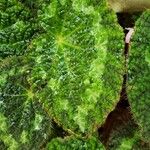
Begonia masoniana
Iron-cross begonia
Description
Source: leafsnapBegonia masoniana, commonly known as the Iron Cross Begonia, is a popular houseplant native to China and Vietnam. This perennial plant belongs to the Begoniaceae family and can grow up to 30 cm in height. It is easily recognizable by its dark green leaves adorned with silver markings that form an iron cross pattern. The Iron Cross Begonia thrives in bright but indirect light and well-draining soil. It requires moderate watering, allowing the soil to dry out slightly between waterings. The plant can be propagated through stem cuttings or division. Known for its unique foliage, Begonia masoniana is a stunning addition to any indoor garden or houseplant collection. Its striking appearance makes it a popular choice for ornamental purposes and air purification. In summary, this beautiful plant requires minimal care but offers maximum visual impact with its stunning foliage. The Iron Cross Begonia is an excellent choice for both novice gardeners and experienced horticulturists alike!
🌳 Renowned for its eye-catching foliage, iron Cross Begonia is frequently valued as an ornamental plant that brings a sense of exotic elegance to indoor spaces. The distinctive iron-cross marking on its leaves makes it a favored pick for botanical enthusiasts who want to expand their collections. Although it is not chiefly known for other uses, its visual attractiveness secures its role as a living art piece and can potentially support mental well-being by enhancing the ambiance of homes and offices.
🎭 Fairness, tranquility, concord, personal relationships
Care Guide
💧 Water Every 7 days
The Iron Cross Begonia flourishes in humid tropical climates and prefers constant moisture. Although it can tolerate some drought, watering it weekly is ideal for its health and vigor. When grown indoors, it is essential to balance watering with proper soil aeration to ensure the optimal growth of this evergreen plant.
What should I do if I give my Iron Cross Begonia too much or too little water?
If you're trying to figure out if you're over- or underwatering your plant, careful observation is key. Here are some signs of overwatering to look out for: a. Yellow leaves with yellow-brown patches at the tips: This indicates that the plant is getting too much water. b. Severe drooping and curling of the leaves: This is a more serious sign of overwatering and can be caused by root rot. The plant is struggling to absorb more water. For indoor Iron Cross Begonias, overwatering is common as they can't tolerate standing water. It's best to detect the issue early and stop watering if you notice standing water or leaf changes. Give the soil 3-5 days to dry out. If you see signs of root rot, take immediate action. Remove the plant from the pot or ground, wash off the roots, and remove any dead or decaying roots while preserving as much healthy root material as possible. Replace the old soil with fresh soil. While overwatering is a concern, underwatering is just as problematic for Iron Cross Begonias. They are highly sensitive to drought conditions. Signs of underwatering include curled, lifeless leaves, yellowing from the bottom, and browning edges. Fortunately, underwatering is generally easier to fix. Simply increase the frequency of watering. If the plant is drying out quickly, it may be due to low humidity. Increasing humidity can help keep the soil moist for longer. Depending on the location, consider adjusting the plant's position to provide adequate sunlight and prevent excessive evaporation.
How much water does my Iron Cross Begonia need?
To ensure proper watering for your Iron Cross Begonia, here are a few guidelines. During spring, water the plant about once per week. However, during summer, increase watering frequency compared to spring, and decrease it during winter. Remember that factors like humidity, temperature, and soil type can affect watering needs. To determine the right frequency, regularly check the soil using your finger or a Soil Moisture Meter. Keep the soil moist but not soggy, watering after the top 1.5-2 inches have dried out. For potted plants, be cautious as they are more prone to overwatering. Use pots with drainage holes and well-draining soil, ensuring that there's no excess water in the tray. If your Iron Cross Begonia is in the ground, rainfall is beneficial. Aim for about 1 inch of rain per week, but supplement with additional watering if rainfall is insufficient. Humidity is also important, with the plant preferring around 40 to 60 percent. Increase indoor humidity with a humidifier and mist outdoor plants throughout the day.
How should I water my Iron Cross Begonia correctly?
There are several ways to water your Iron Cross Begonia effectively. If your plant is in a small pot indoors, you can bring it to the kitchen sink and use the faucet to add water. By holding the pot, you can easily tell when the water starts to flow through the drainage holes, indicating that it's adequately watered. However, avoid doing this during winter or in cold climates as the cold temperature can harm the plant's roots. If your tap water has a high amount of fluorine, chlorine, or salts, it's best to consider using rainwater or lake water instead. Additionally, you can use a watering can, hose, or any tool of your choice to water the Iron Cross Begonia. When watering the plant in the ground, aim the hose at the root system and let the water flow for more than 10 minutes to ensure thorough watering, especially when there's insufficient rainfall. It's important to note that the Iron Cross Begonia is sensitive to the water you use. They prefer soft, acidic water, so using an at-home water filter or allowing tap water to sit for 24 hours can help remove minerals and chemicals. Alternatively, you can purchase filtered water for your plants. The ideal pH for the Iron Cross Begonia is 6.5, making rainwater a better choice. Whenever it's raining, consider collecting some rainwater to use for your Iron Cross Begonia.
When is the best time to water my Iron Cross Begonia plant?
Iron Cross Begonia requires humid conditions to keep the plants moist. It is important to prevent the plants from drying out completely between waterings as this can lead to root rot. To determine when to water the plant, wait until the top 1.5-2 inches of soil has dried out. The depth of testing should be about one-third of the soil depth, so for a 5-inch soil depth, test around 1.5 inches. Larger pots may require more testing. If you have a Soil Moisture Meter, insert it in the same position as before and water when the meter reads around 3. If the reading is higher than 3, wait until the soil dries out further before watering again. Following these guidelines will help prevent overwatering.
☀️ Light Partial sun
The iron Cross Begonia prefers gentle sunlight but can also do well in shadier surroundings. Its roots in forest habitats account for this tolerance. However, excessive sun can damage it, causing scorching, and insufficient light can inhibit its growth.
What are the sunlight requirements for Iron Cross Begonia?
Iron Cross Begonia thrives in partial sunlight, requiring about 3-6 hours of sunlight daily, but it can also grow in full shade, which is described as receiving less than 3 hours of direct sunlight each day. It's essential to watch how sunlight moves through your garden to find spots that offer the right balance of light and shade suitable for your plants. The Iron Cross Begonia's forest origin makes it adaptable to gentle sunlight and shadier conditions, although excessive sunlight can cause scorching, and insufficient light might stunt its growth.
How can artificial lighting be used for Iron Cross Begonia?
Artificial lighting can be vital for Iron Cross Begonia, especially when natural sunlight is insufficient. It is advisable to choose the right type of artificial light, with LED lights being a popular choice because they can be customized to provide specific wavelengths needed by the plants. Full sun plants require 30-50W/sq ft, partial sun plants need 20-30W/sq ft, and full shade plants require 10-20W/sq ft of artificial light. Positioning the light source 12-36 inches above the plants and ensuring they receive 8-12 hours of light per day mimics natural sunlight conditions and promotes healthier growth.
What are the symptoms of light deficiency in Iron Cross Begonia?
Symptoms of light deficiency in Iron Cross Begonia include leggy or sparse growth where the spaces between leaves or stems become longer, leading to a thinned appearance. Faster leaf drop and lighter-colored new leaves indicate a struggle with low light, as does chlorosis, the condition in which leaves lose their green color and turn yellow. Additional symptoms include sunscald from intense sun exposure, leaf curling, wilting, and leaf scorching, which all signify that the plant's light conditions need to be reassessed and adjusted for optimal growth.
What solutions are available for dealing with Iron Cross Begonia's light-related issues?
To address light-related issues in Iron Cross Begonia, gradually acclimatize the plant to changing light conditions by shifting it to sunnier spots each week until it receives 3-6 hours of direct sunlight daily. If the plant is large or not easily movable, consider supplemental artificial lighting, keeping a desk or ceiling lamp on for at least 8 hours a day, or using professional plant grow lights. For outdoor plants, move them to a sunnier location gradually to avoid sunburn. Pruning trees or branches that obstruct light and transplanting smaller plants to sunnier locations with good drainage are also effective solutions. Remember, parts of the plant that suffered due to insufficient light may not recover, but new growth should be healthy with increased light exposure.
🌡️ Temperature 20–37.8°C
The iron Cross Begonia comes from Asia's warm, humid regions and thrives at temperatures between 20 and 38 ℃ (68 and 100 ℉). It favors bright, indirect light and consistently moist soil to preserve its lush appearance. In winter, reduce the temperature to a cooler range of 13 to 18 ℃ (55 to 65 ℉) to support healthy growth.
What is the native environment of the Iron Cross Begonia?
The Iron Cross Begonia, or Begonia masoniana, is native to the warm and humid environments of Asia. It thrives in conditions where temperatures range between 20 to 38°C (68 to 100°F), enjoying bright, indirect light and moist soil. During the cooler months of winter, adjusting the temperature to a cooler range of 13 to 18°C (55 to 65°F) is recommended to promote healthy growth. It's important to protect the plant from cold temperatures by bringing outdoor plants indoors during autumn and positioning them near a bright window but away from direct heat sources.
How does low temperature affect Iron Cross Begonia and what are the solutions?
Iron Cross Begonia prefers warm temperatures and does not tolerate cold well. It thrives best when kept above the minimum suitable growth temperature. During winter, maintaining a temperature above the lower tolerance limit is crucial. Exposure to temperatures below the growth limit can cause the leaves to lighten in color and, following frost damage, turn brown or black with symptoms including wilting and drooping. To mitigate frost damage, trim off the frost-damaged parts and immediately move the plant to a warmer indoor setting. Placing it near a south-facing window ensures ample sunlight, but avoid putting it too close to heaters or air conditioning vents to prevent air dryness.
What should be done if Iron Cross Begonia is exposed to high temperatures?
During the summer, it's crucial to keep Iron Cross Begonia below the maximum suitable growth temperature. Exposure to temperatures exceeding the maximum tolerable growth temperature can cause the leaves to lighten and increase the risk of sunburn. To address heat stress, trim away any sunburned or dried-up parts of the plant. Then, move the plant to a shaded location, particularly away from the harsh midday and afternoon sun. Ensuring the plant is watered in the morning and evening will help maintain soil moisture, offering some relief from high temperatures.
💨 Humidity normal (40-60%)
This plant will thrive in moderate humidity, which is probably the level in your home. However, misting it a few times a week can be very beneficial. Make sure the room has good ventilation.
🪴 Soil 5-6
🌱 Fertilizer
The Iron Cross Begonia needs the most fertilizer during its active growth period, which falls mainly in spring, summer, and early fall. Fertilizing supplies essential nutrients that the soil may lack, encouraging healthy root and stem growth and maintaining the attractive foliage that is a key feature of this plant.
Why should I put fertilizer on my Iron Cross Begonia?
All plants, including the Iron Cross Begonia, need soil nutrients to grow. However, it's not always guaranteed that the soil in your garden will have all the necessary nutrients. To ensure your plants have the nutrients they need, you can use fertilization and soil amendments. For the Iron Cross Begonia, fertilizer is particularly important as it helps the roots and stems develop healthily throughout the growing season. Fertilizing this plant also enhances the appearance of its foliage, which is its main ornamental feature.
What is the ideal time to fertilize my Iron Cross Begonia plant?
During the active growth phase, which is usually in the spring, summer, and early fall, the Iron Cross Begonia needs the most fertilizer. After winter ends, you should feed the plant every two to four weeks. Keep up with this schedule until fall arrives. At that point, gradually reduce the amount of fertilizer until you stop completely in preparation for the winter when the plant's growth rate significantly decreases.
When should I not add fertilizer to my Iron Cross Begonia?
For most of the year, including spring, summer, and most of the fall, it is important to regularly feed your Iron Cross Begonia. However, there are a couple of exceptions to this. If you notice that your begonia has already received too much fertilizer or if you have fertilized it incorrectly, causing fertilizer burn or other issues, you will need to fix these problems before returning to a regular feeding schedule. The only time you should not fertilize your Iron Cross Begonia is during winter, especially if you grow it indoors in a cold area. During this time, the plant enters a dormant phase, so feeding it is not necessary or helpful for its growth. In fact, it is highly likely to cause fertilizer burn.
Which kind of fertilizer does my Iron Cross Begonia need?
To properly nourish an Iron Cross Begonia, it requires a fertilizer with a specific blend of nutrients in relatively low amounts. The ideal fertilizer for this plant would have an N-P-K ratio of 3-1-2. However, in some cases, a general-purpose fertilizer with an even blend can also work well. Regardless of the type of fertilizer used, the ratio number representing the volume of each nutrient should not exceed 10. There are two options when it comes to the form of fertilizer: granular or liquid. If you choose a liquid-based fertilizer, it is usually best to dilute its strength by half. Granular fertilizer, on the other hand, has minimal drawbacks. However, it is often more sensible to utilize liquid fertilizer, especially if you supply water to your Iron Cross Begonia while feeding it.
How should I fertilize my Iron Cross Begonia?
When you buy fertilizer for your Iron Cross Begonia, it will usually come with instructions for how to apply it. In general, it's best to fertilize your begonia just before or while you are watering the soil to avoid damaging the roots. If you are using slow-release granular fertilizer, sprinkle it on the soil and water it immediately after. For liquid-based fertilizer, dilute it with water, apply it to the soil, and then give the plant a bit more water. In the spring and fall when the begonia's growth is picking up or slowing down, it's especially important to dilute the fertilizer by at least half.
🪴 Pot & Repot 2-3 years
When repotting an Iron Cross Begonia, pick a pot 1-2 inches (2.5–5.1 cm) larger with good drainage. Use a well-draining potting mix. Repot in spring or fall, making sure the root ball sits slightly lower than the rim of the flower pot. Water thoroughly after repotting and put it in a warm location with indirect sunlight.
✂️ Pruning
Pruning Iron Cross Begonia from early to late spring encourages dense growth and removes damaged leaves. Light maintenance trimming enhances airflow, reduces pests, and boosts vigorous growth. This approach leads to healthier plants with more attractive foliage and prevents the shock associated with heavy pruning.
🌿 Propagating
🐛 Diseases & pets
☠️ Toxicity
Characteristics
- Plant Type
- Herb
- Life Cycle
- Perennial
- Genus
- Begonia
- Family
- Begoniaceae
- Hardiness Zone
- 10-12
- Mature Height
- 30 cm to 46 cm
- Mature Spread
- 30 cm to 46 cm
- Leaf Color
- Green, Brown
- Leaf Type
- Evergreen
- Flower Color
- Pink, White
- Flower Size
- 2.54 cm
- Bloom Time
- All year round
- Planting Time
- Spring, Autumn
- Harvest Time
- All year round
- Native Area
- Vietnam, China