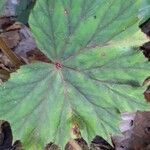
Begonia minor
بگونیا عروس · Minor begonia · Begonias
Description
Source: leafsnapBegonia minor, commonly known as the lesser begonia, is a small herbaceous plant belonging to the Begoniaceae family. Native to South America, it can be found in countries such as Brazil, Peru, and Bolivia. Typically, the plant grows up to 30 cm in height and features small, heart-shaped green leaves with serrated edges. The plant blooms from spring through summer, producing delicate pink or white flowers. These flowers, usually small with five petals, grow in clusters on long stems above the foliage. Begonia minor prefers well-draining soil and regular watering but can tolerate periods of drought. It thrives in partial shade or filtered sunlight and can also grow well indoors under bright, indirect light. Commonly used as an ornamental houseplant, Begonia minor is appreciated for its attractive foliage and delicate blooms. Its ease of care makes it an ideal choice for beginners or those seeking low-maintenance plants. Overall, Begonia minor is a charming little plant that adds beauty and interest wherever it grows!
Care Guide
💧 Water Every 7 days
Jamaica wood sorrel thrives in consistently moist environments and prefers to be watered weekly. While it shows moderate drought tolerance, it flourishes best in well-draining soil that mimics its native loamy habitat. Often grown indoors, Jamaica wood sorrel benefits from adequate humidity to maintain its health and ornamental appeal.
What should I do if I give too much or too little water to my Jamaica wood sorrel?
Observing your plant closely can help you determine if you are experiencing watering issues. Overwatering can cause the leaves to turn yellow and develop yellow-brown patches at the tips. In severe cases, the leaves may droop and curl due to root rot, which hinders water absorption. If you are growing Jamaica wood sorrel indoors, be cautious as it cannot withstand standing water. If you notice signs of overwatering, such as standing water or leaf changes, stop watering and allow the soil to air out for 3-5 days. If root rot is present, act quickly by removing the plant from its container or ground, washing off the roots, removing dead or decaying ones, and replacing the soil. Additionally, underwatering can be detrimental to Jamaica wood sorrel, causing curled, yellowing, and browning leaves. Increasing the frequency of watering and adjusting humidity levels can amend underwatering, while relocating the plant to a spot with less sunlight or excessive heat can prevent excessive evaporation.
How frequently do I need to water my Jamaica wood sorrel?
To properly water your Jamaica wood sorrel, here are some guidelines: 1. In general, water the plant once per week during spring. 2. Adjust the watering frequency during different seasons - increase it in the summer and decrease it in the winter. 3. Consider factors like humidity, temperature, and soil type that can affect the watering needs. 4. Check the soil condition regularly using your finger or a Soil Moisture Meter. Keep the soil moist but not soggy. 5. Water the plant after the top 1.5-2 inches of soil has dried out, and create a watering schedule based on these tests. 6. Potted plants are more prone to overwatering, so use a pot with drainage holes and well-draining soil. Ensure there's no excess water in the plant tray. 7. If your Jamaica wood sorrel is planted in the ground, rainfall usually provides sufficient water. Aim for about 1 inch of rain per week. If rainfall is low, supplement with additional watering. 8. Humidity also affects watering needs. If possible, maintain higher humidity levels (around 40 to 60 percent) for better plant growth. 9. Increase indoor humidity by placing a small humidifier near the plant, and mist outdoor plants regularly throughout the day.
How should I water my Jamaica wood sorrel correctly?
To adequately water your Jamaica wood sorrel plant, there are several options to consider. If you have an indoor pot, simply bring it to your kitchen sink and use the faucet to add water. Hold the pot in your hands and pause when the water starts to drain from the pot's holes. Avoid watering during winter or in cold climates as it can harm the plant's roots. In cases where the tap water contains high levels of fluorine, chlorine, or salts, consider using rainwater or lake water instead. Additionally, the Jamaica wood sorrel can benefit from overhead watering or watering directly into the soil using a watering can, hose, or any suitable tool. When the plant is in the ground and there is insufficient rain, aim the hose at the root system and allow it to water for at least 10 minutes. To ensure optimal conditions for the Jamaica wood sorrel, use soft, acidic water with a pH of 6.5. If you have hard water, consider using a water filter to remove minerals and salts or let the tap water sit for 24 hours to diminish chemical content. Alternatively, you can purchase filtered water or collect rainwater to provide the best watering option for your Jamaica wood sorrel plant.
When is the best time to water my Jamaican wood sorrel plant?
Jamaica wood sorrel prefers humid conditions to keep the plants moist, but they should not be constantly soggy as this can cause root rot. To prevent overwatering, it is recommended to wait until the top 1.5-2 inches of soil has dried out before watering. The depth at which the soil should be tested depends on its overall depth. For example, if the soil depth is around 5 inches, it is advised to test about 1.5 inches (about one-third of the soil depth), or more for larger pots. If you have a Soil Moisture Meter, you can easily determine when to water by inserting it into the soil. If the meter reads around 3, it is time to water. If the reading is still higher than 3, you should wait a little longer until the soil dries out. By following these guidelines, you can avoid overwatering your plants.
☀️ Light Partial sun
The jamaica wood sorrel thrives with moderate sunlight, though it can cope in dimmer conditions. Coming from habitats where sunlight is often diffused, it also tolerates low-light situations. Excessive sun can harm it, while insufficient light may impede its growth and flowering.
What are the sunlight requirements for Jamaica wood sorrel?
Jamaica wood sorrel thrives under moderate sun exposure but can also adapt to less illuminated environments, indicative of its origin in areas with filtered sunlight. It is crucial to find the perfect balance of light for this plant, as too much sun can cause damage, while insufficient light might impede its growth and flowering. When considering where to place your wood sorrel, keep in mind that it requires about 3-6 hours of sunlight (partial sun) or less than 3 hours (full shade). Observing how sunlight moves through your garden will help in choosing spots that offer the ideal mix of light and shade, ensuring your plants' wellbeing.
How can I support my indoor Jamaica wood sorrel with artificial lighting?
In scenarios where natural sunlight is lacking, especially during winter or in less sunny areas, artificial lighting can be a significant boon for growing Jamaica wood sorrel indoors. It promotes healthier and faster growth. Consider LED lights as they can be tailored to provide specific wavelengths needed by your plants, mimicking natural light conditions. For full sun plants, aim for 30-50W per square foot, partial sun plants require 20-30W per square foot, and full shade plants need 10-20W per square foot of artificial light. Position the light source 12-36 inches above the plant and ensure it receives 8-12 hours of light daily to simulate the natural day length optimal for most plant species.
What are the symptoms of inadequate light for indoor Jamaica wood sorrel?
When Jamaica wood sorrel doesn't receive enough light, several symptoms can manifest, indicating light deficiency. You might notice smaller new leaves, leggy or sparse growth as the plant stretches towards the light source, faster dropping of older leaves as a conservation measure, and a halt in new growth as the plant goes into survival mode. Additionally, new leaves may appear lighter in color or even develop chlorosis, turning yellow due to a lack of chlorophyll. Excessive light exposure can lead to sunscald, leaf curling, wilting, leaf scorching, and the breakdown of chlorophyll, negatively affecting the plant’s ability to photosynthesize. Addressing these symptoms early by adjusting light conditions is crucial for the plant's health.
How can I optimize growth conditions for my Jamaica wood sorrel?
To ensure optimal growth for Jamaica wood sorrel, whether indoor or outdoor, gradually introduce them to more sunlight by increasing their exposure to direct sunlight by a few hours each week until they achieve 3-6 hours of direct sunlight daily. This gradual adaptation helps prevent sunburn or shock. For indoor plants that are large or not easily moved, consider using artificial lighting; a desk or ceiling lamp left on for at least 8 hours daily, or professional plant grow lights can provide sufficient light. Outdoors, move your plants to sunnier spots gradually to avoid abrupt changes in light intensity. Reduce obstructions, such as pruning trees that block sunlight, or transplant smaller plants during their dormant period to locations with more sunlight and good drainage. Remember, though parts of the plant affected by insufficient light may not recover, new growth should be healthy after adjusting light exposure.
🌡️ Temperature 20–37.8°C
Jamaica wood sorrel comes from tropical areas where the climate is usually warm and humid. Consequently, it is suited to high heat and humidity. It is sensitive to sudden temperature shifts and prefers a steady temperature, so avoiding indoor temperature swings is important. It typically cannot tolerate cold and needs warmer conditions to grow. If the temperature in its environment falls too much, the plant may stop growing or even die.
What is Jamaica wood sorrel?
Jamaica wood sorrel, which is also known by its botanical name Begonia minor, is a plant species. Detailed information about its essential characteristics, symptoms associated with it, and any additional notes have not been provided in this context.
💨 Humidity normal (40-60%)
This plant will thrive in moderate humidity, which is probably the level in your home. However, misting it a few times a week can be very beneficial. Make sure the room has good ventilation.
🪴 Soil 5-6
🌱 Fertilizer
Proper fertilization is essential for Jamaica wood sorrel's health and appearance. Apply fertilizer during the summer, repeating the application monthly throughout the season. Nutrients feed growth and preserve the plant's parts. Fertilization enhances Jamaica wood sorrel's flower display, ensuring the best blooms.
🪴 Pot & Repot 2-3 years
Repot Jamaican wood sorrel every 2-3 years during the spring. Use a slightly larger container with good drainage. Ensure it receives bright, indirect light and keep the soil moist but well-drained to support its recovery and ongoing health after repotting. This care will accommodate its moderate growth in a bush-like form.
✂️ Pruning
Jamaica wood sorrel adds charm to any garden with its vibrant foliage and delicate flowers. To promote healthy growth and good air circulation, it is best to prune the plant in early spring or late winter. When pruning, aim to maintain its natural shape and be careful not to over-prune, as this could reduce blooming. These practices align with the guidelines of the RHS and the American Horticultural Society.
🌿 Propagating
🐛 Diseases & pets
☠️ Toxicity
Characteristics
- Plant Type
- Herb
- Life Cycle
- Perennial
- Genus
- Begonia
- Family
- Begoniaceae
- Hardiness Zone
- 9-11
- Mature Height
- 25 cm to 40 cm
- Mature Spread
- 20 cm to 30 cm
- Leaf Color
- Dark Green, Olive Drab
- Leaf Type
- Evergreen
- Flower Color
- Pink, White
- Flower Size
- 2.03 cm to 3.05 cm
- Bloom Time
- All year round
- Planting Time
- Spring, Autumn
- Harvest Time
- All year round
- Native Area
- Jamaica