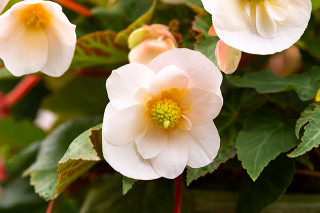
Begonia odorata
Sweet Begonia
Description
Source: leafsnapThe Begonia Coccinea is another name for the Scarlet Begonia. It is a magnificent show-stopper with brilliant crimson blossoms. Although the red scarlet begonia is the most common kind, other hues are also available. The pink and orange-scarlet begonias are just two well-known examples. The Scarlet Begonia is mostly built up of its flowers, much like the Non-Stop Begonia. But the green color of its leaves is very lovely. However, they frequently conceal beneath the enormous, gorgeous blooms that draw all the attention.
Care Guide
💧 Water Every 5-7 days
☀️ Light
🌡️ Temperature
Scarlet Begonias tend to develop aggressively even at standard room temperatures in terms of temperature. Although it shouldn't be maintained below 60°F (17 degrees Celsius) at night, the best temperature for this plant is between 70 and 75°F (21-23 degrees Celsius) during the day. Scarlet Begonias will either prefer greater or lower humidity levels depending on the weather.
💨 Humidity
🪴 Soil
🌱 Fertilizer
Fertilize your Scarlet Begonia in the spring and summer for optimum growth. It grows at its quickest throughout this period. The majority of the plant's growth occurs during this time as well. As a result, it's critical to give it the right nutrition. During this time, make sure to supply ample water and bright, indirect sunshine as addition to fertilizer.
🪴 Pot & Repot
✂️ Pruning
With the right care, the Scarlet Begonia can reach heights of 3 feet or more. It grows moderately. But the plant is mostly distinguished by its blossoms. It does have leaves, but they are secondary to the stunning red blossoms. As a result, there are only a few conditions in which the Begonia Coccinea should be pruned.
🌿 Propagating
🐛 Diseases & pets
☠️ Toxicity
The herb is indeed poisonous. And when consumed, it is lethal to both humans and animals. This means that any part of the plant, including the leaves and blossoms, will have negative consequences if chewed or consumed. These include, among others, edema, discomfort, nausea, and inflammation.
Characteristics
- Plant Type
- Annuals that can be grown as a houseplant
- Hardiness Zone
- 10-11
- Bloom Time
- Summer
- Native Area
- South and Central America, Africa, southern Asia