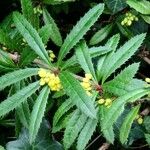
Berberis julianae
Chinese Barberry · Great Barberry · Wintergreen barberry · Evergreen barberry · Julian's Berberis
Description
Source: leafsnapBerberis julianae, commonly known as Chinese barberry, is an evergreen shrub belonging to the Berberidaceae family. Native to China, it has become a popular ornamental plant worldwide, admired for its attractive foliage and bright yellow flowers. The plant typically reaches up to 3 meters in height. It features glossy, dark green leaves on top with a matte underside. The oval-shaped leaves have spiny edges, making Berberis julianae an excellent choice for creating hedges or barriers. Blooming from late spring to early summer, the shrub produces clusters of bright yellow flowers that attract bees and other pollinators. These flowers are followed by small red berries that ripen in late summer or early fall. Berberis julianae prefers well-drained soil but can tolerate a wide range of soil types, provided they are not waterlogged. While it thrives in full sun, it can also tolerate partial shade. This plant is relatively easy to care for, requiring only occasional pruning to maintain its shape or remove dead wood. However, it is important to note that Berberis julianae can be invasive in some areas due to its ability to spread through seed dispersal. Overall, Berberis julianae is an attractive evergreen shrub that offers year-round interest. Its glossy foliage, colorful blooms, and subsequent berries make it an excellent choice for gardeners seeking a low-maintenance plant with ornamental value.
🌳 Beyond its common appeal, wintergreen barberry is used as an effective living barrier in landscaping because of its dense growth and sharp thorns. This little-known but important use supplies both privacy and security. Its capacity to form impenetrable hedges makes it a natural choice for property lines and restricted areas, showing a combination of functional and decorative roles in human environments.
🎭 Protection and healing: it is used to soothe fears and to calm the nerves.
Care Guide
💧 Water Every 7 days
Wintergreen barberry, which originates from mountainous forest understories, thrives in moderate moisture and well-drained soil. It is resilient to short periods of drought. This plant does best with biweekly watering, simulating natural rainfall, and keeps its leaves hydrated throughout the year. In cooler months, it requires less water due to reduced evapotranspiration.
How should I water my Wintergreen barberry plant?
Your Wintergreen barberry is not fussy about watering methods, so you can use any common tool like watering cans, hoses, or cups. When watering, it is best to apply the water directly to the soil and make sure all areas are equally moist to reach the entire root system. Filtered water is preferable as tap water may contain harmful particles to plants. Water at or slightly above room temperature is recommended as extremely cold or hot water can shock the Wintergreen barberry. Nevertheless, the plant generally responds well to any type of water.
What should I do if I give my Wintergreen barberry plant too much or too little water?
Outdoor plants, especially newly planted ones or seedlings, can be easily deprived of water. To ensure proper hydration, it is important to water them consistently for the first few months, especially when the plant is small or newly planted. Once the roots are established, Wintergreen barberry plants can rely on rainwater for the most part. When it comes to potted Wintergreen barberry plants, the risk of overwatering is higher. If you accidentally overwater your plant, it is important to act quickly to mitigate any damage. Immediately stop watering the plant to minimize the effects of overwatering. Then, remove the plant from its pot to inspect the roots. If no root rot is present, you can safely return the plant to its container. However, if you notice signs of root rot, trim away any affected roots and consider applying a fungicide to prevent further damage. Finally, repot the plant in well-draining soil. On the other hand, underwatering a Wintergreen barberry plant is a simpler issue to resolve. If you notice the plant's leaves drooping, drying out, or falling off, it is a sign of underwatering. Simply increase the frequency of watering, and the leaves should regain their fullness relatively quickly. It is important to adjust your watering schedule promptly when underwatering occurs.
How frequently should I water my Wintergreen barberry plant?
Most outdoor plants can grow naturally with rainfall. However, if your area lacks rainfall, you should water your plants adequately every 2 weeks during spring and fall. In the summer, you will need to water them more frequently. During winter, when plants grow slower and require less water, you should water them sparingly or not at all. If your Wintergreen barberry is young or newly planted, it may need more frequent watering to help it establish and grow. For potted plants like the Wintergreen barberry, there are two main ways to determine how often to water them. One way is to follow a set watering schedule, such as once a week or once every other week. However, this may not always be suitable as it may not consider the specific conditions of your growing environment. Another approach is to monitor the soil moisture and water accordingly. Wait until the top two to four inches of soil, about one-third to one-half of the pot's depth, have completely dried out before watering again. This method allows you to adjust the watering frequency based on the plant's water needs, which may change depending on the season. During summer, for example, the plant will likely require more frequent watering.
How much water does my Wintergreen barberry plant need?
When watering your Wintergreen barberry, you don't always need to give it a lot of water. If only a few inches of soil have dried since the last watering, giving it about five to ten ounces of water will support healthy growth. You can determine the amount of water based on the dryness of the soil. Pay attention to how many inches of soil have dried between waterings. To ensure the plant gets enough moisture, water until all the dry soil layers are moist. If more than half of the soil is dry, consider giving more water. Keep watering until you see excess water draining from the pot's holes. If your Wintergreen barberry is in a rainy area, it may not need extra watering. When it's young or establishing, make sure it gets 1-2 inches of rain per week. As it grows, it can rely on rainwater except in hot weather with no rainfall for 2-3 weeks; then give it a full watering to prevent stress.
How do I know if I'm watering my Wintergreen barberry enough?
The Wintergreen barberry is often affected by overwatering, which can be identified by yellowing leaves, leaf drop, shriveling of the plant structure, and potential root rot. On the other hand, an underwatered Wintergreen barberry will start to wilt, with leaves turning brown or becoming brittle. Whether you observe signs of overwatering or underwatering, it is essential to take action and restore the health of your Wintergreen barberry.
☀️ Light Full sun
Wintergreen barberry grows best with plenty of sunlight, though it can perform reasonably in partly shaded areas. Having come from a bright habitat, it tolerates strong daylight. Excessive sun won’t harm the plant, but insufficient light can diminish its vigor.
What are the sunlight requirements for Wintergreen barberry?
Wintergreen barberry requires full sun, meaning it thrives best with more than 6 hours of direct sunlight each day. It can also grow in partial sun, which is about 3-6 hours of sunlight daily. It's essential to observe the way sunlight moves through your garden to find spots that offer a mix of light and shade, ensuring your plants are happy and healthy.
Can Wintergreen barberry grow in artificial light?
Yes, Wintergreen barberry can grow in artificial light, which is a great solution when natural sunlight is insufficient, such as during winter or in less sunny spaces. For optimal growth, it's recommended to use LED lights because they can be customized to provide specific wavelengths needed by plants. Full sun plants require 30-50W per square foot, partial sun plants need 20-30W per square foot, and full shade plants require 10-20W per square foot of artificial light. The light source should be placed 12-36 inches above the plant and kept on for 8-12 hours per day to mimic natural daylight hours.
What are the symptoms of insufficient light in Wintergreen barberry?
Symptoms of insufficient light in Wintergreen barberry include smaller new leaves, leggy or sparse growth, faster leaf drop, slower or no new growth, and lighter-colored new leaves. Chlorosis, or the loss of green color in leaves, can occur due to excessive sunlight, leading to a lack of ability to photosynthesize. Other symptoms from too much sunlight include sunscald, leaf curling, wilting, and leaf scorching, which can reduce the plant's overall health and vitality.
How can I address light-related issues for Wintergreen barberry?
To address light-related issues in Wintergreen barberry, gradually increase sunlight exposure by moving your plant to a sunnier location each week until it receives at least 6 hours of direct sunlight daily. For indoor plants, consider using artificial light if the plant is large or not easily movable, keeping a desk or ceiling lamp on for at least 8 hours a day. For outdoor plants, adapt them to sunlight carefully to avoid sunburn. Minimize obstructions to sunlight by pruning obstructive branches or transplanting smaller plants to sunnier locations during their dormant period for optimal growth and health.
🌡️ Temperature 10–35°C
Wintergreen barberry originates from areas where temperatures range from 50 to 95 °F (10 to 35 ℃). It prefers a mild to warm climate. Adjust its exposure when unusually high or low temperatures are anticipated.
What is the ideal temperature range for Wintergreen barberry?
Wintergreen barberry is native to regions where the temperature ranges from 50 to 95 °F (10 to 35 °C), preferring a mild to warm climate. It possesses strong cold resistance, making special frost protection measures usually unnecessary. However, if temperatures are expected to drop below -25°C, protection against cold is advised by wrapping the trunk and branches with non-woven fabric or cloth. Additionally, to prepare for winter, it is recommended to water the plant abundantly before the first freeze in autumn to ensure the soil remains moist.
How does low temperature affect Wintergreen barberry and what are the solutions?
Wintergreen barberry is cold-tolerant, thriving best when temperatures are above 10°C and typically should be kept above -15°C. If temperatures fall below -25°C, branches may not show immediate damage during winter, but by spring, they can become brittle and dry, with no new shoots emerging. To address this, any dead branches that have failed to produce new leaves by spring should be pruned away.
How does high temperature affect Wintergreen barberry and what are the solutions?
During the summer, Wintergreen barberry should be kept below 35°C to avoid stress. Temperatures exceeding 38°C may cause the leaves to lighten in color, tips to become dry and withered, and increase susceptibility to sunburn. The solution involves trimming away sunburned and dried parts, moving the plant to a shaded location, or using a shade cloth to protect it from the midday and afternoon sun. Additionally, watering the plant in the morning and evening will help keep the soil moist and reduce stress from heat.
What is the botanical name of Wintergreen barberry?
The botanical name of Wintergreen barberry is Berberis julianae.
💨 Humidity normal (40-60%)
This plant will thrive in moderate humidity, which is probably the level in your home. However, misting it a few times a week can be very beneficial. Make sure the room has good ventilation.
🪴 Soil 5-6
🌱 Fertilizer
Proper timing is important when fertilizing Wintergreen barberry. Start fertilizing in early spring and continue once a month until early summer. Fertilizer encourages attractive blooms and supplies energy during both dormant and active growth periods.
Why is it necessary to add fertilizer to my Wintergreen barberry?
To ensure that your Wintergreen barberry produces beautiful blooms, it is important to fertilize it for a few key reasons. Fertilizing in early spring is particularly effective in ensuring excellent flowers during that season. Additionally, fertilizing provides your Wintergreen barberry with ample energy to store in the ground during its dormant growth phases. By giving your Wintergreen barberry extra nutrients during fall planting or late spring, you can help it retain more energy for use when active growth resumes.
When should I fertilize my Wintergreen barberry?
Timing is important when fertilizing Wintergreen barberry. If you apply fertilizer too early while the plant is still dormant, it won't be effective and will be washed away by rain, causing waste and pollution. The first application of fertilizer should be in early spring, and continue fertilizing once a month until early summer.
When is it not a good idea to use fertilizer on my Wintergreen barberry?
To ensure proper growth and blooming of Wintergreen barberry, it is important to select a fertilizer with a lower nitrogen content compared to other nutrients. Avoid fertilizing after early autumn or during hot and dry periods, as excessive growth just before winter or insufficient moisture may occur. It is more effective to apply fertilizer when the temperatures are cooler earlier in the season. Additionally, be cautious about unintentionally providing the tree/shrub with an excessive amount of fertilizer that may have been applied to nearby plants or lawns.
What kind of fertilizer does my Wintergreen barberry plant need?
To ensure the best growth of Wintergreen barberry, it is recommended to use a fertilizer that has a balanced mix of the main plant nutrients, with slightly more phosphorus. Another option is to enrich the soil with organic materials like compost, worm castings, and manure. Experienced gardeners may also choose to supplement with water-soluble fertilizers containing phosphorus when flower buds start appearing. This promotes better flower development, resulting in larger and longer-lasting blooms. Fertilizers for Wintergreen barberry can come in various forms, but liquid or powdered forms are often considered the most effective. Whichever type you use, make sure to dilute the fertilizer and apply it while watering the Wintergreen barberry.
How should I fertilize my Wintergreen barberry plant?
To ensure proper fertilization for your Wintergreen barberry, it's important to follow the specific instructions for the type of fertilizer you are using. Avoid over-fertilizing by determining the correct amount to apply. One general guideline is to use the age of the tree or the trunk diameter as a reference. Estimate around one-tenth of a pound of fertilizer per year or per inch of trunk, with a maximum of one pound. Granular and organic fertilizers, like blood meal, should be sprinkled around the base of the tree, extending to the drip line, but ensure the fertilizer does not come into contact with the trunk. Over time, the granules will break down and seep into the soil, where the roots can absorb them. After fertilizing, apply a one-inch layer of compost around the base and thoroughly water the tree.
🪴 Pot & Repot
✂️ Pruning
Wintergreen barberry plants can benefit from pruning, particularly when they are used as hedges. To promote vigor, prune them in the spring, taking care to avoid periods of excessive moisture and frost. When pruning, limit cuts to one-third of the canopy, and make angle cuts away from the buds. Always disinfect your tools to prevent contamination.
🌿 Propagating
🐛 Diseases & pets
☠️ Toxicity
Characteristics
- Plant Type
- Shrub
- Life Cycle
- Perennial
- Genus
- Berberis
- Family
- Berberidaceae
- Hardiness Zone
- 6-9
- Mature Height
- 3.05 m
- Mature Spread
- 2.44 m to 3.96 m
- Leaf Color
- Green
- Leaf Type
- Evergreen
- Flower Color
- Yellow
- Flower Size
- 0.25 cm
- Bloom Time
- Mid spring, Late spring
- Planting Time
- Spring, Autumn
- Harvest Time
- Early summer, Mid summer
- Native Area
- China