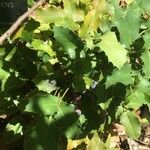
Berberis repens
Creeping barberry · Oregon-grape · Creeping mahonia · Oregon barberry · Oregon grape-holly
Description
Source: leafsnapBerberis repens, commonly known as creeping barberry, is a low-growing evergreen shrub native to North America. It typically reaches a height of up to 2 feet and spreads up to 6 feet wide. The plant features small, glossy green leaves that turn reddish-purple in the fall, and it produces small yellow flowers in the spring followed by red berries in the summer. Berberis repens is a hardy plant that can tolerate a wide range of soil types and growing conditions. It prefers full sun to partial shade and requires moderate watering. Native Americans have used Berberis repens for medicinal purposes for centuries due to its antibacterial properties. The bark of Berberis repens contains berberine, which has demonstrated antimicrobial properties against various bacteria. In landscaping, Berberis repens is often used as ground cover or as an accent plant due to its low-growing habit and attractive foliage. Its thorny branches also make it an effective barrier or hedge plant. Overall, Berberis repens is a versatile shrub with both ornamental value and medicinal benefits. It can thrive in various growing conditions, making it an excellent addition to any garden or landscape project.
🌳 The roots of creeping barberry contain the alkaloid berberine, which yields a bright yellow pigment. In the past, this pigment was applied to dye wool, leather, and wood, typically producing a vivid, clear yellow or, when different mordants were used, a greenish-yellow tone. This use represents a less common application of creeping barberry that extends beyond mere horticultural interest and connects with traditional crafts and natural dyeing techniques. The practice of extracting plant-based dyes is seeing renewed attention within movements for sustainable and eco-friendly textile production.
🎭 Shortness of temper, bitterness.
Care Guide
💧 Water Every 7 days
Creeping barberry, native to arid regions, is drought-tolerant and needs watering only every 1-2 weeks. It thrives in well-draining soil, much like its natural rocky habitat, which supports healthy growth and prevents waterlogging. This makes it an excellent choice for outdoor environments.
How should I water my Creeping barberry?
Your Creeping barberry plant is not very particular about how you water it. You can use any common watering tool, such as watering cans, hoses, or even cups. Regardless of the tool you choose, it's important to apply the water directly to the soil. Make sure to evenly moisten all areas of the soil to provide the entire root system with the necessary water. Using filtered water is recommended as tap water may contain harmful particles. Additionally, it's best to use water that is at or slightly above room temperature, as extremely hot or cold water can be a bit shocking to the Creeping barberry. However, in general, the plant responds well to any type of water you give it.
What should I do if I give my Creeping barberry plant too much or too little water?
Proper watering is essential for outdoor plants, especially newly planted ones or seedlings. It is important to water them consistently for the first few months. Once the roots are established, the plant can rely on rain most of the time. However, watering potted Creeping barberry plants can be tricky. Overwatering is a common mistake that can be remedied by stopping watering immediately and checking the roots for rot. If no rot is present, the plant can be returned to its pot. If there is root rot, affected roots should be trimmed and a fungicide may be applied. It is also important to re-pot the plant in well-draining soil. On the other hand, underwatering can be easily fixed by increasing watering frequency. Signs of underwatering include drooping and drying leaves, which will regain fullness after sufficient watering. Therefore, it is crucial to adjust watering frequency promptly when underwatering occurs.
How many times should I water my Creeping barberry plant?
Most outdoor plants can grow naturally with rainfall, but if your area lacks rain, you should water them every 2 weeks in the spring and fall. During the summer, you will need to water them more often. In the winter, when plants grow slower and need less water, you should water them sparingly. In fact, you may not need to water them at all during the winter. However, if your Creeping barberry is young or newly planted, you should water it more frequently to help it establish and grow. This will also make it more adaptable and drought-tolerant. For potted plants, there are two main approaches to determine how often to water your Creeping barberry. The first approach is to set a regular watering schedule, such as once a week or once every other week. However, this may not always work as it doesn't consider the unique conditions of your Creeping barberry's environment. The second approach is to base your watering frequency on soil moisture. It is best to wait until the top two to four inches of soil, about ⅓ to ½ depth of the pots, have completely dried out before watering again. This method allows you to adjust the watering frequency depending on the season. During the summer, the plant will require more water than the predetermined schedule may suggest.
How much water does my Creeping barberry plant need?
When watering your Creeping barberry, it's important to know that it doesn't always require a lot of water. If only a few inches of soil have dried since the last watering, you can give it about five to ten ounces of water. You can also determine the water volume based on the moisture of the soil. Keep track of how many inches of soil have dried out between waterings. To ensure your Creeping barberry gets enough moisture, water it enough to moisten all the dry soil layers since the last watering. If more than half of the soil is dry, give it more water than usual. Water until you see excess water draining from the drainage holes in the pot. If your Creeping barberry is planted in an area that receives ample rain, additional watering may not be necessary. When it's young or establishing, it needs 1-2 inches of rain per week. As it grows and establishes, it can survive solely on rainwater. Only when there's no rainfall for 2-3 weeks during hot weather should you consider giving it a full watering to prevent stress.
How can I know if I'm giving enough water to my Creeping barberry?
Overwatering is a common issue for the Creeping barberry, and it can be identified by a few signs. The leaves of an overwatered Creeping barberry will turn yellow and may fall off. The plant's overall structure may also shrink, and it could develop root rot. Conversely, an underwatered Creeping barberry will start to droop and may have brown and brittle leaves. Regardless of whether you notice signs of overwatering or underwatering, you should take action to restore your Creeping barberry's health.
☀️ Light Partial sun
The creeping barberry flourishes in locations where it obtains partial daily sunlight exposure. While it is resilient enough to tolerate full-day sunlight presence or most of the day in shadow, a balanced sunlight exposure contributes to its healthy development. Too much sun exposure could potentially have a negative effect on the plant's robustness.
What are the sunlight requirements for Creeping Barberry?
Creeping Barberry thrives in areas that provide partial to full sun exposure. Specifically, it needs about 3-6 hours of sunlight for partial sun conditions and more than 6 hours for full sun or full shade situations. It's important to observe the movement of sunlight through your garden to select the ideal location that achieves a balance of light and shade, promoting the plant's health and happiness.
What are the essential care tips for Creeping Barberry regarding sunlight exposure?
Creeping barberry prefers sun exposure for part of the day but can also adapt to full day sun or mostly shaded conditions. A balance of sunlight throughout the day is optimal for its health. In extreme sunlight conditions, the plant's vigor may be negatively affected. For indoor plants, artificial lighting can be crucial, especially when natural sunlight is insufficient. Adequate lighting promotes healthier growth. LED lights are recommended for indoor use, providing specific wavelengths needed by plants. Depending on the plant's needs, the wattage per square foot varies: 30-50W for full sun plants, 20-30W for partial sun, and 10-20W for full shade. The light source should be placed 12-36 inches above the plant and kept on for 8-12 hours per day to mimic natural daylight.
What are the symptoms of insufficient light in Creeping Barberry?
When Creeping Barberry is grown under insufficient light, it may display several symptoms: smaller new leaves compared to mature ones, leggy or sparse growth due to longer spaces between leaves or stems, faster leaf drop to conserve resources, delayed growth or halted leaf production, lighter-colored new leaves indicating a lack of chlorophyll, chlorosis where leaves turn yellow due to chlorophyll breakdown, sunscald evidenced by pale or necrotic spots on plant tissue, leaf curling to minimize water loss and damage from sunlight, wilting from excessive water loss, and leaf scorching visible as brown, dry patches on leaves
How can you address the issue of insufficient lighting for Creeping Barberry?
To optimize growth for plants with insufficient light, gradually increase sunlight exposure or use artificial lighting. For outdoor plants, progressively moving them to sunnier spots each week can help them adapt without the risk of sunburn. Note that parts of the plant damaged by low light may not recover, but new growth will be healthy once light improves. For ground plants, reducing obstructions (like pruning trees) and transplanting during the plant's dormant period to a sunnier location with good drainage are effective strategies. For indoor or immovable plants, artificial lighting such as keeping a lamp on for at least 8 hours daily or investing in grow lights can provide the necessary lumens.
🌡️ Temperature 15–35°C
Creeping barberry, a plant indigenous to North America, flourishes optimally in temperate zones where temperatures lie between 59 and 95 ℉ (15 to 35 ℃). The plant is recommended to adapt to variable temperatures across diverse seasons, experiencing cooler conditions during the autumn and winter, and warmer ones in spring and summer for it to prosper.
What are the ideal growing conditions for Creeping Barberry?
Native to North America, Creeping Barberry is well-suited to temperate regions, thriving in a temperature range of 59 to 95°F (15 to 35°C). It adapts well to seasonal temperature fluctuations, requiring cooler temperatures in the fall and winter, and warmer conditions in the spring and summer. Given its strong cold resistance, special frost protection measures are usually unnecessary. However, in extreme winter cold, protection such as wrapping with non-woven fabric can be beneficial. Before the onset of winter, it's recommended to water the plant abundantly to ensure the soil remains moist and enters a frozen state, helping to prevent drought and water scarcity during the colder months.
What should I do if my Creeping Barberry is exposed to low temperatures?
Creeping Barberry is notably cold-tolerant, flourishing best when temperatures are kept above a certain minimum suitable for growth. While it can withstand winter temperatures, sustained cold below the growth limit temperature could result in brittleness and dryness of branches come spring, with a lack of new shoots. If such damage occurs, it's advisable to prune away any dead branches that have failed to produce new leaves, promoting the growth of healthy new foliage.
How do I care for Creeping Barberry during high temperatures?
During summer, it's crucial to ensure that the Creeping Barberry is not exposed to temperatures exceeding the maximum suitable for its growth. Excess heat can cause the leaves to lighten in color, dry and wither at the tips, and increase susceptibility to sunburn. To mitigate these effects, trim away sunburned and dried parts, reposition the plant to receive shade during the intense midday and afternoon sun, or employ a shade cloth. Additionally, watering the plant in the morning and evening will help keep the soil consistently moist, alleviating stress from heat.
💨 Humidity
🪴 Soil 5-6
🌱 Fertilizer
Encourage the healthy development of your Creeping barberry by fertilizing it in the early spring. Consistent fertilization boosts general health, enabling vigorous growth, resistance to harsh conditions, and increased protection against disease and pests. Adhere to a particular fertilization routine for your Creeping barberry to guarantee lustrous foliage with vibrant coloration and a lush look.
Why is it necessary for me to add fertilizer to my Creeping barberry?
No matter which kind of Creeping barberry you have, regularly fertilizing it will promote optimal health. Providing the right nutrients will result in stronger growth and increased resilience to challenging conditions. Additionally, it will improve the plant's ability to resist diseases and pests. It is important to preserve the attractive foliage of your Creeping barberry, and one way to do so is by following a consistent fertilization schedule tailored to your specific plant. By doing this, your Creeping barberry will develop vibrant, lush leaves.
When should I fertilize my Creeping barberry?
To properly fertilize your Creeping barberry, start by applying fertilizer in late winter or early spring. This will give the plant the necessary nutrients for healthy growth once the weather warms up. If you live in a warm climate region, it's also beneficial to give your Creeping barberry an extra fertilizer feeding in early fall. By doing this, you not only provide additional nutrients for the upcoming growing season, but you also help the plant become more resilient to winter cold and avoid foliage damage. Fertilizing earlier in the fall will ensure that the new branches have enough time to grow and withstand the cold winter.
When is the best time to not fertilize my Creeping barberry plant?
There are specific times throughout the year that you should avoid fertilizing your Creeping barberry. Firstly, during the early and mid-winter months when the plant is dormant and does not require any feeding. Additionally, it is not advisable to fertilize during the late spring and summer, as these seasons are typically hotter and dryer. Fertilizing during this time can have harmful effects on your Creeping barberry. To prevent any issues, it is best to adhere to a fertilization schedule that only involves feeding in early spring and early fall.
What kind of fertilizer does my Creeping barberry need?
Creeping barberry plants need a good amount of nitrogen, but that doesn't mean phosphorus and potassium are unimportant. In fact, they need all three nutrients in a balanced amount, which is why a 10-10-10 fertilizer can be effective. However, for the best growth, a slightly higher ratio of nitrogen is often recommended, such as 10-6-4. You can choose between a granular or liquid fertilizer when feeding your plant.
How can I give nutrients to my Creeping barberry plant?
To fertilize your Creeping barberry, you have two options - granular fertilizer or liquid fertilizer. If you choose granular fertilizer, simply sprinkle it on the soil at the right time. This slow-release fertilizer will gradually release nutrients into the soil. Before applying granular fertilizer, remember to lightly water your Creeping barberry. The less common alternative is liquid fertilizer. To use this method, mix the fertilizer with water and pour it around the base of your Creeping barberry. In some cases, it may be beneficial to perform a soil test before fertilizing. This will help you determine if you need to adjust the pH of the soil.
🪴 Pot & Repot 2-3 years
When transplanting Creeping barberry, select a container that is 1-2 inches (2.5-5 cm) bigger with sufficient drainage provisions. Employ a potting mix that drains well. Carry out the repotting process either in spring or fall, making sure that the root ball is marginally lower than the edge of the pot. After the repotting process, water it comprehensively and position it in a warm location that receives indirect sunlight.
✂️ Pruning
To enhance the vigor of creeping barberry, it benefits from regular pruning. When you're planting a hedge, begin shaping it early. Prune in the spring while ensuring that the plant tissues stay dry. Remove old or infected branches carefully, cutting at an angle and making sure not to remove more than one-third of the canopy. Always wear gloves for protection and disinfect your tools to prevent the spread of disease.
🌿 Propagating
🐛 Diseases & pets
☠️ Toxicity
Characteristics
- Plant Type
- Shrub
- Life Cycle
- Perennial
- Genus
- Berberis
- Family
- Berberidaceae
- Hardiness Zone
- 7-9
- Mature Height
- 20 cm to 46 cm
- Mature Spread
- 20 cm to 46 cm
- Leaf Color
- Green, Blue, Purple, Lavender
- Leaf Type
- Evergreen
- Flower Color
- Yellow
- Flower Size
- 3.05 cm to 10.16 cm
- Bloom Time
- Mid spring, Late spring, Early summer
- Planting Time
- Spring, Autumn
- Harvest Time
- Mid summer