Berberis thunbergii
زرشک قرمز · زرشک زینتی · Japanese barberry · Barberry · Thunberg's Barberry
Description
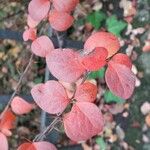
Source: leafsnapBerberis thunbergii, commonly known as Japanese barberry, is a deciduous shrub native to Japan. It is a popular ornamental plant due to its attractive foliage and bright red berries. Typically, the plant grows up to 6 feet tall and wide, featuring thorny branches that deter animals from grazing. The leaves of Berberis thunbergii are small and oval-shaped, varying in color from green to purple-red depending on the cultivar. In the fall, the foliage turns a brilliant red before dropping off for the winter. The bright red berries produced by Berberis thunbergii serve as an important food source for birds during the winter months. However, these berries can be toxic if ingested by humans or pets. Berberis thunbergii prefers full sun or partial shade and well-drained soil. While it is drought-tolerant once established, the plant benefits from regular watering during dry spells. Beyond its ornamental value in gardens and landscapes, Berberis thunbergii has been used in traditional medicine for its anti-inflammatory properties.
💡 There was once a missionary who had a hobby of cultivating Japanese barberry. During the day, he preached virtues to the people, but at night, he turned to thievery. As a result, the Japanese barberry came to symbolize the coexistence of good and evil.
🌳 Aside from its decorative use, japanese barberry also serves as an ecological bioindicator of aluminium in soil. Where it grows well, the soil is probably acidic with increased aluminium levels, acting as a natural guide for farmers and botanists to evaluate land suitability for farming and conservation.
🎭 expiation, safeguarding, recovery
Care Guide
💧 Water Every 7 days
Japanese barberry thrives in well-drained soil and is moderately drought-tolerant, making it adaptable to different moisture levels. It is generally recommended to water the plant every 1 to 2 weeks, allowing the soil to dry out slightly between waterings. Typically grown outdoors, Japanese barberry is versatile across various climate zones, which influences its irrigation needs.
When Should I Water My Japanese Barberry?
Watering your Japanese Barberry is crucial for its growth, vibrant foliage, and resistance against diseases. To determine when to water, check the soil moisture level 1-2 inches deep; if dry, it's time to water. Wilted or drooping leaves, and changes such as fading, yellowing, or browning of the leaves, indicate water stress. Insufficient watering can lead to stunted growth and reduced flowering. Be mindful of the risks associated with early or late watering, including root rot from early watering and potential plant death from late watering. Always adjust the watering schedule by observing temperature and weather conditions, promoting the plant's overall health.
How Should I Water My Japanese Barberry?
Water your Japanese Barberry by deep watering to ensure the soil is well soaked, then allowing it to dry out before the next session. This plant requires well-drained soil and does not tolerate waterlogged conditions well due to its susceptibility to root rot. While misting isn't necessary due to its non-dependency on humidity, using a moisture meter can help prevent overwatering. When watering, focus on the soil rather than leaves or the base of the plant to prevent diseases. Watering in the morning is most beneficial as it allows any incidental water on the plant to dry before the cooler evening hours.
How Much Water Does Japanese Barberry Really Need?
The amount of water needed by Japanese Barberry varies but ensuring water reaches the root zone without excessive runoff is crucial. For container plants, thoroughly saturate the root ball without causing water to pool. An average-sized plant in a 10-inch diameter pot may require 1-2 liters per session. Proper hydration is indicated by vibrant and healthy leaves, sturdy stems, and compact growth. Avoid overwatering to prevent root rot and underwatering which leads to wilting leaves. Ensure good drainage in the soil and monitor moisture level regularly.
What Kind of Water is Best for Japanese Barberry?
Japanese Barberry benefits most from distilled water as it is free from contaminants and minerals. Rainwater is a good alternative due to its natural and balanced pH level. Tap water is acceptable but may contain chlorine and minerals potentially harmful to the plant, and filtered water is suitable if it removes harmful contaminants. The plant is sensitive to chlorine, so letting tap water sit out for 24 hours before use is recommended. Moderate room temperature water is preferred to avoid shocking the plant.
How Do Japanese Barberry's Watering Needs Change with the Seasons?
Japanese Barberry’s watering needs increase in spring due to active growth and higher moisture requirement. In summer, maintain consistently moist soil with deep watering methods. Autumn brings a decrease in watering needs as growth slows and temperatures cool. During winter's dormancy period, water minimally to prevent root rot and disease. It's essential to adjust watering frequency based on seasonal changes, monitoring soil conditions to ensure the plant's health throughout the year.
☀️ Light Full sun
Japanese barberry does well with abundant daily light, which greatly supports its healthy growth. Originating in regions with ample sunlight, it can also tolerate reduced light levels. However, too much or too little light can cause the plant to decline.
What are the sunlight requirements for Japanese barberry?
Japanese barberry requires full sun exposure of above 6 hours of sunlight daily to thrive optimally but can also tolerate partial sun conditions of about 3-6 hours of sunlight. It's essential to observe the movement of sunlight through your garden to identify spots that offer the right balance of light and shade, ensuring the plant's health and happiness.
How important is light for the growth of Japanese barberry?
Light plays a crucial role in the growth and health of Japanese barberry. Originating from areas with ample sunlight, it flourishes under abundant daily light exposure. Although it can adapt to reduced sunlight conditions, both excessive and insufficient light exposure can lead to the plant's deterioration. In cases where natural sunlight is inadequate, artificial lighting can serve as a vital solution, encouraging faster and healthier growth. Indoor plants, for instance, may require artificial lighting, especially during winter or in less sunny spaces, with specific suggestions including LED lights at a distance of 12-36 inches above the plant for 8-12 hours per day depending on the plant's needs.
What are the symptoms of incorrect light exposure in Japanese barberry?
When exposed to inadequate light, Japanese barberry may exhibit various symptoms indicating its distress. These include the growth of smaller new leaves, a leggy or sparse appearance due to longer spaces between leaves or stems, premature leaf drop to conserve resources, and a halt in new leaf production leading to slower or no growth. Additional signs of light stress include pale or irregularly colored new leaves due to insufficient chlorophyll, chlorosis, or yellowing of leaves, damage from intense sunlight such as sunscald, leaf curling as a defense against excessive light, wilting from increased water loss, and leaf scorching.
How can I correct light exposure issues for Japanese barberry indoors and outdoors?
To address light exposure issues for Japanese barberry, gradual adjustments are key. Indoors, gradually shift the plant to sunnier locations each week until it receives at least 6 hours of direct sunlight daily, utilizing south-facing windows and keeping curtains open for maximum exposure. Artificial lighting, like desk lamps or professional grow lights, can supplement light for plants that are large or hard to move. Outdoors, acclimate your plants to increased sunlight by moving them to brighter spots weekly to prevent sunburn. Pruning nearby trees to reduce shade or transplanting the plant during its dormant period to a sunnier location can also improve light access. However, parts of the plant already damaged by insufficient light may not recover, underscoring the importance of early intervention.
🌡️ Temperature 10–35°C
Japanese barberry is a temperate woody plant that prefers temperatures of 50 to 95 ℉ (10 to 35 ℃). In its native habitat it grows in regions with a moderate climate where average annual temperatures are between 40 and 60 ℉ (5 to 15 ℃). It tolerates cold and can endure short periods of sub-freezing temperatures. In winter, the plant should be protected from strong, cold winds to prevent drying out and injury.
What are the temperature preferences and cold tolerance of Japanese barberry?
Japanese barberry thrives in a temperate climate with a preferred temperature range of 50 to 95°F (10 to 35°C). It originates from regions where the average annual temperatures range between 40 to 60°F (5 to 15°C), showcasing its adeptness at navigating moderate climates. Despite its strong cold resistance, it's advisable to shield it from strong, cold winds in winter to prevent desiccation and damage. Although the plant generally doesn't require special frost protection measures, if temperatures are anticipated to plummet below -25°C, it is crucial to safeguard it by wrapping the trunk and branches with non-woven fabric or other suitable materials. Additionally, abundant watering before the first autumn freeze ensures the soil remains moist, thus helping the plant avert drought and water scarcity during winter and the onset of spring.
How should you care for Japanese barberry in low temperature conditions?
Japanese barberry exhibits commendable cold tolerance, flourishing optimally when temperatures stay above 10°C, and ideally should remain above -15°C during winter. If temperatures descend below -25°C, the plant's branches may turn brittle and dry by spring, impeding the emergence of new shoots. To mitigate this, it's recommended to prune any dead branches that fail to produce new leaves come spring, thus promoting healthier plant growth and ensuring its resilience against the harsh cold.
What steps should be taken if Japanese barberry is exposed to high temperatures?
During the summer, it's essential to maintain Japanese barberry's temperature below 35°C to prevent heat stress. Exposure to temperatures exceeding 38°C can result in lighter leaf coloration, dry and withered tips, and increased susceptibility to sunburn. To combat these issues, trim away any sunburned or dried-up parts of the plant. Relocating the plant to an area with shade, especially from the midday and afternoon sun, or using a shade cloth can offer necessary protection. Ensuring the soil remains moist through morning and evening watering can also help the plant better cope with high temperatures.
💨 Humidity normal (40-60%)
This plant will thrive in moderate humidity, which is probably the level in your home. However, misting it a few times a week can be very beneficial. Make sure the room has good ventilation.
🪴 Soil 5-6
🌱 Fertilizer
Fertilize your Japanese barberry in early spring to encourage healthy growth. Regular feeding boosts the plant’s overall health, producing vigorous growth, increased toughness in challenging conditions, and enhanced resistance to pests and diseases. Follow a specific fertilizing schedule for your Japanese barberry to maintain vibrant, deeply colored foliage and a lush appearance.
Why should I add fertilizer to my Japanese barberry?
No matter the type of Japanese barberry you own, regular fertilization is important for maintaining overall plant health. Providing the proper nutrients promotes vigorous growth, increases resilience to harsh conditions, and improves the plant's ability to resist disease and pests. The foliage of the Japanese barberry is a notable feature and should be protected. To achieve this, establish and follow a regular fertilization schedule tailored to your specific Japanese barberry. This will result in deep-colored leaves and a lush appearance.
When should I put fertilizer on my Japanese barberry plant?
To keep your Japanese barberry healthy, fertilize it for the first time in late winter or early spring. This will give it the necessary nutrients to grow well when the weather becomes warmer. If you live in a warm climate, it's beneficial to fertilize again in early fall. This provides extra nutrients for the following growing season and helps the barberry withstand the cold winter without foliage damage. Fertilizing earlier in fall helps the new branches grow strong enough to handle the winter.
When is the best time to not add fertilizer to my Japanese barberry?
There are a few times during the year when you should not fertilize your Japanese barberry. The first time is during the early and mid-winter months when the plant is dormant and does not need to be fed. It is also not recommended to fertilize the plant during late spring and summer due to the hotter and drier weather conditions, which can negatively affect the plant's response to fertilization. To avoid any problems, it is best to stick to a fertilization schedule that focuses on early spring and early fall feeding.
What kind of fertilizer should I use for my Japanese barberry plant?
Japanese barberry primarily requires nitrogen as its main nutrient, but this doesn't mean that phosphorus and potassium should be neglected. In fact, a healthy Japanese barberry needs a sufficient amount of all three nutrients. Using a balanced fertilizer like 10-10-10 can be effective. However, a more precise nutrient ratio often promotes optimal growth. Typically, fertilizers with a slightly higher nitrogen content, such as a 10-6-4 ratio, tend to yield better results. You can opt for either granular or liquid-based fertilizers when applying them.
How can I add fertilizer to my Japanese barberry?
To fertilize your Japanese barberry, there are two options: using a granular fertilizer or a liquid fertilizer. If you opt for granular fertilizer, simply sprinkle it on the soil at the appropriate time. The slow-release nature of this fertilizer will gradually release nutrients into the soil. It is recommended to lightly water your barberry before applying the fertilizer. Alternatively, you can use a liquid fertilizer, although this is less common. To do this, mix the fertilizer with water and pour it around the base of the plant. Occasionally, it may be helpful to conduct a soil test beforehand to determine if any pH adjustments are necessary.
🪴 Pot & Repot 2-3 years
When repotting Japanese barberry, pick a pot 1–2 inches (2.5–5.1 cm) larger with ample drainage. Use a well-draining potting mix. Repot in spring or fall, making sure the root ball is slightly lower than the rim of the pot. Water thoroughly after repotting and place it in a warm spot with indirect sunlight.
✂️ Pruning
Japanese barberry is known for its vibrant red foliage and dense, thorny branches. Pruning in early spring is crucial for this plant. It involves removing dead wood, thinning crowded branches, and carefully shaping the plant. This process encourages healthy growth, boosts flowering, and helps the plant recover quickly, improving both its vigor and appearance.
🌿 Propagating
🐛 Diseases & pets
☠️ Toxicity
This particular berry, a looks quite tasty, but it will give you a nasty stomach upset but won't kill. Also the sap from the plant is very irritating to the skin, so wash off any traces if you come in to contact with its foliage.
Characteristics
- Plant Type
- Shrub
- Life Cycle
- Perennial
- Genus
- Berberis
- Family
- Berberidaceae
- Hardiness Zone
- 6-9
- Mature Height
- 0.3 m to 3.05 m
- Mature Spread
- 1.22 m to 2.13 m
- Leaf Color
- Green, Red, Variegated, Orange, Yellow, White
- Leaf Type
- Deciduous
- Flower Color
- Yellow, Red, Green
- Flower Size
- 0.25 cm to 0.51 cm
- Bloom Time
- Mid spring, Late spring, Early summer
- Planting Time
- Spring, Autumn
- Harvest Time
- Mid summer, Late summer
- Native Area
- Japan