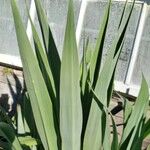
Beschorneria yuccoides
Yucca-leaved Beschorneria · Mexican Lily
Description
Source: leafsnapBeschorneria yuccoides is a striking succulent plant from the Asparagaceae family, native to the rocky regions and cliffs of Mexico. It features a rosette of long, narrow green leaves that can grow up to 1 meter in length. These stiff, pointed leaves are reminiscent of those found on yucca plants. The plant produces impressive flower spikes that can reach heights of up to 2 meters. These spikes are adorned with small, greenish-yellow flowers that bloom from late spring through summer. Beschorneria yuccoides is drought-tolerant and thrives in well-draining soil with full sun exposure or partial shade. It can withstand frost but may need protection during periods of extreme cold. With its unique appearance and low maintenance needs, Beschorneria yuccoides makes an excellent addition to any garden or landscape design. Its beautiful flowers attract pollinators such as bees, butterflies, and hummingbirds, making it an ideal choice for wildlife gardens as well.
Care Guide
💧 Water Every 7 days
Mexican false red yucca is well-suited for arid environments and thrives with very little moisture, demonstrating excellent drought tolerance. It efficiently retains water, requiring watering only every 1-2 weeks. Its sturdy structure enables it to stay healthy even during periods of limited rainfall.
What should I do if I give too much or too little water to my Mexican false red yucca plant?
Newly planted outdoor plants, especially seedlings, are prone to being under-watered. It is important to maintain regular watering for a few months after planting, until the roots are established. Once established, Mexican false red yucca can rely on rainwater most of the time. When grown in pots, overwatering is a common issue. If you accidentally overwater your Mexican false red yucca, there are steps you can take to remedy the situation. Stop watering the plant immediately to minimize the effects of overwatering. Then, inspect the roots by removing the plant from its pot. If no root rot is present, you can return the plant to the pot. However, if root rot is found, trim affected roots and consider using a fungicide to prevent further damage. Repot the plant in soil that drains well. Underwatering, on the other hand, is an easy problem to fix. If you notice drooping and drying leaves, water the plant more frequently. The leaves will quickly regain fullness after sufficient watering. Adjust your watering frequency as soon as you notice underwatering.
How frequently should I water my Mexican false red yucca plant?
If you have plants growing outdoors, they can usually be left to grow with the rain. However, if your area doesn't get much rain, you should water them every 2 weeks in the spring and fall. In the summer, you'll need to water them more often, and in the winter, you can water them less. Mexican false red yucca plants need more water when they are young or newly planted to help them establish and grow. For potted plants, there are two ways to determine how often to water your Mexican false red yucca. One way is to have a set watering schedule, such as once a week or every other week. However, this may not always work because it doesn't consider the specific growing conditions for your plant. Another option is to check the soil moisture. Wait until the top two to four inches of soil in the pots have dried out completely before watering again. This is usually about ⅓ to ½ of the depth of the pots.
How often should I water my Mexican false red yucca plant?
When watering your Mexican false red yucca, it's important to know that it doesn't always need a lot of water. If only a few inches of soil have dried since the last watering, giving it about five to ten ounces of water each time will promote healthy growth. You can also gauge how much water to give based on the moisture of the soil. Take note of how many inches of soil have dried out between waterings. To ensure your Mexican false red yucca gets enough moisture, water enough to dampen all the dry soil layers since the last watering. If more than half of the soil is dry, it's advisable to give more water. In such cases, continue watering until you see excess water draining from the pot's drainage holes. If your Mexican false red yucca is planted outdoors in a rainy area, it may not require additional watering. When the yucca is young or newly planted, make sure it receives 1-2 inches of rain per week. As it grows and becomes established, it can rely solely on rainwater for survival. Only when the weather is hot and there has been no rainfall for 2-3 weeks should you provide a thorough watering to prevent stress on the plant.
How do I know if I'm giving my Mexican false red yucca enough water?
The Mexican false red yucca is often overwatered, which can be recognized by yellowing leaves, leaf drop, shriveled plant structure, and potential root rot. Conversely, an underwatered Mexican false red yucca will wilt, have brown or brittle leaves. If you notice these signs, it is important to intervene and restore the plant's health.
How should I water my Mexican false red yucca as it grows?
When the Mexican false red yucca is young, especially as a seedling, it requires more water compared to when it is fully grown. It is crucial to keep the soil consistently moist during the plant's early stages to promote root development. This is also the case if you have transplanted the Mexican false red yucca to a new location. Additionally, the plant can produce beautiful flowers and fruits with proper care. If your Mexican false red yucca is currently flowering or fruiting, you may need to provide slightly more water than usual to support these structures.
☀️ Light Full sun
Mexican false red yucca comes from open habitats like sunny meadows and forest edges that provide plenty of light. It flourishes in Full Sun but can also tolerate Partial Sun, adapting well to different light conditions.
What are the sunlight requirements for Mexican false red yucca?
Mexican false red yucca thrives in environments with ample sunlight, requiring more than 6 hours of direct sunlight each day to flourish. Originating from open landscapes like sunny meadows and forest edges, it can tolerate both full sun and partial sun conditions. However, it's important to ensure that the plants are strategically placed to receive the perfect balance of light and shade, mimicking their natural habitat for optimal growth. During periods of insufficient natural sunlight, especially in winter or less sunny spaces, artificial lighting can serve as an alternative, supporting the plants' need for light with options such as LED lights, which can be customized to the plants' specific requirements.
How does inadequate sunlight affect Mexican false red yucca, and what are the symptoms?
Insufficient sunlight can significantly impact the health of Mexican false red yucca, manifesting in several symptoms indicative of light deficiency. These include smaller new leaves, leggy or sparse growth, faster leaf drop, slower or halted new growth, lighter-colored or chlorotic leaves, sunscald, leaf curling, wilting, and leaf scorching. These symptoms represent the plant's struggle to adapt to suboptimal lighting conditions, leading to reduced chlorophyll production, weakened structure, and decreased overall health.
What solutions can address the symptoms of light deficiency in Mexican false red yucca?
To mitigate the symptoms of light deficiency in Mexican false red yucca, a gradual adaptation to more suitable light conditions is essential. For indoor plants, moving them to a sunnier location or utilizing artificial light sources, such as desk or ceiling lamps for at least 8 hours daily, can significantly improve light exposure. Outdoor plants similarly benefit from gradual relocation to sunnier spots, taking care to avoid abrupt changes that could cause sunburn. Additionally, reducing obstructions that block sunlight and, if necessary, transplanting smaller plants to brighter areas during their dormant period can help ensure they receive adequate sunlight for healthy growth. It's important to note that while damaged parts of the plant might not recover, new growth following these adjustments will be healthy.
🌡️ Temperature 15–37.8°C
Mexican false red yucca comes from tropical areas, where the climate is generally warm and humid. As a result, it is well suited to high temperatures and humidity. It does not tolerate sudden temperature changes and prefers a stable temperature environment, so it is important to avoid temperature fluctuations indoors. It usually cannot withstand cold temperatures and needs warmer conditions to grow. If the environmental temperature falls too low, the plant may stop growing or even die.
💨 Humidity
🪴 Soil 6-8
🌱 Fertilizer
The best time to fertilize a Mexican false red yucca is in early spring, as it breaks dormancy. This encourages overall growth and flower development. Applying fertilizer improves the foliage, stems, and branches, and helps produce flowers that are large, bright, and long-lasting. It also helps move nutrients from the roots to the blooms and strengthens the plant's health and resistance to disease.
Why do I need to add plant food to my Mexican false red yucca?
No matter what type of Mexican false red yucca you have, regular fertilization is key for a healthy plant. By providing the right nutrients, the plant will grow stronger, be more resilient to tough conditions, and better able to fight off diseases and pests. The foliage of the Mexican false red yucca is a standout feature, so it's important to maintain it. This involves following a fertilization schedule tailored to your specific plant, resulting in vibrant and lush leaves.
When should I put fertilizer on my Mexican false red yucca plant?
To ensure the healthy growth of your Mexican false red yucca, it is recommended to fertilize it for the first time in late winter or early spring. This initial fertilization provides the necessary nutrients for the plant to thrive once the weather warms up. If you live in a warm climate region, it can be beneficial to provide an additional fertilizer feeding during early fall. This second fertilization not only adds nutrients to the soil for the following growing season, but also helps the plant become more resilient and better equipped to survive the cold winter without damaging its foliage. Fertilizing earlier in the fall will give the new branches enough time to grow and withstand the winter chill.
When is it best to not fertilize my Mexican false red yucca plant?
There are specific times of the year when you should refrain from fertilizing your Mexican false red yucca. Firstly, during the early and mid-winter months when the plant is dormant, it does not require any additional nutrients. Secondly, it is not advisable to fertilize the plant during late spring and summer. This is because the weather is usually hotter and drier during this time, which can have a negative impact on the plant if fertilized. To avoid any issues, it is recommended to only fertilize the plant during early spring and early fall.
What kind of fertilizer does my Mexican false red yucca require?
For a Mexican false red yucca, nitrogen is usually the most important nutrient, although phosphorus and potassium should not be disregarded. It is recommended to provide a balanced fertilizer, such as a 10-10-10, which contains all three main nutrients in sufficient quantities. However, a more specific nutrient ratio can result in optimal growth for this plant. Fertilizers with a slightly higher nitrogen content, like a 10-6-4 ratio, tend to be more effective. Both granular and liquid-based fertilizers can be used for this purpose.
How can I make my Mexican false red yucca grow better?
For fertilizing your Mexican false red yucca with granular fertilizer, simply sprinkle it on the soil when the time is right. The slow-release properties of the granular fertilizer will gradually release nutrients into the soil. It is generally recommended to lightly water the plant before applying the fertilizer. Alternatively, you can use liquid fertilizer, although this is less common. To do so, mix the fertilizer with water and pour it onto the soil around the base of the yucca plant. It can also be helpful to conduct a soil test beforehand to determine if any pH adjustments are necessary.
🪴 Pot & Repot 2-3 years
The Mexican false red yucca is a rosette-forming succulent that develops into a bush. Every 2-3 years in the spring, repot the plant using a container that is 2-3 inches larger than the previous one. Ensure the pot has good drainage, and place the plant in indirect light after repotting. Resume watering once new growth becomes visible.
✂️ Pruning
The Mexican false red yucca is a stunning plant known for its striking rosettes and tall flower spikes. To keep it healthy, it requires minimal pruning in early spring, just before new growth begins. To ensure the plant's vitality and deter pests, remove any dead leaves and spent flower stalks. It's important to use clean tools and avoid excessive pruning. For detailed care instructions, refer to horticultural guides or resources.
🌿 Propagating
🐛 Diseases & pets
☠️ Toxicity
Characteristics
- Plant Type
- Tree, Shrub
- Life Cycle
- Perennial
- Genus
- Beschorneria
- Family
- Asparagaceae
- Hardiness Zone
- 8-11
- Mature Height
- 1.52 m
- Mature Spread
- 1.52 m
- Leaf Color
- Green, Gray, Silver
- Leaf Type
- Evergreen
- Flower Color
- Pink, Red
- Flower Size
- 3.05 cm to 5.08 cm
- Bloom Time
- Mid spring, Late spring, Early summer
- Planting Time
- Summer
- Harvest Time
- Mid summer, Late summer, Early fall