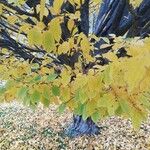
Betula alleghaniensis
Yellow birch · Gray birch · Silver birch · Swamp birch · Wiinizik
Description
Source: leafsnapBetula alleghaniensis, commonly known as yellow birch, is a deciduous tree native to eastern North America. It can grow up to 30 meters tall and features distinctive yellowish-brown bark that peels in thin, curly strips. The leaves are alternate, simple, and have serrated edges, displaying a dark green color. In the fall, the leaves turn bright yellow before falling off for the winter. Yellow birch typically thrives in moist forests and along streams or rivers. It prefers well-drained, slightly acidic soils but can tolerate a range of soil types. The tree produces small flowers in early spring before the leaves emerge, which develop into small nutlets that mature by late summer. The wood of yellow birch is highly valued for its strength and durability, making it popular for furniture making, flooring, and cabinetry. Historically, the bark has also been used by indigenous peoples for medicinal purposes. Overall, Betula alleghaniensis is ecologically significant due to its role in forest ecosystems and economically valuable due to its quality wood products.
🎭 Defense, Deliverance, Cleansing
Care Guide
💧 Water Every 7 days
Yellow birch originates from moist forests and thrives best in environments with consistently moderate moisture. It prefers evenly moist soil, so it's beneficial to water the plant every 1-2 weeks, taking care not to overwater. Proper regulation of water uptake is crucial during the growing season, especially in cooler climates where temperatures can fluctuate.
How should I water my Yellow Birch tree for the best results?
To ensure excellent root development, place a garden hose at the base of the plant. Avoid spraying the leaves directly, as this can be harmful. If the leaves are exposed to direct sunlight outdoors, they will need more water. Using bubblers or soaker hoses to moisten the roots of each plant is also effective. When adding or removing plants, use soaker hoses that cover the entire garden or bed to encourage deep root growth. Remove any excess water and allow the soil to dry before watering again. Watering at ground level helps to prevent diseases. On a sunny day, it may be beneficial to spray the entire bush with water. Whether your Yellow Birch is potted or in-ground, remember that it prefers deep watering rather than light sprinkling.
What should I do if I give Yellow Birch too much water or too little water?
If a Yellow Birch is overwatered, its leaves may turn yellow, drop off, and wilt. The plant may appear dull and unhealthy, with mushy stems. When these signs appear, adjusting your watering schedule is recommended. Wilting can also indicate under watering, as evidenced by crispy, dry leaves. In such cases, check the soil for dryness and provide a thorough watering when necessary. Sufficient water will enable the Yellow Birch to recover, but the plant may still have dry, yellow leaves due to damage to its root system. Once the plant returns to normal, the yellowing of leaves will cease. When keeping a Yellow Birch indoors, regularly check the moisture levels in the pot, avoid overwatering, and watch for black spots. If black spots are present, allow the soil in the pot to dry out for a few days. Overwatering can lead to root rot, indicated by discolored and slimy roots. To prevent root rot, avoid overly soggy soil and consider transferring the plant to a different pot if necessary. When planting a Yellow Birch outdoors, make sure to dig a little deeper. If the soil feels too dry when checking with your fingers, it may indicate underwatering. Adequate watering is essential for the plant to recover.
How frequently should I water my Yellow Birch tree?
The Yellow Birch prefers deep and infrequent watering, especially when planted in pots. In pots, the soil dries out faster, so soak them with a gallon of water each time. In cold regions, water every 3 to 5 days, early in the morning when the soil is dry. Check the soil inside to see if watering is needed - if the top 2-3 inches are dry, give it a full watering. During hot days, check the moisture daily as the heat can quickly dry out the soil. For gardens, irrigation is necessary. In hot climates, water once a week when 2-3 inches of soil become too dry. Take into account rainfall and avoid overwatering to prevent root rot. Yellow Birch generally grows in spring and fall. Add 3-4 inches of mulch when they are outdoors to conserve water. In sandy soil, water more frequently as it drains faster. In clay soil, water less frequently, allowing 2-3 days for the plant to dry. Mark the watering dates on the calendar and pay attention to droopy leaves, as it may indicate a need for watering.
How much water should I give my Yellow Birch tree?
The Yellow Birch generally needs about a gallon of water on a regular schedule. For potted plants, water them deeply until you see water dripping from the bottom of the pot. Wait until the soil is dry before watering them again. You can use a water calculator or moisture meter to determine how much water your plant needs in a week. Water the plant generously during the flowering period, but allow the moisture to evaporate afterwards to avoid root rot. If the Yellow Birch is planted outdoors and receives sufficient rainfall, it may not need extra watering. However, when the Yellow Birch is young or newly planted, ensure it receives 1-2 inches of rain per week. As the Yellow Birch grows, it can rely solely on rainfall. Only water it fully during cooler times of the day if the weather is too hot or if there has been no rainfall for 2-3 weeks to prevent heat damage. Additional watering will be necessary during extended dry periods.
Do I need to water my Yellow Birch tree more or less depending on the time of year or the weather?
The Yellow Birch is an outdoor plant that thrives in rainy conditions but only needs watering during persistently dry weather. During the spring and fall, keep the soil moist but not soggy for the Yellow Birch to grow well. Alternating between dry and moist conditions benefits its growth. In the summer, hot weather causes water to evaporate quickly, so water more frequently and add extra water if there is a lack of rainfall. During winter, the Yellow Birch needs less water because it drops its leaves and goes dormant. Use a well-draining soil mixture like terracotta to help water evaporate faster. Once the Yellow Birch starts growing and going dormant in spring, stop watering and rely on the fall and winter rains for survival. Ensure good drainage to avoid ponding or drought during flowering, especially in winter. When in a pot, the Yellow Birch has limited root growth, so water them well, especially in summer, and provide adequate drainage to prevent cold and wet roots. Water the entire root system deeply once or twice a week, depending on the weather, and avoid shallow sprinkles that promote fungi growth. Despite dormancy in fall and winter, don't let the Yellow Birch dry out completely. Avoid overwatering to prevent waterlogging, which can be fatal during winter. Applying mulch conserves water, reduces stress, and enhances healthy blooms.
☀️ Light Full sun
Yellow Birch performs best in plentiful sunlight, though it tolerates light shade. Strong, full-spectrum light encourages robust, healthy growth. Heavy shading can inhibit growth and increase susceptibility to disease, whereas excessive sun may cause leaf scorch. This behavior reflects its native forest environment, which supplied evenly distributed light.
What are the sunlight requirements for Yellow Birch?
Yellow Birch requires full sun for more than 6 hours of direct sunlight daily, but it can also tolerate partial sun, about 3-6 hours of sunlight. It's important to monitor the movement of sunlight through your garden to find spots that provide a good balance of light and shade, ensuring the plant's well-being. The Yellow Birch thrives in abundant sunlight and can handle slight shade. This balance is crucial for its growth, as too much shade can stunt growth and promote disease, while excessive sunlight may cause leaf scorch.
How can artificial lighting be used for Yellow Birch?
Artificial lighting can support Yellow Birch's growth, especially indoors or in less sunny locations. When natural sunlight isn't sufficient, especially during winter or in darker areas, artificial lights are beneficial. LED lights are recommended for their ability to provide specific light wavelengths needed by plants. Full sun plants require 30-50W/sq ft, partial sun plants 20-30W/sq ft, and full shade plants 10-20W/sq ft of artificial light. The artificial light source should be placed 12-36 inches above the plant, mimicking natural sunlight for 8-12 hours per day to promote healthy growth.
What are the symptoms of light deficiency in Yellow Birch?
Yellow Birch shows several symptoms when it experiences light deficiency, including smaller new leaves, leggy or sparse growth, faster leaf drop, and halted new growth. These symptoms indicate the plant is not receiving enough light, forcing it into survival mode. Leaves may also appear lighter in color or develop chlorosis, turning yellow due to a lack of chlorophyll. Excessive sunlight can cause symptoms like sunscald, leaf curling, wilting, and leaf scorching, highlighting the importance of balancing sunlight exposure.
How can I address light-related issues with my Yellow Birch?
To address light-related issues, gradually move your Yellow Birch to a sunnier location, aiming for at least 6 hours of direct sunlight if indoors. Using a south-facing window can maximize sunlight exposure. Consider artificial lighting when natural light is insufficient by keeping a lamp on for 8 hours a day or using grow lights. Outdoors, move plants gradually to prevent sunburn. Removing obstructions and transplanting to sunnier locations with good drainage can also improve sunlight access. Remember, parts of the plant damaged by insufficient light may not recover, but new growth should be healthy with improved light exposure.
🌡️ Temperature 0–32.2°C
Yellow Birch favors a native habitat with temperatures from 32 to 90 ℉ (0 to 32 ℃). They prosper in temperate climates and favor cooler summer temperatures, typically between 60 to 70 ℉ (16 to 21 ℃). In winter, temperatures can fall as low as -40 ℉ (-40 ℃), but yellow Birch endures these cold conditions because it is adapted to colder regions. In the fall, yellow Birch tolerates cooler temperatures and prefers a range of 40 to 60 ℉ (4 to 15 ℃).
What are the ideal growing conditions for Yellow Birch?
Yellow Birch, or Betula alleghaniensis, thrives in its native environment, which ranges in temperature from 32 to 90 °F (0 to 32 °C). It is best suited to temperate climates, favoring cooler summertime temperatures of 60 to 70 °F (16 to 21 °C). Winter temperatures can drop to as low as -40 °F/C, a condition Yellow Birch can withstand due to its adaptation to colder regions. Fall temperatures between 40 to 60 °F (4 to 15 °C) are preferred. Before the first freeze of autumn, it is beneficial to water the plant generously to ensure the soil remains moist into winter, aiding in drought prevention.
How does Yellow Birch handle low winter temperatures?
Yellow Birch is remarkably cold-tolerant, able to cope with winter temperatures down to -40 °F/C without needing additional frost protection. However, it is essential to keep winter temperatures above -35°C to prevent damage. Should temperatures fall below this threshold, you might not notice immediate changes. Yet, in spring, the branches may become brittle, dry, and fail to produce new shoots. To mitigate this, prune away any dead branches that have failed to produce new leaves in the spring.
What should be done if Yellow Birch is exposed to high temperatures?
Yellow Birch struggles with high temperatures, particularly when the mercury exceeds 32°C, leading to significant leaf drop or, in severe cases, the death of the plant. To combat this, sunburned and dried-up parts of the plant should be trimmed away. Moving the plant to a shaded location or using a shade cloth can protect it from the harsh midday and afternoon sun. Additionally, watering the plant in the morning and evening can help keep the soil moist and support the plant during hot spells.
💨 Humidity
🪴 Soil 5-6
🌱 Fertilizer
Fertilize your Yellow Birch in early spring to encourage healthy growth. Regular feeding improves overall health, producing vigorous growth, greater tolerance of harsh conditions, and enhanced resistance to pests and diseases. Keep to a defined fertilization schedule for your Yellow Birch to preserve foliage that is vibrant, deeply colored, and lush in appearance.
Why is it necessary to put fertilizer on my Yellow Birch tree?
To ensure the optimal health of your Yellow Birch plant, it is essential to regularly fertilize it, regardless of the specific type you have. Providing the proper nutrients will promote robust growth and strengthen its ability to withstand challenging growing conditions, while also enhancing its resistance against diseases and pests. The attractive foliage of your Yellow Birch is a standout feature, so it is worthwhile to prioritize its maintenance. By following a consistent fertilization schedule tailored to your Yellow Birch, you can encourage the development of vibrant, lush leaves with a deep, captivating color.
When should I fertilize my Yellow Birch tree?
To promote healthy growth, it is recommended to fertilize your Yellow Birch for the first time in late winter or early spring. This provides the necessary nutrients for the tree to thrive once the weather warms up. If you live in a warm climate region, it is beneficial to give your Yellow Birch an extra feeding of fertilizer in early fall. This not only supplements the soil with nutrients for the following growing season but also improves the tree's resilience to winter cold, preventing foliage damage. Fertilizing earlier in the year will allow the new branches ample time to grow and withstand the harsh winter conditions.
When should I not put fertilizer on my Yellow Birch tree?
There are specific times when you shouldn't fertilize your Yellow Birch. The first is during the early and mid-winter months when the tree is inactive and doesn't require nutrients. Additionally, avoiding fertilizer during late spring and summer is recommended. These seasons tend to have hotter and drier weather, which can negatively affect the tree if it's fertilized. To prevent any problems, it's best to stick to a fertilization schedule that focuses on early spring and early fall for feeding.
What kind of fertilizer does my Yellow Birch tree need?
Nitrogen is typically the most important nutrient for a Yellow Birch, but this does not mean that phosphorus and potassium should be disregarded. Actually, your Yellow Birch generally requires a significant amount of all three main nutrients, which is why a balanced fertilizer like a 10-10-10 can be effective. However, a more specific nutrient ratio often leads to optimal growth. In particular, fertilizers with a slightly higher nitrogen content, like a 10-6-4 ratio, tend to work well. As for application methods, you can choose between granular or liquid-based fertilizers.
How can I give nutrients to my Yellow Birch tree to help it grow well?
To fertilize your Yellow Birch, you have two options: granular fertilizer or liquid fertilizer. With granular fertilizer, simply sprinkle it onto the soil at the proper time. The nutrients will be released slowly over time, thanks to its slow-release nature. It's generally recommended to lightly water your Yellow Birch before applying fertilizer. For the less common option of liquid fertilizer, mix it with water and pour the mixture onto the soil around the base of your Yellow Birch. If you want to be extra cautious, consider performing a soil test prior to fertilizing to determine if any pH adjustments are needed.
🪴 Pot & Repot
✂️ Pruning
Yellow Birch is known for its distinctive peeling bark and benefits from pruning in early spring. Prioritize removing dead or crossing branches to encourage healthy growth and preserve the tree's shape. Light thinning improves air circulation, reduces the risk of disease, and minimizes sap loss, all of which contribute to a robust and attractive tree for landscaping purposes.
🌿 Propagating
🐛 Diseases & pets
☠️ Toxicity
Characteristics
- Plant Type
- Tree
- Life Cycle
- Perennial
- Genus
- Betula
- Family
- Betulaceae
- Hardiness Zone
- 3-7
- Mature Height
- 21.34 m to 24.38 m
- Mature Spread
- 17.98 m to 24.08 m
- Leaf Color
- Green, Yellow
- Leaf Type
- Deciduous
- Flower Color
- Yellow
- Flower Size
- 2.54 cm
- Bloom Time
- Mid spring, Late spring
- Planting Time
- Spring
- Harvest Time
- Mid summer, Late summer