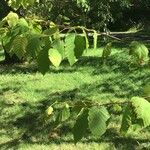
Betula maximowicziana
Monarch birch
Description
Source: leafsnapBetula maximowicziana, the monarch birch, is a species of birch tree native to the Kuril Islands and northern to central Japan. It is a valuable timber tree in Japan. It is also grown as an ornamental for its bark in Japan, Europe and a few places in North America, but has had limited acceptance due to lack of uniformity.
Care Guide
💧 Water
☀️ Light Full sun
Monarch birch is native to open habitats, such as sunny meadows and forest edges, that provide abundant light. It flourishes in Full Sun but can also tolerate Partial Sun, adapting well to a range of sunlight conditions.
🌡️ Temperature 5–32.2°C
Monarch birch is highly adaptable to a range of climate conditions, coping with both hot summers and cold winters. Nevertheless, it has an ideal temperature range for healthy growth. If temperatures rise too far, the plant can suffer from heat and humidity stress, which may lead to its death. In areas where temperatures approach the lower limit of its cold tolerance, it is important to use insulating measures to protect the plant.
💨 Humidity
🪴 Soil 6-7
🌱 Fertilizer
Apply fertilizer to your Monarch birch in early spring to encourage healthy growth. Regular feeding boosts overall health, producing vigorous growth, increased resilience to harsh conditions, and improved resistance to disease and pests. Keep a consistent fertilization schedule for your Monarch birch to maintain vibrant, deeply colored foliage and a lush appearance.
🪴 Pot & Repot
✂️ Pruning
🌿 Propagating
🐛 Diseases & pets
☠️ Toxicity
Characteristics
- Plant Type
- Tree
- Life Cycle
- Perennial
- Genus
- Betula
- Family
- Betulaceae
- Hardiness Zone
- 4-7
- Mature Height
- 20.12 m to 29.87 m
- Mature Spread
- 10.06 m to 14.94 m
- Leaf Color
- Light Green, Green
- Leaf Type
- Deciduous
- Flower Size
- 7.62 cm to 15.24 cm
- Bloom Time
- Early spring, Mid spring
- Planting Time
- Spring, Summer
- Harvest Time
- Late summer, Early fall, Mid fall
- Native Area
- Russia, Japan