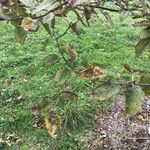
Betula nigra
River birch · Black Birch · Red birch · Water Birch · Swamp birch
Description
Source: leafsnapBetula nigra, commonly known as river birch, is a deciduous tree native to the eastern United States. This fast-growing tree can reach up to 80 feet in height and 60 feet in width. The river birch’s bark is distinctive and attractive, featuring a papery texture that peels away in thin layers of cinnamon-brown or reddish-brown. The leaves of the river birch are alternate, simple, and have serrated edges. They are dark green on the top and lighter underneath. In the fall, the leaves turn yellow before dropping off. River birches are dioecious trees, meaning they have separate male and female flowers on different trees. The male flowers appear as long yellowish-brown catkins, while the female flowers appear as small green cones. These trees prefer moist soils but can tolerate some drought once established. They grow best in full sun to partial shade but can also tolerate shade. River birch has many uses, including erosion control along streams and rivers due to its strong root system, which helps stabilize soil banks. It also provides food for wildlife, such as birds that eat its seeds and insects that feed on its leaves. Additionally, its attractive bark texture makes it an excellent choice for ornamental purposes in landscaping projects. Overall, Betula nigra is an excellent choice for those looking for a visually appealing, fast-growing tree that provides numerous ecological and aesthetic benefits!
🌳 Beyond its role in landscaping and as a source of timber, river birch bark has long been harvested to waterproof canoes. Its characteristic peeling bark is also used as a unique material for artistic crafts and decorations. The plant's fibrous wood is likewise suitable for producing pulp for the paper industry. Additionally, river birch serves as a bioindicator, with its growth response potentially indicating specific soil metal levels, such as magnesium.
🎭 Safeguarding, Flexibility, Restoration
Care Guide
💧 Water Every 7 days
Originating from wet environments, the river birch thrives in consistently moist conditions and displays moderate drought tolerance. To maintain optimal hydration and drainage, adjust your watering schedule every 1-2 weeks. As a deciduous plant, the river birch sheds its leaves annually, which affects its ability to absorb and conserve water.
When Should I Water My River Birch?
Watering your river birch at the correct time is vital for its health, growth, and disease resistance. Check the soil's dryness; when the top 1-2 inches feel dry, it's time to water. Additionally, if the leaves droop or change color, becoming yellow or brown at the edges, it indicates dehydration. Stunted growth and extended drought conditions without adequate water can also stress your river birch. Be mindful as watering too early or too late can lead to issues such as root rot or disease susceptibility, thus impacting the plant's well-being.
How Should I Water My River Birch?
River birch should be watered at the trunk's base to ensure that the water reaches the root zone effectively. Use a watering can or hose for this purpose. It's best to water early in the morning to prevent evaporation and avoid watering on the foliage to prevent diseases. The soil should be consistently moist but well-drained to prevent root rot. A moisture meter can help gauge when to water again, and ensuring the planting site or pot has good drainage is crucial.
How Much Water Does River Birch Really Need?
River birch, with its shallow root system, prefers consistently moist soil but does not fare well with waterlogging. Keeping the soil sufficiently moist without it becoming waterlogged is key. Signs of adequate hydration include lush green leaves and steady growth. Conversely, signs of over or underwatering include yellowing leaves, wilting, and soil with a foul smell or overly dry. Adjusting watering practices based on the soil's drainage and applying mulch can help maintain the right moisture levels.
What Kind of Water is Best for River Birch?
River birch can be watered with rain or tap water, as it tolerates mildly acidic to neutral pH levels. However, if your tap water is heavily chlorinated, let it sit for 24 hours before using it to allow chlorine to evaporate. Avoid using water with high fluoride levels, as it can cause leaf scorch. Lukewarm water is preferable to avoid shocking the plant's roots. Monitoring and adjusting watering to maintain a moist (not wet) soil condition can help prevent disease.
How Do River Birch's Watering Needs Change with the Seasons?
Seasonal changes affect how you should water your river birch. In spring, maintain consistent soil moisture to support growth. Summer calls for deep, infrequent watering to help it endure heat. Reduce water frequency in autumn as the plant prepares for dormancy, ensuring the soil remains lightly moist. During winter's dormancy period, water sparingly, allowing the topsoil to dry out between waterings, but ensuring roots do not dry out completely.
☀️ Light Full sun
River birch grows best when given ample sunlight throughout the day. It can, however, adjust to situations with reduced light. At every stage of development, steady light exposure supports its health, as shown by its native habitat. Excessive light as well as too little light can both hinder its growth.
What are the sunlight requirements for river birch?
River birch requires generous exposure to sunlight throughout the day for optimal growth, reflecting its natural habitat conditions. It thrives in full sun, defined as more than 6 hours of sunlight daily, but can also adapt to partial sun, receiving about 3-6 hours of sunlight. However, both overexposure and insufficient sunlight can negatively impact its growth. It's important to observe the movement of sunlight in your garden to ensure plants receive the right balance of light and shade.
How can artificial lighting be used for river birch indoors?
Indoor river birch plants may require artificial lighting to maintain optimal growth, especially when natural sunlight is insufficient, such as in winter. LED lights, customized to provide specific wavelengths of light, are a popular choice. Full sun plants need 30-50W/sq ft, partial sun plants 20-30W/sq ft, and full shade plants 10-20W/sq ft of artificial light. The light source should be positioned 12-36 inches above the plant to mimic natural sunlight, and plants typically need 8-12 hours of light per day.
What are the signs of light deficiency or excessive light in river birch?
Signs of light deficiency in river birch include small or pale new leaves, leggy or sparse growth, faster leaf drop, slower or no new growth, and chlorosis, where leaves lose their green color. Excessive sunlight can cause symptoms such as sunscald, leaf curling, wilting, and leaf scorching where leaves appear brown, dry, and crispy. These symptoms indicate the plant's struggle to adapt to its light conditions, impacting its health and growth.
What solutions are available for light-related issues in river birch?
To address light-related issues in river birch, consider gradually moving indoor plants to sunnier locations, ensuring they receive at least 6 hours of direct sunlight daily. Utilize a south-facing window or artificial lighting if the plant is large. For outdoor plants, avoid sudden changes in light intensity to prevent sunburn. Reducing obstructions, such as pruning trees that block sunlight, or transplanting to a sunnier location with good drainage, can also help ensure optimal sunlight exposure for river birch.
🌡️ Temperature 5–35°C
In its natural habitat, river birch is adapted to temperature swings ranging from 5 ℉ (-15 ℃) up to 35 ℉ (2 ℃). The tree prefers warm summers and mild winters, with a winter minimum preference of 2 ℉ (-17 ℃). In summer it does poorly when temperatures exceed 100 ℉ (38 ℃) and benefits from partial shade during those periods.
What are the ideal growing conditions for River Birch?
River Birch thrives in its native growth environment with varying temperatures from 5°F (-15°C) to 35°F (2°C), favoring warm summers and mild winters. The tree is cold-resistant and does not generally require special frost protection measures, although if winter temperatures are expected to drop below the tree's tolerance level, protective measures such as wrapping the trunk and branches in non-woven fabric or cloth are recommended. It is also important to water the plant abundantly before the first freeze of autumn to ensure the soil remains moist, helping the tree to avoid drought and water scarcity during the winter and early spring.
How does low temperature affect River Birch and what can be done?
River Birch is quite cold-tolerant and prefers temperatures above a certain minimum during winter. If temperatures fall below its growth temperature limit, you might not notice immediate changes during the winter, but come spring, the branches could become brittle, dry, and fail to produce new shoots. To manage this, it's advisable to prune away any dead branches in spring that have failed to produce new leaves, ensuring the health and growth of the tree.
What should be done if River Birch experiences high temperatures?
During the summer, it's crucial to keep River Birch's temperature below its maximum tolerance. Exceeding this temperature could result in lighter leaf color, dry and withered leaf tips, and increased susceptibility to sunburn. To mitigate these issues, trim away sunburned and dried parts of the plant, relocate it to a shaded area or use a shade cloth to protect it from midday and afternoon sun. Moreover, maintain soil moisture by watering the plant in the morning and evening.
💨 Humidity
🪴 Soil 6-7
🌱 Fertilizer
Fertilize your River birch in early spring to encourage healthy growth. Regular feeding improves overall health, producing vigorous growth, greater resilience to harsh conditions, and enhanced resistance to diseases and pests. Keep a set fertilization schedule for your River birch to preserve vibrant, deeply colored foliage and a lush appearance.
Why should I use fertilizer on my River birch?
To ensure the overall health of your River birch, it is important to regularly fertilize regardless of its type. Proper nutrients will promote strong growth and improve its resilience against challenging conditions. Additionally, fertilization will enhance the ability of your River birch to fight off diseases and pests. Since the foliage of your River birch is a notable feature, it is crucial to maintain its appearance by sticking to a consistent fertilization schedule. This will result in vibrant and lush leaves with a deep color.
When should I fertilize my River birch tree?
To keep your River birch healthy and encourage growth, it's best to fertilize it in late winter or early spring. This provides the necessary nutrients for its growth when the weather becomes warmer. If you live in a warm climate region, it's also helpful to give your River birch another round of fertilizer in early fall. This not only adds nutrients for the following growing season but also strengthens the tree's ability to withstand winter without foliage damage. Fertilizing earlier in fall ensures that the new branches have enough time to grow and withstand the cold winter.
When is it best to not use fertilizer on my River birch tree?
To ensure the health of your River birch, it is important to be mindful of when to fertilize. Avoid applying fertilizer during the early and mid-winter months as the tree is dormant and does not require nutrients during this time. It is also advisable to refrain from fertilizing during late spring and summer, when the weather tends to be hotter and drier. These conditions can negatively impact the tree's response to fertilization. Instead, adhere to a fertilization schedule that involves feeding in early spring and early fall.
What kind of fertilizer should I use for my River birch tree?
River birch trees require nitrogen as the most essential nutrient, although phosphorus and potassium are still necessary. Therefore, a balanced fertilizer with all three nutrients, like a 10-10-10 blend, can be effective. However, for optimal growth, a slightly higher nitrogen ratio is often beneficial, such as 10-6-4. Both granular and liquid fertilizers can be used for fertilization.
How can I properly fertilize my River birch tree?
To fertilize your River birch, you have two options: granular fertilizer or liquid fertilizer. For granular fertilizer, simply sprinkle it on the soil at the right time. It releases nutrients slowly over time. It's best to moisten the soil before applying. On the other hand, liquid fertilizer is less common but still an alternative. Mix it with water and pour it around the base of your River birch. If needed, perform a soil test to check the pH before fertilizing.
🪴 Pot & Repot Every 12 months
✂️ Pruning
The river birch is known for its unique peeling bark and multi-trunk structure. To improve its health and appearance, prune your river birch in early spring by removing any dead or crossing branches. Thinning the branches also helps to improve air circulation and sunlight exposure. Always use clean pruning tools and avoid heavy pruning to reduce stress on the tree.
🌿 Propagating
🐛 Diseases & pets
☠️ Toxicity
The river birch is potentially harmful to humans and animals. The essential oil found in the tree contains methyl salicylate, a toxic compound which should not be used externally or internally. Common adverse reactions typically include skin and respiratory irritation, especially in sensitive individuals.
Characteristics
- Plant Type
- Tree
- Life Cycle
- Perennial
- Genus
- Betula
- Family
- Betulaceae
- Hardiness Zone
- 4-9
- Mature Height
- 24.99 m to 29.87 m
- Mature Spread
- 11.89 m to 17.98 m
- Leaf Color
- Green, Yellow
- Leaf Type
- Deciduous
- Flower Color
- Yellow, Brown, Green
- Flower Size
- 0.25 cm to 0.51 cm
- Bloom Time
- Mid spring, Late spring
- Planting Time
- Spring, Summer, Autumn, Winter
- Harvest Time
- Mid summer