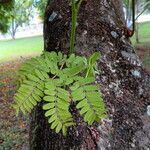
Biancaea sappan
Gango · Césalpinie sappan · Indisches Rotholz · Sappanwood · Sappan
Description
Source: wikipedia (CC BY-SA)Biancaea sappan is a species of flowering tree in the legume family, Fabaceae, that is native to tropical Asia. Common names in English include sappanwood and Indian redwood. It was previously ascribed to the genus Caesalpinia. Sappanwood is related to brazilwood, and was itself called brasilwood in the Middle Ages.
Care Guide
💧 Water
☀️ Light Full sun
Sappanwood comes from open habitats, like sunny meadows and forest edges, that offer abundant light. It thrives in Full Sun but can also tolerate Partial Sun, adapting readily to different sunlight conditions.
🌡️ Temperature 20–37.8°C
Sappanwood is indigenous to regions with temperatures between 68 and 100.4 °F (20 to 38 ℃). It generally thrives within this warm temperature range. Adjustments for the plant's temperature requirements may be needed during colder seasons.
💨 Humidity
🪴 Soil 6-7
🌱 Fertilizer
The best time to fertilize a Sappanwood is in early spring, as it breaks dormancy. This encourages overall growth and flower development. Fertilizing improves the foliage, stems, and branches, and promotes flowers that are large, colorful, and long-lasting. It also helps transport nutrients from the roots to the flowers and enhances the plant’s health and resistance to disease.
🪴 Pot & Repot
✂️ Pruning
🌿 Propagating
🐛 Diseases & pets
☠️ Toxicity
Characteristics
- Plant Type
- Tree
- Life Cycle
- Perennial
- Genus
- Biancaea
- Family
- Fabaceae
- Hardiness Zone
- 10-12
- Mature Height
- 6.1 m
- Mature Spread
- 7.01 m
- Leaf Color
- Green
- Leaf Type
- Semi-evergreen
- Flower Color
- Yellow
- Flower Size
- 2.03 cm to 3.05 cm
- Bloom Time
- Summer, Early fall, Mid fall
- Planting Time
- Spring, Autumn
- Harvest Time
- Fall, Early winter, Mid winter