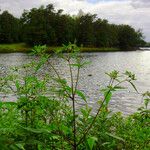
Bidens connata
London Bur-marigold · Purplestem Beggarticks · Purple-stemmed Beggarticks · Connate Beggarticks · Purple-stemmed Swamp Beggarticks
Description
Source: leafsnapBidens connata , the purplestem beggarticks or London bur-marigold, is a species of flowering plant in the family Asteraceae. It is widespread across much of Eurasia, North Africa, and North America, and naturalized in Australia and on certain Pacific Islands.Bidens connata is an annual herb up to 200 cm (80 inches) tall. It produces as many as 3 yellow flower heads containing both disc florets and ray florets. The species grows in marshes and other wet sites.
Care Guide
💧 Water
Purple-stem beggarticks thrive in wet environments, preferring high humidity and tolerating flooding. For optimal growth, weekly watering is recommended. This herbaceous plant flourishes during the warm months when rainfall is abundant, making it well-suited for outdoor gardening in humid climates.
☀️ Light Full sun
Purple-stem beggarticks do best in locations that receive sunlight for part of the day. Although they can tolerate places without sunlight, their growth will be inhibited. Their natural habitat shows the same light pattern. Excessive sun exposure can cause the plant to dry out.
What are the sunlight requirements for Purple-stem beggarticks?
Purple-stem beggarticks requires about 3-6 hours of sunlight daily, known as partial sun exposure. It's important to monitor how sunlight moves through your garden to find spots that offer a balance of light and shade, ensuring the plants thrive. Although this plant can survive in less sunny conditions, its growth may be hindered.
How does sun exposure affect the growth of Purple-stem beggarticks?
Sun exposure is crucial for the growth of Purple-stem beggarticks, mimicking their natural habitat which benefits from partial day sun exposure. While the plant can endure low-light environments, its growth will be significantly slowed. Conversely, too much sunlight can lead to dryness and negatively impact the plant's health.
What artificial lighting requirements do indoor Purple-stem beggarticks plants have?
Indoor Purple-stem beggarticks plants require adequate artificial lighting to support optimal growth, especially when natural sunlight is insufficient. LED lights are recommended for their ability to provide specific wavelengths needed by the plant. Full sun plants should receive 30-50W/sq ft, partial sun plants 20-30W/sq ft, and full shade plants 10-20W/sq ft of artificial light. The light source should be placed 12-36 inches above the plant for 8-12 hours per day to mimic natural daylight.
What are the symptoms of inadequate light in Purple-stem beggarticks?
Symptoms of light deficiency in Purple-stem beggarticks include smaller leaves, leggy or sparse growth, faster leaf drop, slower or no new growth, and lighter-colored or yellowing leaves. Excessive sunlight can cause symptoms like chlorosis, sunscald, leaf curling, wilting, and leaf scorching, indicating both insufficient and excessive light can negatively impact the plant.
What are the solutions for Purple-stem beggarticks struggling with inadequate sunlight?
To address insufficient sunlight for Purple-stem beggarticks, gradually move your plants to sunnier spots each week, aiming for 3-6 hours of direct sunlight daily. For indoor plants, consider using artificial lights for at least 8 hours a day or invest in professional grow lights. If plants are outdoors, avoid sudden changes to prevent sunburn. For ground plants, reduce shadows by pruning and consider transplanting smaller plants during their dormant period to sunnier locations. Note that parts of the plant damaged by insufficient light may not recover, but new growth will be healthy after adjusting the light exposure.
🌡️ Temperature 0–32.2°C
Purple-stem beggarticks originate from temperate environments and thrive at temperatures between 68 and 95 °F (20 to 35 ℃). Seasonal changes in care might be needed to preserve these conditions, especially in climates that lie outside this range.
What is Purple-stem beggarticks and where does it thrive?
Purple-stem beggarticks, scientifically known as Bidens connata, is native to temperate environments where it thrives best. It prefers temperatures ranging from 68 to 95 °F (20 to 35 °C), making seasonal adjustments in care necessary, especially in climates not within this range. Despite its strong cold resistance, special measures might be needed in winters with temperatures dropping below -35°C, such as covering the plant with soil or straw and ensuring the soil remains moist before the first freeze in autumn.
How does Purple-stem beggarticks react to low temperatures?
Purple-stem beggarticks is known for its cold tolerance, thriving best when the temperature remains above 20°C. It is generally resilient during winter and should be kept above 0°C. However, if the temperature falls below -35°C, while there may not be notable changes in winter, the plant may exhibit decreased sprouting or fail to sprout at all come spring. In such cases, removing any parts that have failed to sprout in spring is recommended.
How should Purple-stem beggarticks be cared for in high temperatures?
During the summer months, it's important to ensure the temperature around Purple-stem beggarticks does not exceed 35°C. Excessive heat above 38°C can cause the plant's leaves to lighten, curl, become susceptible to sunburn, and in severe cases, cause the entire plant to wilt and dry. To mitigate these issues, trim away the sunburned and dried parts, relocate the plant to a shaded area during midday and afternoon sun, or use a shade cloth. Additionally, watering the plant in the morning and evening helps maintain soil moisture.
💨 Humidity
🪴 Soil 5-7
🌱 Fertilizer
Purple-stem beggarticks do well with regular, weak applications of fertilizer to encourage healthy leaf development. Fertilize Purple-stem beggarticks roughly once a month during the summer. Nitrogen is vital for foliage, and providing nitrogen-rich sources helps Purple-stem beggarticks prosper.
🪴 Pot & Repot
✂️ Pruning
To ensure the healthy growth of purple-stem beggarticks, known for their purple stems and yellow flowers, regular pruning is essential. Effective techniques include deadheading, trimming in early spring, and removing damaged parts. These practices help encourage growth, maintain the plant's shape, improve airflow, and reduce the risk of disease, ultimately promoting vibrant blooms throughout the growing season.
🌿 Propagating
🐛 Diseases & pets
☠️ Toxicity
Characteristics
- Plant Type
- Herb
- Life Cycle
- Annual
- Genus
- Bidens
- Family
- Asteraceae
- Hardiness Zone
- 3-8
- Mature Height
- 0.2 m to 2.13 m
- Mature Spread
- 30 cm
- Leaf Color
- Green, Dark Green
- Leaf Type
- Deciduous
- Flower Color
- Yellow, Brown, Orange
- Flower Size
- 2.54 cm to 5.08 cm
- Bloom Time
- Mid summer, Late summer, Early fall
- Planting Time
- Spring, Summer, Autumn
- Harvest Time
- Early fall, Mid fall