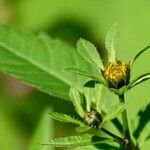
Bidens frondosa
Devil's Beggarticks · Beggar-ticks · Stick-tights · Devil's beggar-ticks · Devil's-Pitchfork
Description
Source: leafsnapBidens frondosa is a North American species of flowering plant in the aster family, sunflower family. It is widespread across much of Canada, the United States, and Mexico It is known in many other parts of the world as an introduced species, including Europe, Asia, Morocco, and New Zealand. Its many common names include devil's beggarticks, devil's-pitchfork, devil's bootjack, sticktights, bur marigold, pitchfork weed, tickseed sunflower, leafy beggarticks, and common beggar-ticks.
🌳 The notable devil's beggarticks is recognized not only for its physical features but also for its chemical abilities. Growing well in contaminated soils, it remarkably takes up heavy metals such as copper and zinc, indicating it could be an environmentally friendly way to clean polluted soil. Historically, Native Americans ate its young shoots as a spring vegetable, although their bitter taste limited their appeal in cooking.
🎭 Devil that has horns
Care Guide
💧 Water
Devil's beggarticks thrives in environments with moderate moisture and is well-suited to semi-aquatic habitats. While it prefers consistent hydration, it can tolerate brief periods of dryness. To maintain its health and vigor during its active growth period, water it weekly.
How should I water my Devil's beggarticks plants?
There are several ways to water Devil's beggarticks. You can use a garden hose with a spray nozzle or a watering can, or any other common watering tool. Devil's beggarticks is not too picky about how it gets water, as it can survive on rainwater, tap water, or filtered water. However, it's generally best to avoid watering this plant from overhead as it can harm the leaves and flowers and potentially cause disease. A drip irrigation system is often the most effective method, as it provides even and direct water to the soil. If you have a container-grown Devil's beggarticks, you can use a cup, watering can, or your tap to water it directly onto the soil.
What do I do if I give my Devil's beggarticks too much or too little water?
To avoid underwatering Devil's beggarticks, simply water the plant regularly when you notice it lacks moisture. However, overwatering can be a more serious problem if not addressed early. Excessive watering can lead to diseases that may cause the plant to decline and die. To prevent this, choose a suitable spot for growing with ample sunlight to dry the soil and good drainage to avoid water pooling. If you unintentionally overwater your potted Devil's beggarticks, consider transferring it to a new pot with better soil drainage and more drainage holes. When repotting, use loose soil and an efficient draining pot.
How often do I need to water my Devil's beggarticks?
Devil's beggarticks requires regular watering during the growing season. In spring, water once a week. As the season progresses and gets warmer, increase watering to two to three times a week. However, be careful not to exceed this rate as it can harm the plant. Regardless of watering frequency, keep the soil relatively moist but not wet. When watering Devil's beggarticks in a pot, increase watering frequency as pot soil can dry out faster. In most cases, water container-grown Devil's beggarticks a few times per week compared to once a week for plants in the ground.
How much water does my Devil's beggarticks plant need?
Determining how much water to give to your Devil's beggarticks can be approached in a few different ways. Some gardeners prefer to feel the soil to gauge its moisture level. This method suggests watering until the top six inches of soil feel moist. Alternatively, you can use a specific measurement as a guideline. Typically, Devil's beggarticks require about two gallons of water per week, depending on environmental factors like heat and soil dryness. However, following rigid guidelines may result in overwatering if your plant actually needs less. When growing Devil's beggarticks in a container, a different method is needed. Moistening all the dry layers of soil is key, which can be tested with a simple finger check for moisture. Additionally, you can water until excess water trickles out of the pot's drainage holes.
How do I know if I'm giving enough water to my Devil's beggarticks plant?
Taking care of Devil's beggarticks can be tricky when it comes to watering. While these plants need to be watered weekly to satisfy their deep root system, they are also prone to root rot if overwatered. Overwatering can also cause browning of the leaves. Underwatering is less of a concern as these plants can survive without additional watering for some time, but if left too long without water, they may wilt and develop dry leaves.
☀️ Light Partial sun
Devil's beggarticks does well with moderate sunlight and can also survive in places with abundant sun. It establishes itself in habitats where sunlight shifts over the course of the day. Excessive sun can impede its growth, while too little sunlight prevents it from growing optimally and may harm its health.
What are the sunlight requirements for Devil's beggarticks?
Devil's beggarticks needs varying amounts of sunlight to thrive, generally doing well in moderate to abundant solar exposure. It prefers environments where sunlight conditions change throughout the day. Specifically, 'Partial sun' signifies about 3-6 hours of sunlight, whereas 'Full sun' requires more than 6 hours of direct sunlight. Not getting enough sunlight may prevent optimal growth and even harm the plant's health, while too much direct sunlight might also hinder its growth. Indoor devil's beggarticks or those in less sunny locations can benefit from artificial light sources, especially during winter or in low-light environments, to ensure healthy growth.
How does artificial lighting support Devil's beggarticks growth indoors?
For indoor Devil's beggarticks or those situated in areas with inadequate natural sunlight, artificial lighting can be crucial for promoting optimal growth. It's recommended to use LED lights, which can be customized to provide specific wavelengths needed by your plants. Full sun plants require 30-50W/sq ft, partial sun plants need 20-30W/sq ft, and full shade plants should have 10-20W/sq ft of artificial light. The light source should be placed 12-36 inches above the plant to mimic natural sunlight conditions, and most plants will need 8-12 hours of light per day.
What are the symptoms of inadequate or excessive light exposure in Devil's beggarticks?
Symptoms of inadequate light exposure in Devil's beggarticks include the development of smaller new leaves, leggy or sparse growth, quicker leaf drop, halted or no new growth, pale or irregularly colored new leaves due to chlorosis, and conditions like leaf curling, wilting, and leaf scorching when the sunlight is too intense. Excessive sunlight exposure can result in sunscald, which damages the plant's leaves or stems, and chlorosis, leading to yellowed leaves because of reduced chlorophyll and impaired photosynthesis. Leaf curling can occur as a defense mechanism against too much sun, and wilting happens when the plant loses too much water through transpiration.
How can you manage light exposure for healthier Devil's beggarticks growth?
To manage light exposure for Devil's beggarticks and promote healthier growth, adjust the plant's location gradually to increase sunlight exposure, aiming for 3-6 hours of direct sunlight daily. For large or immovable plants indoors, consider using artificial light sources like desk lamps or professional plant grow lights, keeping them on for at least 8 hours a day. Outdoors, plants should be moved to sunnier spots gradually to avoid sunburn. Reducing obstructions such as pruning trees or relocating smaller plants during their dormant period to sunnier spots can also help. Note that parts of the plant damaged by insufficient sunlight may not recover, but new growth should be healthy once light conditions improve.
🌡️ Temperature 0–37.8°C
Devil's beggarticks is used to 68 to 100 °F (20 to 38 ℃) conditions, reflecting its native temperate zone. Adjusting temperatures—lower in winter and higher in summer—replicates its natural environment.
What are the ideal temperature conditions for growing Devil's beggarticks?
Devil's beggarticks thrives in temperatures ranging from 68 to 100 °F (20 to 38 °C), which is indicative of its preference for a temperate climate. To mimic its natural environment, it is advisable to adjust temperatures lower in winter and higher in summer. The plant possesses strong cold resistance, meaning special frost protection measures are generally unnecessary. However, in instances where winter temperatures are expected to fall below -35°C, it becomes important to provide cold protection, which can be done by covering the plant with soil or straw. Additionally, watering the plant abundantly before the first freeze of autumn to ensure the soil remains moist is recommended. This care helps prevent drought and water scarcity for the plant during the winter and early spring months.
How does Devil's beggarticks react to low temperatures, and what are the recommended solutions?
Devil's beggarticks is cold-tolerant, thriving best in temperatures above 20°C and should ideally be kept above 0°C during winter. If temperatures fall below -35°C, there might not be noticeable changes immediately, but a decrease in sprouting or a lack of sprouting might occur in spring. To mitigate this, any parts of the plant that fail to sprout in spring should be removed as part of the plant's care.
How should Devil's beggarticks be cared for in high temperatures?
In summer, Devil's beggarticks should be maintained at temperatures below 38°C. Exposure to temperatures above 43°C can cause the leaves to lighten in color, become prone to curling, and make the plant susceptible to sunburn; in severe cases, the plant may wilt and dry out completely. To address these issues, sunburned and dried-up parts of the plant should be trimmed away. Moving the plant to a location with shade from the midday and afternoon sun or using a shade cloth can help protect it. Additionally, watering the plant in the morning and evening to keep the soil moist is advisable.
💨 Humidity
🪴 Soil 6-7
🌱 Fertilizer
Devil's beggarticks benefit from regular, dilute applications of fertilizer to encourage healthy leaf growth. Fertilize roughly once a month during the summer. Nitrogen is vital for foliage, and providing nitrogen-rich sources helps Devil's beggarticks thrive.
🪴 Pot & Repot
✂️ Pruning
🌿 Propagating
🐛 Diseases & pets
☠️ Toxicity
Characteristics
- Plant Type
- Herb
- Life Cycle
- Annual
- Genus
- Bidens
- Family
- Asteraceae
- Hardiness Zone
- 3-11
- Mature Height
- 20 cm to 61 cm
- Mature Spread
- 61 cm to 91 cm
- Leaf Color
- Green, Red
- Leaf Type
- Deciduous
- Flower Color
- Yellow
- Flower Size
- 1.27 cm to 2.54 cm
- Bloom Time
- Mid summer
- Planting Time
- Spring
- Harvest Time
- Mid summer, Late summer
- Native Area
- Americas, Africa, Polynesia, Europe, Asia