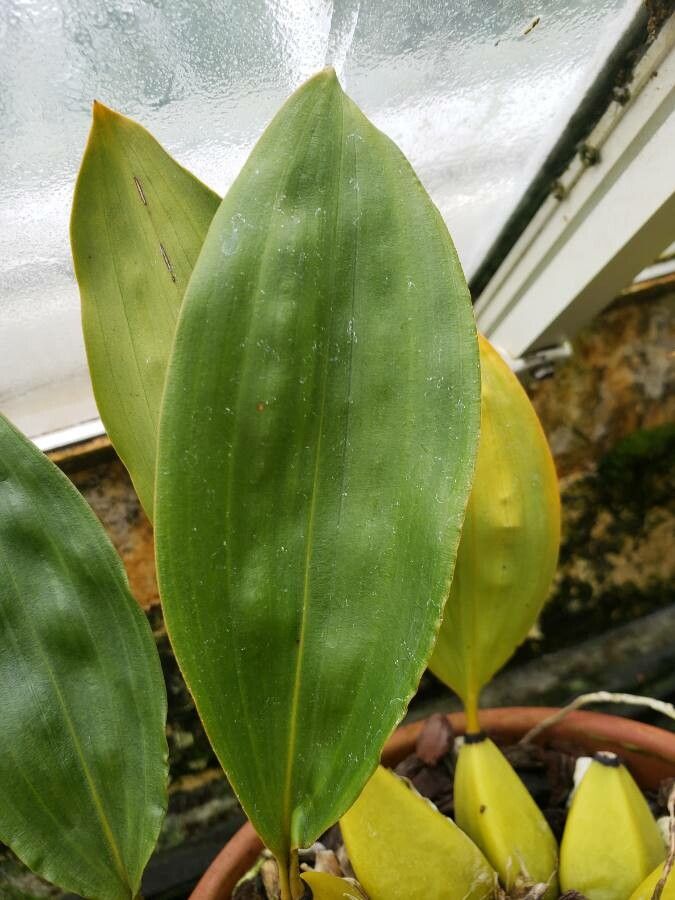
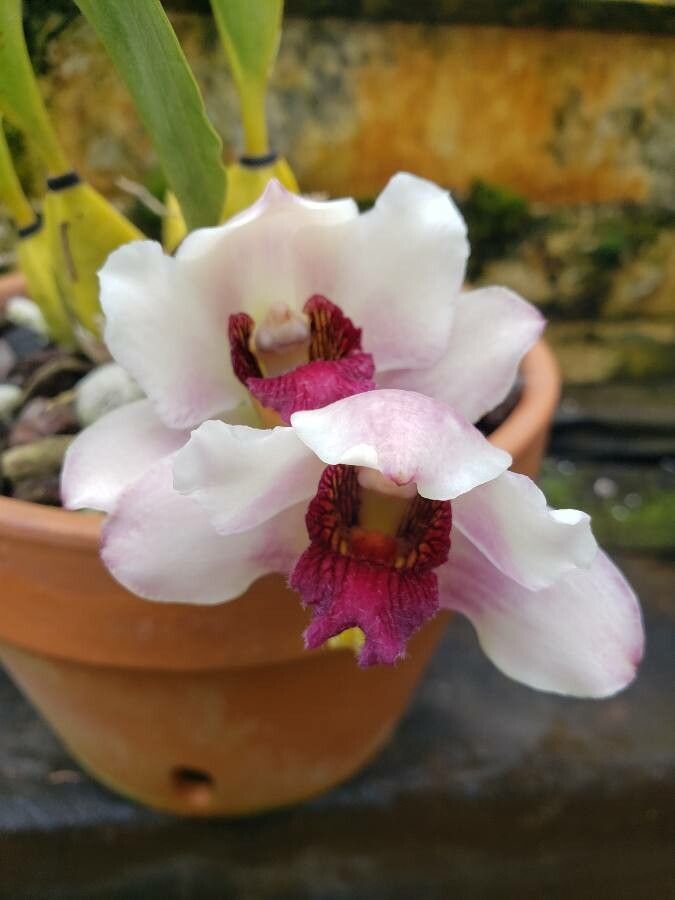
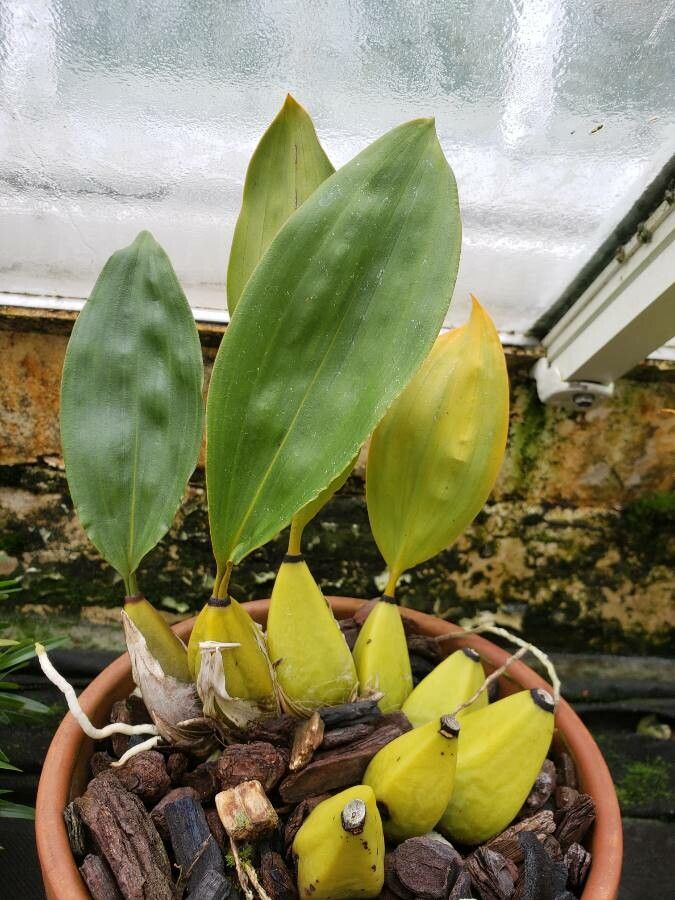
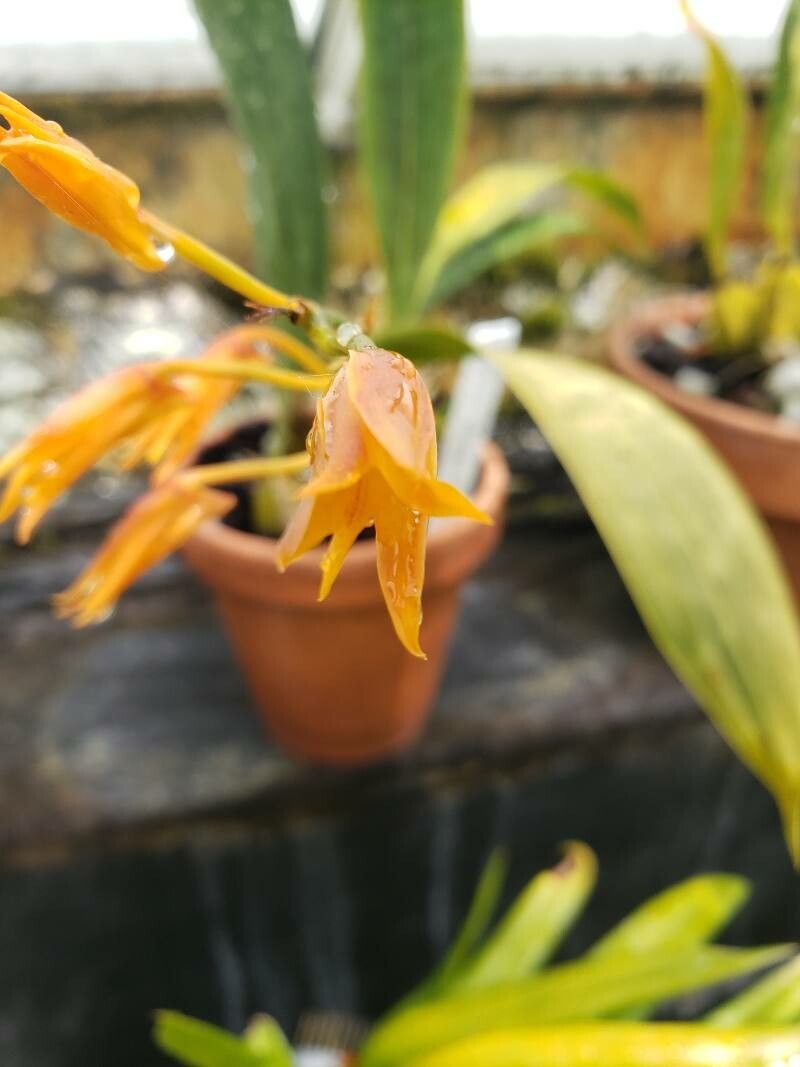
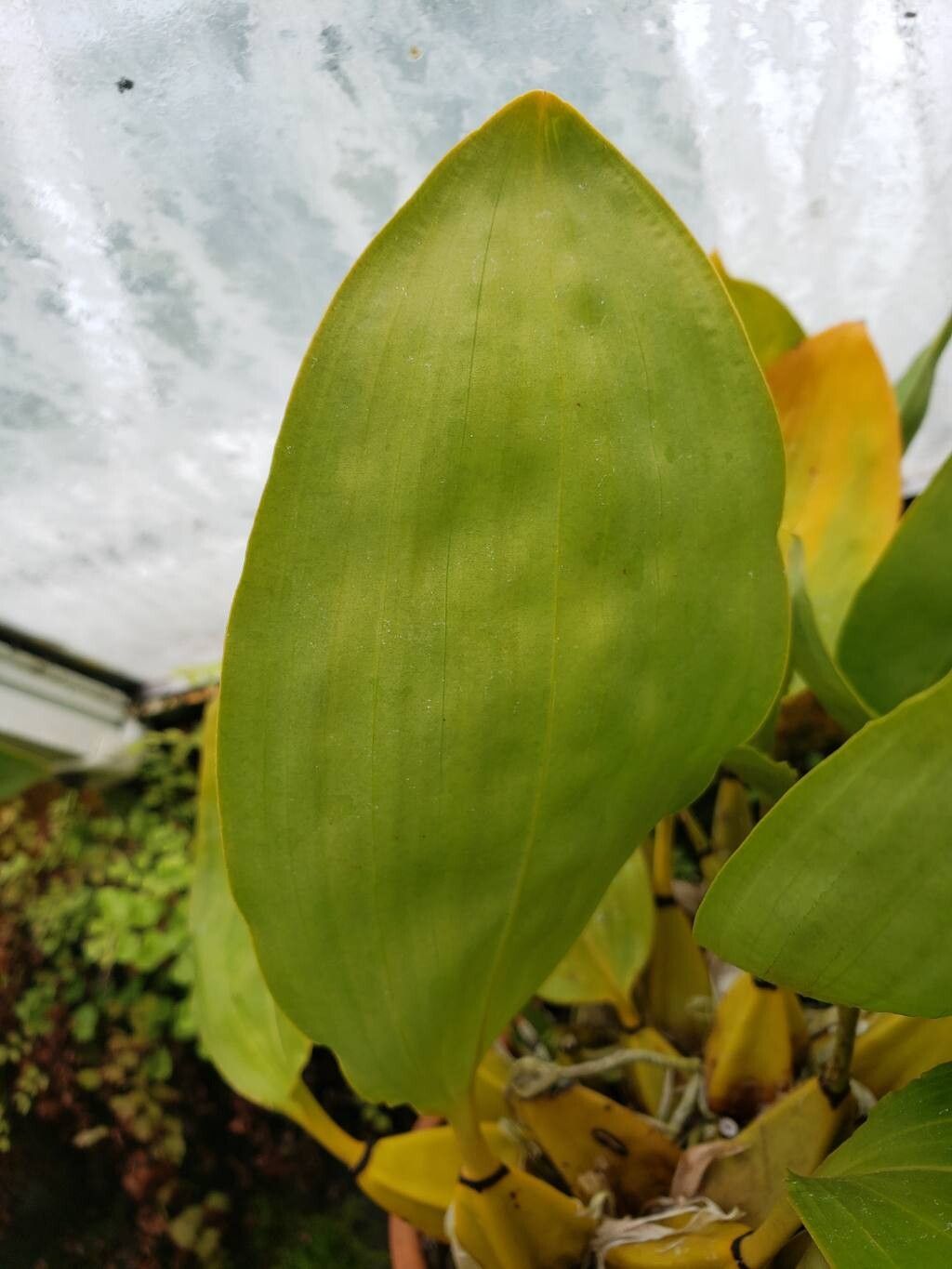
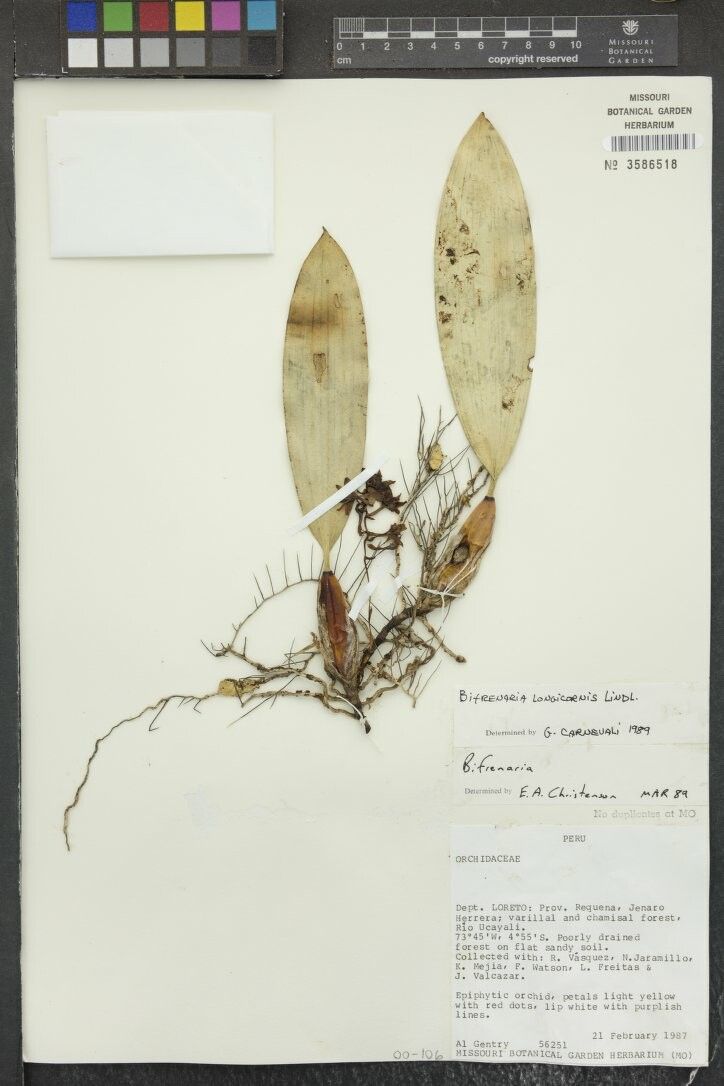
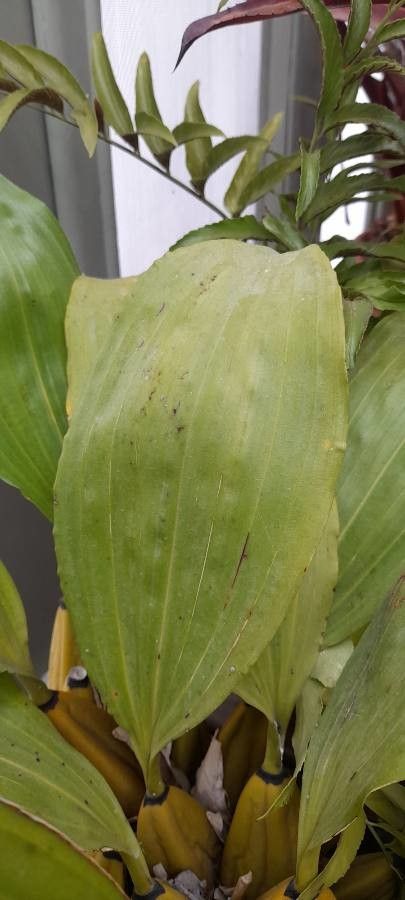
Bifrenaria harrisoniae is a species of orchid native to Brazil.
Harrison's bifrenaria is generally resistant to disease and experiences relatively few insect pest problems. Its care is considered difficult because it needs high humidity along with good air circulation and an environment with few harmful pathogens. Too much watering can cause root rot. Although anyone can grow Harrison's bifrenaria, keeping it healthy and getting it to bloom again requires more cultivation experience.
How to keep Bifrenaria Harrisoniae.
Light
Harrison's bifrenaria is a sun-loving perennial herbaceous plant that comes from open habitats and commonly grows in meadows and grasslands. It prefers full sun but can tolerate partial sun.
Water
Harrison's bifrenaria flourishes in warm and humid environments, much like its native habitat in Brazil. It prefers consistent moisture, but once established, it can tolerate moderate drought. To support its growth, provide regular weekly watering and enhance humidity with misting or pebble trays. It is crucial to use well-draining soil to prevent root rot.
Temperature
Harrison's bifrenaria does best in warm conditions. It prefers moderately high temperatures rather than excessive heat and humidity. Sunlight helps warm the plant and encourages flowering. However, long periods of direct sun in summer can cause sunburn, so the amount of light it receives should be limited during that season. The plant is generally not tolerant of cold and needs adequate protection and warmer temperatures in winter to avoid freezing.
Fertilizer
Proper fertilization is essential for the health and appearance of Harrison's bifrenaria. Fertilize Harrison's bifrenaria in summer, repeating the application monthly throughout that season. Nutrients support growth and sustain the plant's parts. Fertilization improves Harrison's bifrenaria's flowering, helping it achieve its best blooms.
Pruning
Harrison's bifrenaria is a vibrant orchid that benefits from pruning between early and late spring. To promote growth and blooming, remove dead flowers and any damaged foliage. Additionally, thin out overcrowded stems to improve air circulation. Consistent pruning enhances the plant's health, encourages more blooms, and improves its overall appearance.
Pot & Repot
When repotting Harrison's bifrenaria, select a pot that is slightly larger with good drainage, ideally a clear orchid pot. Use a well-draining, orchid-specific potting mix that includes bark or moss. Gently clean the roots and trim any that are dead or rotting. Repot after flowering—typically in spring or fall—then water thoroughly and place the plant in bright, indirect light. Once repotted, avoid disturbing the roots.
Botanical profile.
- Plant Type
- Herb
- Life Cycle
- Perennial
- Genus
- Bifrenaria
- Family
- Orchidaceae
- Hardiness Zone
- 10-12
- Mature Height
- 30 cm to 40 cm
- Mature Spread
- 20 cm to 30 cm
- Leaf Color
- Dark Green
- Leaf Type
- Evergreen
- Flower Color
- White, Yellow
- Flower Size
- 5.08 cm to 6.35 cm
- Bloom Time
- All year round
- Planting Time
- Spring, Summer
- Harvest Time
- All year round
- Native Area
- Brazil
Reader questions.
What are the sunlight requirements for Harrison's bifrenaria?
Harrison's bifrenaria, or Bifrenaria harrisoniae, thrives in conditions where it can receive the appropriate amount of sunlight it needs. For full sun exposure, it requires above 6 hours of sunlight daily, which is essential for its optimal growth. However, it also does well under partial sun, requiring about 3-6 hours of sunlight per day. It's important to observe the movement of sunlight through your garden to find the ideal spots that offer a perfect balance of light and shade. This ensures your Harrison's bifrenaria will be happy and healthy.