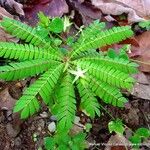
Biophytum dendroides
Care Guide
💧 Water
☀️ Light Partial sun
Biophytum dendroides naturally occurs in habitats like forest understories or rocky areas, where it is exposed to natural shade. It favors partial sunlight but can also tolerate full sun or full shade, illustrating its versatile and hardy nature.
What are the sun requirements for Biophytum dendroides?
Biophytum dendroides, also known by its botanical name Biophytum dendroides, thrives under specific sunlight conditions to ensure their growth and happiness. The plant requires partial sun, meaning about 3-6 hours of sunlight daily, or full sun, which implies it needs more than 6 hours of sunlight a day. It is crucial to observe how sunlight transitions across your garden space throughout the day, selecting locations that offer the ideal mix of light and shadow to meet the light requirements of your Biophytum dendroides plants.
🌡️ Temperature 20–37.8°C
Biophytum dendroides comes from tropical areas, where the climate is generally warm and humid. As a result, it is adapted to high temperatures and humidity. It is sensitive to abrupt temperature changes and prefers a steady thermal environment, so indoor temperature fluctuations should be avoided. It typically does not tolerate cold and needs warmer conditions to grow. If the surrounding temperature becomes too low, the plant may stop growing or even die.
💨 Humidity
🪴 Soil 6-7
🌱 Fertilizer
Proper fertilization is essential for the health and appearance of Biophytum dendroides. Fertilize Biophytum dendroides during the summer, repeating the treatment monthly throughout the season. Nutrients support growth and preserve the plant’s parts. Fertilization improves Biophytum dendroides’s flower display, helping it produce its best blooms.
🪴 Pot & Repot
✂️ Pruning
Biophytum dendroides is characterized by its delicate, fern-like leaves and small yellow flowers. To enhance its shape and blooms, it is important to prune the plant in early spring. Start by removing any dead stems to improve airflow and reduce the risk of disease. Additionally, thinning out older stems will promote new growth, resulting in healthier foliage and more abundant flowering.
🌿 Propagating
🐛 Diseases & pets
☠️ Toxicity
Characteristics
- Plant Type
- Herb
- Life Cycle
- Perennial
- Genus
- Biophytum
- Family
- Oxalidaceae
- Hardiness Zone
- 10-12
- Mature Height
- 10 cm to 30 cm
- Mature Spread
- 15 cm to 25 cm
- Leaf Color
- Light Green, Green
- Leaf Type
- Evergreen
- Flower Size
- 0.51 cm to 1.02 cm
- Bloom Time
- Summer, Early fall, Mid fall
- Planting Time
- Spring, Summer, Autumn
- Harvest Time
- Late summer, Fall, Early winter
- Native Area
- Colombia, Belize, Honduras, Mexico, Guatemala, Bolivia, El Salvador, Nicaragua, Ecuador, Costa Rica, Panama