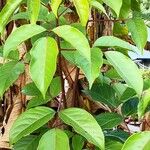
Bischofia polycarpa
Description
Source: wikipedia (CC BY-SA)Bischofia polycarpa, or Chinese bishop wood, is a plant species of the family Phyllanthaceae. It and the related Bischofia javanica are the only two members of genus Bischofia and tribe Bischofieae.
Care Guide
💧 Water
Chinese bishopwood, a plant originating from subtropical regions, is known for its drought tolerance and ability to thrive with occasional rainfall. To ensure optimal growth, water the chinese bishopwood every 2 to 3 weeks, allowing the soil to dry out between waterings. Its capacity to store water enhances its resilience in various climates throughout the growing season.
☀️ Light Full sun
Chinese bishopwood comes from open habitats, like sunny meadows and forest margins, where light is abundant. It performs best in Full Sun but can also endure Partial Sun, adapting well to a range of sunlight conditions.
What are the sunlight requirements for Chinese bishopwood?
Chinese bishopwood, known botanically as Bischofia polycarpa, thrives best in full sun conditions, requiring more than 6 hours of sunlight daily. It can also adapt well to partial sun, with about 3-6 hours of sunlight. This flexibility is attributed to its origin from open environments such as sunny meadows and forest edges. When planning your garden, it's essential to observe how sunlight moves through the area to ensure you choose locations that offer the right balance of light for your plants.
How can I use artificial lighting for Chinese bishopwood indoors?
When natural sunlight is not adequate, especially during winter or in less sunny spaces, artificial lighting becomes a crucial alternative for indoor plants like Chinese bishopwood. LED lights are recommended due to their ability to be tailored to provide specific light wavelengths needed by plants. For full sun plants, 30-50W per square foot is advised, 20-30W per square foot for partial sun plants, and 10-20W per square foot for full shade plants. The light source should be placed 12-36 inches above the plant to mimic natural sunlight effectively, with the duration of light exposure ideally matching the plant species' natural daylight hours, usually between 8-12 hours daily.
What are some common symptoms of sunlight deficiency or overexposure in Chinese bishopwood?
Chinese bishopwood may exhibit various symptoms when exposed to suboptimal lighting conditions. Light deficiency can lead to smaller new leaves, leggy or sparse growth, faster leaf drop, slower or no new growth, and lighter-colored or irregularly patterned new leaves. Overexposure to sunlight might cause chlorosis (leaves turning yellow), sunscald (pale, bleached areas on leaves), leaf curling, wilting, and leaf scorching (brown, dry edges on leaves). These symptoms reflect the plant's response to its environment, either by conserving energy or reducing surface area exposure to sunlight.
How can I address sunlight-related issues for my Chinese bishopwood?
To optimize growth for Chinese bishopwood suffering from sunlight-related issues, a gradual adjustment to more suitable light conditions is essential. For indoor plants, gradually move them to sunnier spots until they receive at least 6 hours of direct sunlight daily, utilizing a south-facing window for natural light or artificial plant grow lights for additional support. Outdoor plants should also be moved to sunnier areas progressively to avoid sunburn. Reducing obstructions like pruning trees or relocating plants can also help in maximizing sunlight exposure. Note that parts of the plant damaged by insufficient light may not recover, but new growth should be healthy following these adjustments.
🌡️ Temperature 20–37.8°C
Chinese bishopwood comes from tropical areas, where the climate is generally warm and humid. Therefore it is well adapted to high temperatures and humidity. It is sensitive to sudden temperature changes and prefers a stable temperature environment, so indoor temperature fluctuations should be avoided. It typically cannot tolerate cold conditions and requires relatively warm temperatures for growth. If the surrounding temperature falls too low, the plant may stop growing or even die.
💨 Humidity
🪴 Soil 6-7
🌱 Fertilizer
Fertilization is essential for the care of Chinese bishopwood. Regular nutrient applications during the growing season preserve the energy needed for its showy leaves and encourage overall growth. Failing to fertilize can lead to unhealthy foliage, reduced ornamental value, and stunted or weak growth that is more likely to break.
🪴 Pot & Repot
✂️ Pruning
To help Chinese bishopwood thrive, it's important to prune it annually using formative and maintenance techniques in early spring. This practice enhances air circulation, encourages healthy growth, and helps the plant maintain its shape. Be sure to use sharp tools to prevent disease, and dispose of cuttings promptly to deter pests.
🌿 Propagating
🐛 Diseases & pets
☠️ Toxicity
Characteristics
- Plant Type
- Tree
- Life Cycle
- Perennial
- Genus
- Bischofia
- Family
- Phyllanthaceae
- Hardiness Zone
- 9-11
- Mature Height
- 14.94 m
- Mature Spread
- 14.02 m
- Leaf Color
- Dark Green, Olive Drab
- Leaf Type
- Deciduous
- Flower Color
- Green
- Flower Size
- 7.62 cm to 12.70 cm
- Bloom Time
- Mid spring, Late spring
- Planting Time
- Spring, Autumn
- Harvest Time
- Late summer, Early fall, Mid fall
- Native Area
- China