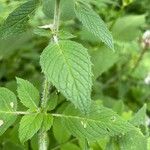
Blephilia hirsuta
Hairy wood-mint · Hairy Pagoda-Plant · Hairy Blephilia
Description
Source: leafsnapBlephilia hirsuta, commonly known as hairy wood mint, is a perennial herbaceous plant in the mint family, Lamiaceae. Native to North America, this plant is found primarily in the eastern and central regions of the United States. Typically reaching up to 2 feet in height, it features square stems and opposite leaves that are hairy on both sides. The flowers of Blephilia hirsuta are small, tubular, and clustered densely at the top of each stem. Blooming from late spring through summer, these flowers attract a variety of pollinators, including bees, butterflies, and hummingbirds. Hairy wood mint thrives in moist soils in partially shaded areas, such as woodland edges or along streams. It can also tolerate full sun if it receives adequate moisture. The leaves of Blephilia hirsuta emit a pleasant aroma when crushed or rubbed, thanks to their high concentration of essential oils. Traditionally, Native American tribes have used these leaves for medicinal purposes to treat ailments such as headaches, colds, and feverish conditions. Overall, Blephilia hirsuta is not only an attractive plant for gardens but also serves important ecological functions. It provides habitat for pollinators like bees, which are essential for maintaining healthy ecosystems.
🎭 Wealth, Affection, Desire
Care Guide
💧 Water Every 7 days
The hairy pagoda plant thrives in moderate moisture and benefits from consistent hydration, typically requiring weekly watering. Although it can withstand short periods of dryness, it flourishes best with steady humidity. During the growing season, the plant needs more frequent watering to support its foliage and flowering.
How should I water my Hairy pagoda plant?
To properly water the Hairy pagoda plant, it is recommended to use filtered water at room temperature. Tap water may contain harmful particles that can affect the plant's health, so filtering it is preferable. The water should be at room temperature or slightly warmer to prevent shocking the plant, as it comes from a warm environment. Overhead watering should be avoided to prevent foliage issues. Instead, water the plant by pouring filtered room temperature water directly onto the soil until it is thoroughly soaked. This helps to moisten the roots and facilitates their spread through the soil to gather essential nutrients.
What should I do if I give my Hairy pagoda plant too much or too little water?
Overwatering is a more common issue for Hairy pagoda plants and can be harmful to their health. When this happens, the stems and leaves may wilt and turn yellow. It can also lead to diseases like root rot, mold, and mildew, which can kill the plant. Underwatering is less common but still possible. In this case, the leaves may become brittle and brown. It's important to recognize the signs of overwatering early on because some diseases may not be fixable if you wait too long. If you notice signs of overwatering, reduce watering immediately and check the soil's quality. If it drains poorly, replace it with a well-draining potting mix. If you see signs of underwatering, simply water more regularly until the plant improves.
How often should I water my plant called Hairy pagoda?
If you have a potted Hairy pagoda plant, check if it needs water by sticking your finger into the soil. If the top two to three inches are dry, it's time to water it. For outdoor plants, use the same method. If the top few inches of soil are dry, give it some water. Usually, you'll need to water this plant about once a week in spring and early fall. In extremely hot weather, you may need to water it twice or more a week. However, mature Hairy pagoda plants can handle drought well.
How much water does my Hairy pagoda plant require?
When watering your Hairy pagoda plant, don't be afraid to give it a generous amount of water. Wait until the top few inches of soil are dry, and then give it a good, thorough watering. Make sure to water enough so that the soil becomes completely saturated. You'll know you've added enough water when excess water starts to drain out of the bottom of the pot. If you don't see any water draining out, you may have not given enough water. However, be careful not to let the water sit and accumulate in the soil, as this can harm the plant. On the other hand, if water doesn't drain out at all, it could mean that the soil is not draining properly, which is bad for the plant's health. If the plant is outdoors, it generally only needs about 1 inch of rain per week.
How should I water my Hairy pagoda plant as it grows?
The water needs of the Hairy pagoda plant can vary based on its growth stages. In the first few years or after transplanting, more water is required because the plant is focused on growing new roots to support future growth. These roots need extra moisture to thrive. As the plant matures, less water is needed. Additionally, during the bloom period, the plant requires more water as flower development utilizes a significant amount of moisture.
☀️ Light Partial sun
The hairy pagoda plant does best in locations that receive ample light without extreme intensity. It can grow particularly well under the mild warmth of the sun, especially in its native settings where light is filtered by semi-canopies. Conversely, excessively strong light can stress the plant, while insufficient light may inhibit its growth.
What are the sunlight requirements for the Hairy pagoda plant?
The Hairy pagoda plant, or Blephilia hirsuta, has specific sunlight needs varying from partial to full sun. Partial sun refers to about 3-6 hours of sunlight per day, whereas full sun is above 6 hours of sunlight daily. Observing how sunlight moves through your garden is crucial for choosing the best spots that provide the right balance of light and shade, ensuring the plant's well-being.
How can artificial lighting benefit indoor Hairy pagoda plants?
Indoor Hairy pagoda plants require adequate lighting for optimal growth, especially when natural sunlight is insufficient, such as in winter or less sunny spaces. Artificial lights, particularly LED lights, can be a vital solution. They can be customized to provide specific wavelengths needed by the plants. For full sun plants, 30-50W/sq ft of artificial light is recommended, partial sun plants need 20-30W/sq ft, and full shade plants need 10-20W/sq ft. The artificial light source should be placed 12-36 inches above the plant to mimic natural sunlight, ensuring the plant receives 8-12 hours of light per day.
What are the symptoms of insufficient light in Hairy pagoda plants?
When Hairy pagoda plants grow in insufficient light, they may exhibit several symptoms indicating light deficiency. Such symptoms include smaller new leaves than the previous ones, leggy or sparse growth, faster leaf drop, slower or no new growth, lighter-colored new leaves, chlorosis (leaves turning yellow due to chlorophyll breakdown), sunscald (damage from intense light exposure), leaf curling (a defense mechanism against excessive sunlight), wilting (due to loss of water), and leaf scorching (brown, dry edges on leaves caused by excessive sunlight). Recognizing these symptoms early on can help in taking corrective actions to improve the plant's health.
What are the solutions for light-related issues in Hairy pagoda plants?
To address light-related issues in Hairy pagoda plants, consider the following solutions. For indoor plants, gradually shift them to sunnier spots each week until they receive 3-6 hours of direct sunlight daily for optimal growth. Utilize artificial lighting, such as desk or ceiling lamps for at least 8 hours daily, or invest in professional plant grow lights if natural sunlight is insufficient. For outdoor plants, move them gradually to sunnier locations each week to avoid sudden changes in light intensity that can cause sunburn. If obstructions block sunlight, prune trees or other barriers, or consider transplanting smaller plants to sunnier locations with ample sunlight and good drainage during their dormant period. Note that parts of the plant damaged by insufficient sunlight may not recover, but new growth should be healthy with increased light exposure.
🌡️ Temperature 5–32.2°C
The hairy pagoda plant comes from an environment with variable temperatures and is adapted to a range of 41 to 90°F (5 to 32℃). It grows best within that range. Depending on indoor climate, make appropriate adjustments with the seasons to maintain its health.
What is the ideal temperature range for the Hairy Pagoda Plant?
The Hairy Pagoda Plant, scientifically named Blephilia hirsuta, thrives best in a habitat that experiences varied temperatures between 41°F (5°C) and 90°F (32°C). This range is considered optimal for its health and growth. To ensure the plant remains healthy, especially if grown indoors, adjustments correlating to the seasonal changes might be necessary to emulate these conditions.
Does the Hairy Pagoda Plant need frost protection during winter?
The Hairy Pagoda Plant is highly tolerant to cold conditions and doesn't require additional frost protection measures during the winter. However, to prepare for the first freeze in autumn, it's recommended to water the plant generously. This ensures that the soil remains moist when it enters a frozen state, preventing drought and water scarcity for the plant during the winter months and early spring.
How does low temperature affect the Hairy Pagoda Plant, and what are the solutions?
Although the Hairy Pagoda Plant is extremely cold-tolerant, it’s imperative to maintain the winter temperature above -30°C (-22°F). Dropping below this threshold might not show immediate changes during the winter, but could lead to a decrease in sprouting or even a complete lack of sprouting come springtime. As a solution, in spring, it's advisable to remove any parts of the plant that have failed to sprout.
What impact does high temperature have on the Hairy Pagoda Plant, and how can it be mitigated?
The Hairy Pagoda Plant does not tolerate high temperatures well. Growth halts when the temperature climbs above 32°C (90°F), making the plant more susceptible to rot. To mitigate high temperature impacts, you should trim away any sunburned and dried-up parts of the plant. Moving the plant to a shaded location, particularly away from the midday and afternoon sun, or using a shade cloth can be beneficial. Additionally, keeping the soil moist by watering the plant in the morning and evening will help combat the effects of high temperatures.
💨 Humidity
🪴 Soil 6-7
🌱 Fertilizer
The best time to fertilize a Hairy pagoda plant is in early spring, as it comes out of dormancy and begins active growth. Feeding supplies essential nutrients needed for healthy development. Although the Hairy pagoda plant has fairly low fertilizer requirements, applying fertilizer once a year can improve its survival and encourage stronger, longer-lasting blooms.
🪴 Pot & Repot 2-3 years
When repotting the Hairy pagoda plant, pick a pot 1-2 inches (2.5–5.1 cm) larger that has good drainage. Use a well-draining potting mix. Repot in spring or fall, making sure the root ball sits slightly below the rim of the flower pot. Water thoroughly after repotting and put the plant in a warm spot with indirect sunlight.
✂️ Pruning
The hairy pagoda plant benefits greatly from regular pruning, as this practice promotes bushier growth and removes spent flowers. It is best to prune the plant from early to late spring, focusing on cutting back long stems and removing any damaged leaves. Using clean tools is essential to maintain the plant's health. Consistent pruning enhances both the health of the foliage and the plant's ability to produce flowers.
🌿 Propagating
🐛 Diseases & pets
☠️ Toxicity
Characteristics
- Plant Type
- Herb
- Life Cycle
- Perennial
- Genus
- Blephilia
- Family
- Lamiaceae
- Hardiness Zone
- 4-7
- Mature Height
- 30 cm to 91 cm
- Mature Spread
- 46 cm
- Leaf Color
- Green
- Leaf Type
- Semi-evergreen
- Flower Color
- Lavender, Purple
- Flower Size
- 2.54 cm
- Bloom Time
- Summer
- Planting Time
- Spring, Summer
- Harvest Time
- Late summer, Early fall, Mid fall