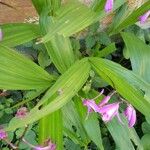
Bletilla striata
Chinese ground orchid · Hyacinth orchid · Urn orchid · Bletilla · Hardy orchid
Description
Source: leafsnapBletilla striata, commonly known as the Chinese ground orchid, is a hardy and easy-to-grow perennial from the orchid family. Native to China, Japan, and Korea, this plant has gained popularity in gardens worldwide due to its stunning flowers and low maintenance needs. Growing from underground rhizomes, Bletilla striata features upright stems with slender, dark green leaves that are approximately 30 cm long and 2 cm wide. In late spring or early summer, the plant produces spikes of pink or purple flowers, each measuring about 5-8 cm in diameter. The Chinese ground orchid thrives in well-drained soil with partial shade but can also tolerate full sun when provided with adequate moisture. Although it is drought-tolerant once established, it benefits from regular watering during dry periods. Propagation is simple: divide the rhizomes in early spring or fall when the plant becomes overcrowded. Bletilla striata is largely free from major pests or diseases, making it an excellent option for gardeners seeking low-maintenance plants. In summary, Bletilla striata is an attractive perennial that brings color and texture to any garden setting while requiring minimal care once established.
💡 Bletilla striata has been cultivated in Korea and China for over 1,500 years due to its numerous medicinal properties. Additionally, the mucus extracted from its bulb is used to enhance the quality of ink and to create invisible ink. This gum is also used to treat the silk strings of traditional Chinese musical instruments.
🌳 The Chinese ground orchid showcases its beautiful flowers in the spring and summer. You can plant this ornamental in flower beds or borders within shady gardens, or place it in well-drained rock gardens. Additionally, it can be grown in a container to decorate a patio, which is especially useful in colder climates where the plant might not survive the winter outdoors.
🎭 Lighthearted, Charm
Care Guide
💧 Water Every 7 days
The Chinese ground orchid thrives in moist environments and is adapted to retain water, preferring consistent moisture with weekly watering. While it can withstand brief dry spells, it benefits from regular hydration. This orchid is typically grown outdoors and requires well-draining soil to prevent root rot, all while maintaining its ornamental appeal.
How should I water my Chinese ground orchid?
The way you water your Chinese ground orchid depends on whether it is in an active growth phase or not. If it is actively growing, water the soil and occasionally water from above if it's warm outside. This helps the plant absorb moisture through its leaves. In contrast, during winter or cool and wet weather, only water the soil directly and avoid overhead watering. To determine if your orchid needs more water, check if the roots and leaves are dry or discolored. Too much water will make the plant look mushy and limp. When growing Chinese ground orchids in pots, ensure the potting mix has good drainage. During the growing season, water the plant multiple times per week, but make sure the water drains quickly to avoid standing water. The amount of water needed depends on the size of the pot. Larger pots require less frequent watering, while smaller pots need slightly more frequent watering. It is best to use rainwater or distilled water, and try to match the water temperature with the air temperature as closely as possible.
What should I do if I give my Chinese ground orchid too much or too little water?
To keep your Chinese ground orchid healthy, it's important to manage its watering needs properly. While it requires frequent watering during active growth, it also needs a well-draining growing medium. Overwatering can lead to root rot, causing the plant to become mushy. If you notice signs of rot, carefully remove affected roots with sterile pruning shears. Then, repot the orchid in a container with proper drainage and fast-draining potting mix. Avoid excessive repotting as it may not be well-tolerated by the plant. On the other hand, an underwatered orchid will shrivel and become dry to the touch. If this happens, it's because the soil is drying out too quickly, so you should increase your watering frequency.
How frequently do I need to water my Chinese ground orchid?
During the spring and summer months, it is best to water your Chinese ground orchid once or twice per week. If the weather is particularly hot and dry, you may need to increase this to three times per week or more. In the winter, you will still need to water your orchid, but not as frequently. Typically, watering two to three times per month should be sufficient to keep your orchid alive during the coldest months. However, if you keep your orchid indoors during winter, remember that indoor locations can cause the soil to dry out faster, so you may need to water more often. As the fall season approaches, gradually reduce the watering frequency from the summer rate to your reduced winter schedule.
What do I need to think about when watering my Chinese ground orchid during different seasons and growth periods?
When planning the watering schedule for your Chinese ground orchid, it's important to consider two growth phases. The first phase is the active growth period, which occurs in spring and summer. During this time, the plant should be watered multiple times per week. The second phase is the rest period, which lasts for about two to three months during winter. During this period, the Chinese ground orchid requires much less water and fertilization. Watering once or twice per month is sufficient. In the fall, gradually decrease the frequency of watering from multiple times per week to once or twice per month, which is appropriate for the winter season.
What changes should I make when watering my Chinese ground orchid indoors?
The Chinese ground orchid thrives in a relatively humid environment. However, this can be a challenge to maintain indoors as most indoor locations lack the necessary air moisture. As a result, the orchid and its soil tend to dry out faster compared to when they are grown outdoors. To counteract this issue, you can use a humidifier in the room where you grow the orchid to increase the humidity levels. Additionally, you may need to water the orchid more frequently. It's important to note that while the orchid requires humidity, it also needs sufficient air circulation to prevent excessive moisture and the associated diseases. To ensure proper air circulation, consider using a fan in the same room where you grow the plant.
☀️ Light Partial sun
The Chinese ground orchid does well when exposed to moderate sunlight for most of the day. It can also tolerate situations with higher light intensity. Nevertheless, prolonged exposure to strong, unfiltered sunlight can damage the plant and cause its leaves to turn yellow. In the wild, it grows in areas where taller vegetation diffuses the sunlight.
What are the sunlight requirements for Chinese ground orchid?
Chinese ground orchid thrives in conditions with moderate intensity sunlight for most of the day and can endure enhanced sunlight intensity. However, prolonged exposure to strong, unfiltered sunlight can damage the plant, turning its leaves yellow. In its native habitat, it grows under the canopy of tall vegetation, which scatters sunlight. The plant requires partial sun, about 3-6 hours of sunlight a day, or full sun, which is above 6 hours of sunlight. Observing how sunlight moves through your garden can help you find the perfect balance of light and shade, ensuring your plants thrive.
How can artificial lighting be used for Chinese ground orchid?
Artificial lighting is crucial for the healthy growth of indoor plants, especially when natural sunlight is insufficient. It's beneficial during winter or in spaces that don't receive much sunlight. LED lights are recommended for their ability to provide specific wavelengths needed by plants. For full sun plants, 30-50W per square foot is ideal; partial sun plants need 20-30W per square foot, and full shade plants require 10-20W per square foot. The light source should be placed 12-36 inches above the plant to mimic natural sunlight, and most plants need 8-12 hours of light per day.
What are the symptoms of insufficient light for Chinese ground orchid?
When Chinese ground orchid doesn't receive enough light, it may show several symptoms indicating light deficiency. These include smaller new leaves, leggy or sparse growth, faster leaf drop, slowed or ceased growth, lighter-colored new leaves, chlorosis (leaf yellowing), sunscald, leaf curling, wilting, and leaf scorching. These signs reflect the plant's struggle to adapt to low light conditions and its attempts to conserve resources.
What are some solutions for insufficient light for Chinese ground orchid?
To address light deficiency in Chinese ground orchids, gradual adaptation to sunlight is key. Indoors, shift the plants to sunnier spots each week until they receive 3-6 hours of direct sunlight daily. If moving the plant isn't feasible, use a desk or ceiling lamp for at least 8 hours a day or invest in professional plant grow lights. Outdoors, gradually move plants to sunnier locations each week to prevent sunburn. Reducing obstructions like pruning trees can also help. For smaller plants, consider transplanting during their dormant period to a location with better sunlight and drainage. It's important to note that while affected parts may not recover, new growth will be healthy with increased light exposure.
🌡️ Temperature 5–35°C
The Chinese ground orchid originates from temperate areas and does well in temperatures from 41 to 95 °F (5 to 35 ℃). It typically does not need many seasonal adjustments, although protecting it from very cold conditions is helpful.
What is the native temperature range for the Chinese ground orchid?
The Chinese ground orchid, also known as Bletilla striata, is native to temperate regions and thrives in temperatures ranging from 41 to 95 °F (5 to 35 °C). These plants are quite adaptable and generally do not require frequent adjustments for seasonal changes, though they benefit from protection against extreme cold.
How should the Chinese ground orchid be protected during extreme cold?
Despite the Chinese ground orchid's strong cold resistance, special measures should be taken if winter temperatures are expected to drop below -25°C. Protection can be provided by covering the plant with soil or straw. It's also advisable to water the plant abundantly before the first freeze in autumn to keep the soil moist. This helps prevent the plant from suffering from drought and water scarcity during the winter and early spring.
What are the symptoms of the Chinese ground orchid being exposed to low temperatures?
The Chinese ground orchid is cold-tolerant and does best when temperatures stay above 5°C but should be kept above -20°C during winter. If temperatures fall below -25°C, the plant may not show immediate changes, but there could be a decreased ability to sprout or even complete failure to sprout in the spring.
What should be done if the Chinese ground orchid fails to sprout in spring?
If the Chinese ground orchid fails to sprout in spring, likely due to being exposed to temperatures below -25°C during winter, any parts of the plant that have failed to sprout should be removed to encourage healthy growth for the remaining parts.
What are the symptoms of the Chinese ground orchid being exposed to high temperatures?
When exposed to temperatures above its comfort zone, specifically over 35°C, the Chinese ground orchid can experience stress. Symptoms include lighter-colored leaves which may curl, become prone to sunburn, and the entire plant may wilt or become dry in severe cases.
💨 Humidity high (>60%)
This plant needs special care because it loves high humidity levels of 60-80% or more. The best way to achieve this is by placing a humidifier near the plant. Daily misting is also essential! Make sure the room has good ventilation.
🪴 Soil 5-6
🌱 Fertilizer
The best time to fertilize a Chinese ground orchid is in early spring, as it is coming out of dormancy and starting active growth. Fertilization supplies essential nutrients for healthy development. Although the Chinese ground orchid has relatively low fertilizer requirements, applying fertilizer once a year can improve its survival and encourage better, longer-lasting blooms.
Why should I put fertilizer on my Chinese ground orchid plant?
Fertilization is important for the Chinese ground orchid because it provides necessary nutrients for plant growth. Although the overall fertilization needs for this orchid are relatively low, it can still benefit from annual fertilization. Fertilization helps the orchid stay alive and may even result in better, longer-lasting flowers. Therefore, those interested in maintaining the optimal appearance of their Chinese ground orchid should prioritize annual fertilization.
When should I fertilize my Chinese ground orchid to get the best results?
It is best to fertilize a Chinese ground orchid during late winter to early spring when the plant is transitioning from dormancy to active growth. Fertilizing during this time promotes healthy growth and helps the plant start the season well. While early spring is generally the most beneficial time to fertilize, it is also acceptable to fertilize in the fall. However, it is not advisable to fertilize during summer and winter.
When is the best time to not fertilize my Chinese ground orchid?
To properly care for your Chinese ground orchid, it is best to fertilize during late winter and early spring. This plant has minimal fertilization needs, so a single yearly feeding is sufficient. Be cautious not to overfertilize by continuing to fertilize during the other seasons, as this can cause complications. However, if you missed fertilizing in spring, it is acceptable to feed the plant in the fall. Additionally, there is no need to fertilize during the winter when the orchid is in a dormant phase and not producing new growth.
What kind of fertilizer should I use for my Chinese ground orchid?
To nourish a Chinese ground orchid, it is generally recommended to use any general-purpose fertilizer with balanced amounts of the three main plant nutrients. However, some specific nutrient blends can be even more beneficial. For example, many gardeners believe that higher levels of phosphorus can promote stronger roots and better flowers. Since the Chinese ground orchid is a flowering plant, using a fertilizer rich in phosphorus may be the best option. Whether in granular or liquid form, as long as there are sufficient nutrients, both types of fertilizers can be used. In addition to manufactured fertilizers, you can also enhance the soil for your Chinese ground orchid by using natural materials such as compost and manure. These organic means can greatly contribute to creating a healthy growing medium for your orchid.
How should I fertilize my Chinese ground orchid?
To fertilize a Chinese ground orchid, the most common method is to use granular or pellet fertilizer applied to the soil around the plant. The best time to fertilize is when the plant is transitioning from its winter dormant phase to active growth. In early spring, wait for the plant to start producing shoots before applying the fertilizer. Alternatively, some people prefer using liquid fertilizer, which should be diluted with water before application. Whether using granular or liquid fertilizer, it is important to moisten the soil before, during, and after fertilization.
🪴 Pot & Repot Every 12 months
For the Chinese ground orchid to thrive in pots, excellent drainage is crucial. Proper drainage prevents root rot and supports healthy growth, making it essential for successful cultivation.
✂️ Pruning
To maintain a thriving Chinese ground orchid, prune it from early to late spring. Remove any dead foliage to promote healthy growth and improve its appearance. After the orchid blooms, cut the spent flower spikes down to ground level to encourage future blooms. Regular pruning also increases airflow around the plant, which helps reduce the risk of disease. Always use clean tools when pruning, and avoid heavy pruning during the winter.
🌿 Propagating
🐛 Diseases & pets
☠️ Toxicity
Characteristics
- Plant Type
- Herb
- Life Cycle
- Perennial
- Genus
- Bletilla
- Family
- Orchidaceae
- Hardiness Zone
- 5-9
- Mature Height
- 30 cm to 61 cm
- Mature Spread
- 15 cm to 30 cm
- Leaf Color
- Green
- Leaf Type
- Deciduous
- Flower Color
- Purple, Lavender
- Flower Size
- 2.54 cm to 5.08 cm
- Bloom Time
- Late spring, Early summer
- Planting Time
- Spring
- Harvest Time
- Mid summer
- Native Area
- Myanmar, Japan, South Korea, China