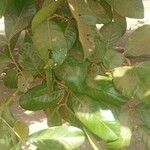
Blighia sapida
Akee · Vegetable Brain · Akee-apple · Aki · Achee
Description
Source: leafsnapThe ackee, also known as ankye, achee, akee, ackee apple or ayee (Blighia sapida) is a fruit of the Sapindaceae (soapberry) family, as are the lychee and the longan. It is native to tropical West Africa. The scientific name honours Captain William Bligh who took the fruit from Jamaica to the Royal Botanic Gardens in Kew, England in 1793. The English common name is derived from the West African Akan akye fufo.Although having a long-held reputation as being poisonous with potential fatalities, the fruit arils are renowned as delicious when ripe, prepared properly, and cooked, and are a feature of various Caribbean cuisines. Ackee is the national fruit of Jamaica and is considered a delicacy.
Care Guide
💧 Water
The ackee apple plant thrives in arid conditions with minimal watering, needing moisture only once every 2-3 weeks. It prefers full sun and grows best when the soil dries out between waterings. Its drought tolerance makes the ackee apple an excellent choice for xeriscaping, as it promotes resilience in dry environments.
How should I water my Ackee apple?
You can water your Ackee apple with any common watering tool, such as a watering can, hose, or even a cup. It's important to water the soil directly and make sure all areas are equally moistened to provide enough water to the entire root system. Using filtered water is beneficial as tap water may have harmful particles. Also, it's best to use water at or slightly above room temperature, as water that is too cold or hot can shock the Ackee apple. However, this plant usually adapts well to different types of water.
What should I do if I give my Ackee apple too much water or too little water?
Outdoor plants, especially newly planted ones or seedlings, can be prone to not being watered enough. It's important to keep watering them regularly for a few months while they are small or newly planted. This is because once the roots are established, the Ackee apple plant can rely on rain most of the time. When your Ackee apple is planted in pots, overwatering is more likely. If you accidentally overwater your plant, you should take immediate action to fix the situation. Firstly, stop watering the plant right away to minimize the effects of overwatering. Then, remove the Ackee apple from its pot to inspect the roots. If there are no signs of root rot, you can return the plant to its container. However, if root rot is present, trim away any affected roots and consider applying a fungicide to prevent further damage. Lastly, repot the Ackee apple in well-draining soil. In the case of underwatering, simply water the Ackee apple plant more frequently. Underwatering is usually an easy issue to fix. If the plant is underwatered, its leaves will droop, dry out, and fall off. However, they will quickly regain their fullness after sufficient watering. So, adjust your watering frequency as soon as you notice underwatering occurring.
How frequently should I give my Ackee apple water?
Most plants grow well with natural rainfall, but if your area doesn't get enough rain, you should water them every 2 weeks in the spring and fall, and more often in the summer. In the winter, when growth slows down, you can water less or not at all. If you have a young Ackee apple plant, you should water it more often to help it establish and become drought tolerant. For potted plants, you can either follow a set watering schedule or determine when to water by checking the moisture level of the soil. In the summer, the plant will need more water than the schedule suggests. It's best to wait until the top few inches of soil have dried out before watering again.
How much water should I give my Ackee apple?
Watering your Ackee apple may not always require a large amount of water. If only a few inches of soil have dried since the last watering, providing it with about five to ten ounces of water each time can promote healthy growth. You can also gauge the amount of water needed based on the moisture of the soil. To do this, take note of how many inches of soil have dried between waterings. To ensure your Ackee apple receives adequate moisture, water it enough to dampen all the layers of soil that have dried since the last watering. If more than half of the soil has dried out, consider giving it more water than usual. In such cases, continue watering until you see excess water draining from the pot's drainage holes. If your Ackee apple is located in an area with sufficient outdoor rainfall, additional watering may not be necessary. However, when the Ackee apple is young or still establishing itself, make sure it receives 1-2 inches of rain per week. As it grows and becomes more established, it can rely solely on rainwater. Only in situations where the weather is hot and there has been no rainfall for 2-3 weeks should you consider giving your Ackee apple a thorough watering to prevent it from experiencing stress.
How can I know if I'm giving enough water to my Ackee apple?
Overwatering is a common issue for the Ackee apple. There are signs to watch for in an overwatered plant, such as yellowing leaves and leaf drop. Overwatering can also lead to the plant shrinking and root rot. On the other hand, an underwatered Ackee apple will start to wilt and may have brown or brittle leaves. Regardless of whether you see signs of overwatering or underwatering, it is important to take action to restore the plant's health.
☀️ Light Full sun
The ackee apple does best in clear, sunny conditions, where photosynthesis and growth are at their peak. In its native habitat it is accustomed to plentiful light. Too little or too much light can harm the plant, causing slower growth or possible sunscald.
What are the sunlight requirements for Ackee apple plants?
Ackee apple plants require full sun, meaning they should receive above 6 hours of sunlight daily to thrive best. It's crucial to observe the movement of sunlight through your garden to select spots that offer an optimal balance of light and shade, ensuring your plants' happiness. This careful placement is essential for the ackee apple, as it thrives under clear skies in its native ecosystem, with abundant illumination being critical to its photosynthesis and growth. Insufficient or excessive sunlight can lead to health issues, such as slowed growth or sunscald.
How can artificial lighting benefit indoor Ackee apple plants?
Indoor Ackee apple plants require adequate lighting to achieve optimal growth, especially when natural sunlight is insufficient. Artificial lights provide a vital solution, particularly during winter or in less sunny spaces, by promoting faster and healthier growth. LED lights are recommended because they can be customized to offer specific wavelengths needed by the plants. For artificial lighting: Full sun plants need 30-50W/sq ft, partial sun plants need 20-30W/sq ft, and full shade plants need 10-20W/sq ft. The light source should be placed 12-36 inches above the plant to mimic natural sunlight, and most plants will need 8-12 hours of light per day.
What are the common symptoms of inadequate sunlight in Ackee apple plants?
Ackee apple plants that do not receive enough sunlight may exhibit several symptoms indicating light deficiency. These include smaller new leaves, leggy or sparse growth, faster leaf drop, slower or no new growth, and lighter-colored new leaves. Additionally, excessive sunlight can cause chlorosis, sunscald, leaf curling, wilting, and leaf scorching. These symptoms reflect the plant's struggles with poor light conditions, impacting its ability to photosynthesize, maintain health, and grow properly.
What solutions can improve sun exposure for Ackee apple plants?
To optimize sun exposure for Ackee apple plants, gradually acclimatize them to brighter conditions. For indoor plants, move them weekly to sunnier spots until they receive at least 6 hours of direct sunlight daily, ideally near a south-facing window. Additionally, using artificial light, such as a desk or ceiling lamp for at least 8 hours daily, can supplement sunlight. For outdoor plants, gradually transitioning them to sunnier locations helps prevent sunburn. Minimizing obstructions, such as pruning trees that shade your plants, or transplanting smaller plants to areas with better sunlight and drainage, can also be beneficial. It's important to note that parts of the plant already affected by insufficient sunlight may not recover, but new growth should be healthy with improved light exposure.
🌡️ Temperature 20–37.8°C
Ackee apple comes from tropical areas, where the weather is usually warm and humid. Consequently, it is adapted to high heat and moisture. It does not tolerate sudden temperature shifts and prefers a steady temperature, so avoiding indoor temperature variations is important. It generally cannot endure cold conditions and needs warmer temperatures to thrive. If the ambient temperature falls too low, the plant may stop growing or even die.
💨 Humidity
🪴 Soil 6-7
🌱 Fertilizer
Use organic fertilizers (for example, fish emulsion or compost) instead of chemical fertilizers for Ackee apple. Give young plants increased nitrogen and phosphorus in spring. Work compost or fertilizer into the soil either before or after planting. For mature plants, apply a balanced fertilizer in spring or one formulated for specific nutrient deficiencies. Nutrient deficiency produces small leaves, short branches, yellow to bronze foliage, acidic fruits, premature fruit drop, and fruit splitting.
🪴 Pot & Repot Every 12 months
✂️ Pruning
The ackee apple tree has leathery, pear-shaped fruit and benefits greatly from pruning in the spring. To encourage healthy growth, shape the tree, and enhance air circulation—which helps prevent fungal infections—remove any dead branches. Make sure to use clean, sharp tools, and make your cuts just above the buds for the best results. This practice will help improve fruit production and manage the size of the fruit effectively.
🌿 Propagating
🐛 Diseases & pets
☠️ Toxicity
Characteristics
- Plant Type
- Tree
- Life Cycle
- Perennial
- Genus
- Blighia
- Family
- Sapindaceae
- Hardiness Zone
- 10-12
- Mature Height
- 7.62 m to 15.24 m
- Mature Spread
- 7.62 m to 14.94 m
- Leaf Color
- Green
- Leaf Type
- Evergreen, Semi-evergreen
- Flower Color
- White, Yellow
- Flower Size
- 20.32 cm
- Bloom Time
- Late spring, Summer, Early fall, Mid fall
- Planting Time
- Spring, Summer, Autumn
- Harvest Time
- Late summer, Fall, Early winter, Mid winter
- Native Area
- Benin, Mali, Burkina Faso, Sierra Leone, Cameroon, Liberia, Togo, Senegal, Ghana, Côte d'Ivoire, Nigeria, Guinea, Guinea-Bissau, Gabon