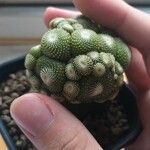
Blossfeldia liliputana
Description
Source: leafsnapBlossfeldia is a genus of cactus (family Cactaceae) containing only one species, Blossfeldia liliputiana, native to South America in northwestern Argentina (Jujuy, Salta, Tucumán, Catamarca and Mendoza Provinces) and southern Bolivia (Santa Cruz and Potosí Departments). It grows at 1,200–3,500 m altitude in the Andes, typically growing in rock crevices, and often close to waterfalls.It is of note as the smallest cactus species in the world, with a mature size of around 10–12 mm diameter. The flowers are white or rarely pink, 6–15 mm long and 5–7 mm diameter.The genus Blossfeldia has been divided into many separate species; however most morphological evidence supports that the genus is monotypic, and contains only Blossfeldia liliputiana.The species is named after the fictional country of Lilliput, where all of the inhabitants are minute.
Care Guide
💧 Water Every 3 weeks
Blossfeldia is well-suited for arid environments due to its excellent drought tolerance. When caring for this plant, water it once every three weeks, ensuring the soil dries out completely between waterings. It is ideal for indoor cultivation in containers, and careful regulation of watering is especially important during its dormant period.
☀️ Light Full sun
Blossfeldia does best when given plenty of daylight. It can tolerate locations with less light, but it achieves its best growth with abundant sun. Insufficient light can impair its growth and overall health. Keep in mind that it naturally occurs in very sunny habitats, and mimicking that environment will produce optimal growth.
What are the sunlight requirements for Blossfeldia?
Blossfeldia requires specifically tailored sunlight conditions to thrive optimally. It needs full sun, which means above 6 hours of direct sunlight daily, or partial sun, approximately 3-6 hours of sunlight. It's crucial to observe how sunlight moves through your garden or indoor space to ensure that your Blossfeldia gets the perfect balance of light and shade. This careful placement aligns with its native habitat, rich in sunlight, to promote its best growth.
How does inadequate light affect Blossfeldia growth, and what can be done?
When Blossfeldia is exposed to less than optimal light conditions, its growth and health can suffer significantly. Inadequate sunlight might cause smaller new leaves, leggy or sparse growth, faster leaf drop, slowed or halted growth, lighter-colored new leaves, chlorosis, sunscald, leaf curling, wilting, and leaf scorching. To counter these issues indoors, gradually increase the plant's exposure to sunlight or use artificial lighting. For outdoor plants, moving them to sunnier spots gradually can help. Additionally, addressing ground-level obstructions by pruning or relocating plants can ensure better sunlight access.
What artificial lighting requirements do Blossfeldia plants have?
For indoor Blossfeldia plants or in areas with insufficient natural light, artificial lighting is an essential alternative. It's recommended to use LED lights as they can be customized for the needed wavelengths. Full sun plants require 30-50W per square foot, partial sun plants need 20-30W per square foot, and full shade plants need 10-20W per square foot. The artificial light source should be placed 12-36 inches above the plant, ensuring it receives 8-12 hours of light daily to mimic natural sunlight as closely as possible.
🌡️ Temperature 15–35°C
Blossfeldia is native to areas where temperatures range from 59 to 95 °F (15 to 35 °C). It grows best within this moderate temperature band. In colder regions, seasonal temperature adjustments may be necessary to reproduce its natural habitat.
What are the optimal temperature conditions for growing Blossfeldia?
Blossfeldia, also known by its botanical name Blossfeldia liliputana, thrives best in regions where the temperature ranges between 59 to 95 °F (15 to 35 °C). It is a heat-loving plant that prefers moderate temperatures and enters a dormant state when the winter comes. To maintain the optimal environment, especially in colder climates, seasonal adjustments may be necessary to replicate its native conditions. When temperatures fall below 15 °C, the plant's growth slows, and precautions should be taken to limit watering to prevent root rot. Additionally, if outdoor temperatures drop below -5°C, it's crucial to move the plant indoors, ideally placing it near a south-facing window to ensure it receives ample sunlight. Supplemental lighting can be considered if natural light is insufficient.
How should I care for Blossfeldia in low temperatures?
In low temperatures, particularly when the temperature is above 15 °C but drops below during winter, Blossfeldia requires special attention to prevent damage. The plant is not tolerant of cold and should be kept above -5 °C to avoid entering a state of weakness, wilting, or susceptibility to root rot. Should the temperature fall below -10 °C, the plant may exhibit signs of mild frost damage such as gradual withering after a week. To counteract the effects of cold, affected areas should be trimmed, especially if frostbite is observed. Check for root rot, and if present, cut off the rotted roots. You might need to propagate the plant through cuttings. Immediately moving the plant to a warmer indoor setting and near a south-facing window will help ensure it receives sufficient sunlight. If sunlight is inadequate, consider using supplemental lighting to aid in recovery.
What should I do if my Blossfeldia is exposed to high temperatures?
During the summer, it's important to ensure that the temperature around your Blossfeldia remains below 35 °C. Exposure to temperatures above 41 °C can halt the plant's growth, leading to water loss, wilting, and an increased risk of sunburn. If your plant shows signs of sunburn or root rot due to excessive heat, the first step is to remove the damaged parts of the plant. Shielding the plant from harsh afternoon sunlight until it recovers is crucial. In cases where root rot is present due to overwatering, it is advised to stop watering the plant until new roots have developed. These measures will help your Blossfeldia recover and return to normal growth.
💨 Humidity
🪴 Soil 6-7
🌱 Fertilizer
For Blossfeldia, small amounts of fertilizer once or twice a year during the growing season are enough. Avoid fertilizing in winter and in summer when the plant is dormant. Cut back on fertilizer for repotted plants and wait a couple of months after repotting before you start feeding. Fertilizing helps maintain healthy growth and promotes flowering.
🪴 Pot & Repot 2-3 years
Repot Blossfeldia in spring or summer, selecting a pot slightly larger than the current one with good drainage. Use a well-draining, sandy or gritty cactus mix. Handle the plant carefully to avoid its spines. Let the cactus dry out before repotting to help prevent root rot. After repotting, wait one week before watering to allow the roots to heal.
✂️ Pruning
Blossfeldia requires minimal pruning. To encourage healthy growth, make sure to regularly remove any withered flowers and branches to help the plant focus its nutrients where they are most needed.
🌿 Propagating
🐛 Diseases & pets
☠️ Toxicity
Characteristics
- Plant Type
- Succulent
- Life Cycle
- Perennial
- Genus
- Blossfeldia
- Family
- Cactaceae
- Hardiness Zone
- 8-10
- Mature Height
- 10 cm
- Mature Spread
- 3 cm
- Leaf Color
- Green
- Leaf Type
- Evergreen
- Flower Color
- White, Pink
- Flower Size
- 0.51 cm to 0.76 cm
- Bloom Time
- Summer, Early fall
- Planting Time
- Spring, Summer, Autumn
- Harvest Time
- Late summer, Fall
- Native Area
- Bolivia