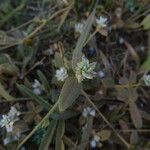
Blutaparon vermiculare
Samphire · Silverhead · Bayflower · Salt weed
Description
Source: leafsnapBlutaparon vermiculare, with common names silverhead, silverweed, saltweed, and samphire, is a species of plant in the family Amaranthaceae, native to Central America and the southeastern United States. It is an edible
Care Guide
💧 Water
Silverhead thrives in coastal habitats, preferring well-drained soils and needing moderate watering about once a week. It can tolerate brief droughts and flourishes outdoors in full sunlight, making it an ideal choice for seaside gardens where it benefits from the humidity and sea spray.
☀️ Light Full sun
Silverhead needs abundant sunlight to develop healthily. It originates from an environment that is generally rich in sunshine. Insufficient sunlight or excessive exposure to the sun can adversely affect the plant's health and its growth.
What are the sunlight requirements for Silverhead?
Silverhead, scientifically known as Blutaparon vermiculare, thrives in an environment with abundant sunshine, requiring above 6 hours of direct sunlight daily for healthy growth. It's important to observe how sunlight moves through your garden and choose locations that offer the perfect balance of light and shade to ensure the plants' well-being. Inadequate sunlight can lead to symptoms like smaller leaves, leggy growth, and delayed development, while too much sun can cause issues like chlorosis, sunscald, leaf curling, wilting, and leaf scorching. Adjusting the plant's exposure to sunlight, whether through gradual relocation outdoors or supplementing with artificial lighting indoors, is crucial for its health.
How do I ensure my Silverhead gets enough light indoors?
Ensuring adequate lighting for Silverhead indoors involves utilizing artificial lights effectively, especially in situations where natural sunlight is limited. LED lights are recommended because they can be customized to provide specific wavelengths needed by plants. Indoor plants generally require 30-50W/sq ft of artificial light for full sun plants, 20-30W/sq ft for partial sun plants, and 10-20W/sq ft for full shade plants. Position the lights 12-36 inches above the plant to mimic natural sunlight and run them for 8-12 hours per day to replicate natural daylight hours. This approach promotes faster and healthier growth, overcoming the challenges of insufficient natural sunlight.
What are common symptoms of inadequate sunlight in Silverhead and how can they be addressed?
Symptoms of inadequate sunlight exposure in Silverhead include smaller, lighter-colored leaves, leggy or sparse growth, faster leaf drop, slower or stopped new growth, and in cases of excessive sun, chlorosis, sunscald, leaf curling, wilting, and leaf scorching. To address these issues, gradually increase sun exposure by moving plants to sunnier spots or using artificial lighting. Inside, keep lights on for at least 8 hours a day or use professional grow lights. Outdoors, ensure a gradual adaptation to sunnier locations to prevent sunburn. Eliminate obstructions to sunlight, like pruning trees or moving plants. Remember, while new growth should be healthy after increasing light, parts of the plant that suffered from previous light deficiencies might not recover.
🌡️ Temperature 20–37.8°C
Silverhead comes from tropical areas, where the climate is generally warm and humid. As a result, it is adapted to high temperatures and humidity. It does not tolerate abrupt temperature changes and prefers a stable thermal environment, so indoor temperature fluctuations should be avoided. It typically cannot withstand cold conditions and requires higher temperatures to grow. If the surrounding temperature falls too low, the plant may stop growing or even die.
💨 Humidity
🪴 Soil 6-7
🌱 Fertilizer
Silverhead needs the most fertilizer during its active growth period, which takes place mainly in spring, summer, and early fall. Fertilizing supplies essential nutrients the soil may lack and supports healthy root and stem development, along with attractive foliage, which is a distinctive feature of this plant.
🪴 Pot & Repot
✂️ Pruning
To keep Silverhead healthy and well-shaped, it's important to prune it carefully. The best time to do this is from early to late spring. During pruning, remove dead stems and any overgrown sections to improve air circulation and sunlight exposure. This not only helps prevent disease but also encourages strong growth and enhances the plant's appearance in the garden.
🌿 Propagating
🐛 Diseases & pets
☠️ Toxicity
Characteristics
- Plant Type
- Herb
- Life Cycle
- Perennial
- Genus
- Blutaparon
- Family
- Amaranthaceae
- Hardiness Zone
- 9-11
- Mature Height
- 15 cm
- Mature Spread
- 20 cm to 61 cm
- Leaf Color
- Green
- Leaf Type
- Deciduous
- Flower Color
- White
- Flower Size
- 0.76 cm to 1.02 cm
- Bloom Time
- Summer, Fall
- Planting Time
- Spring, Autumn
- Harvest Time
- Late summer, Fall, Early winter, Mid winter