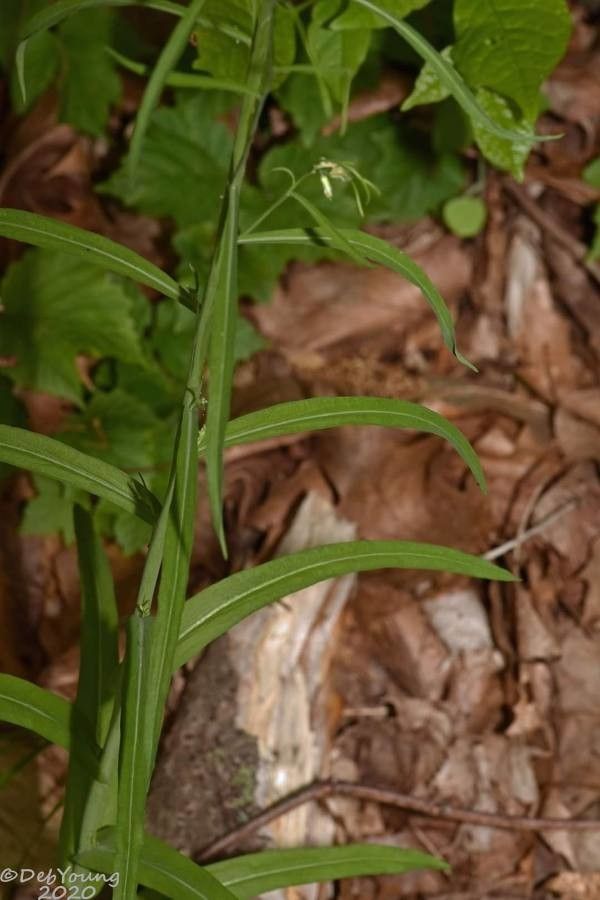
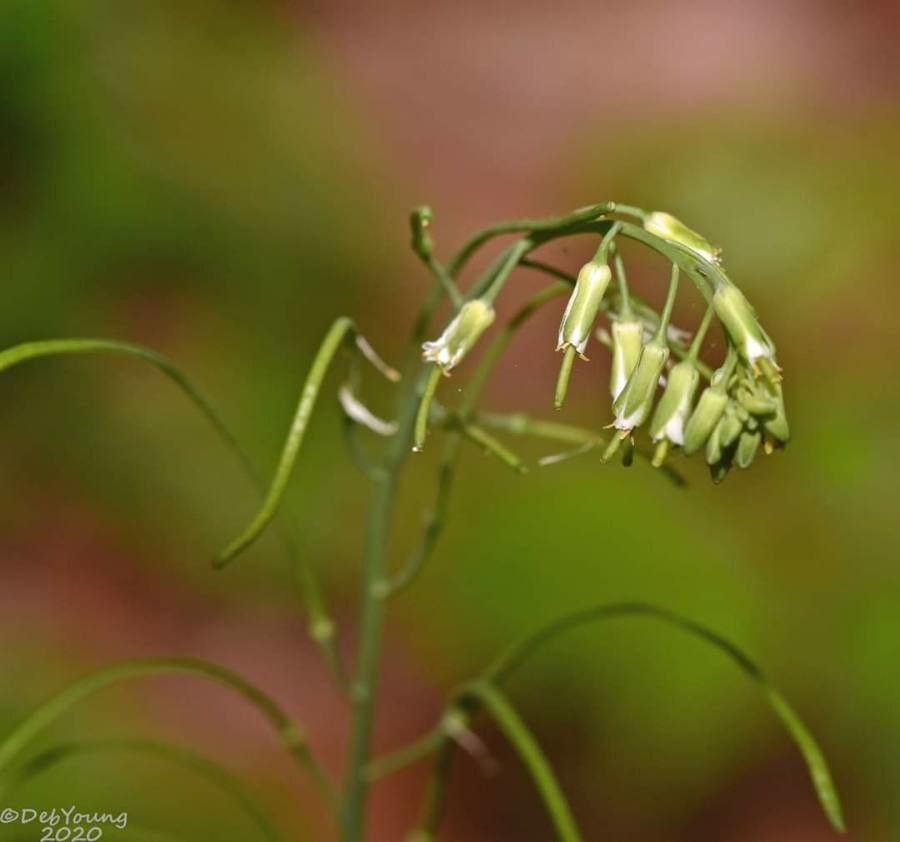
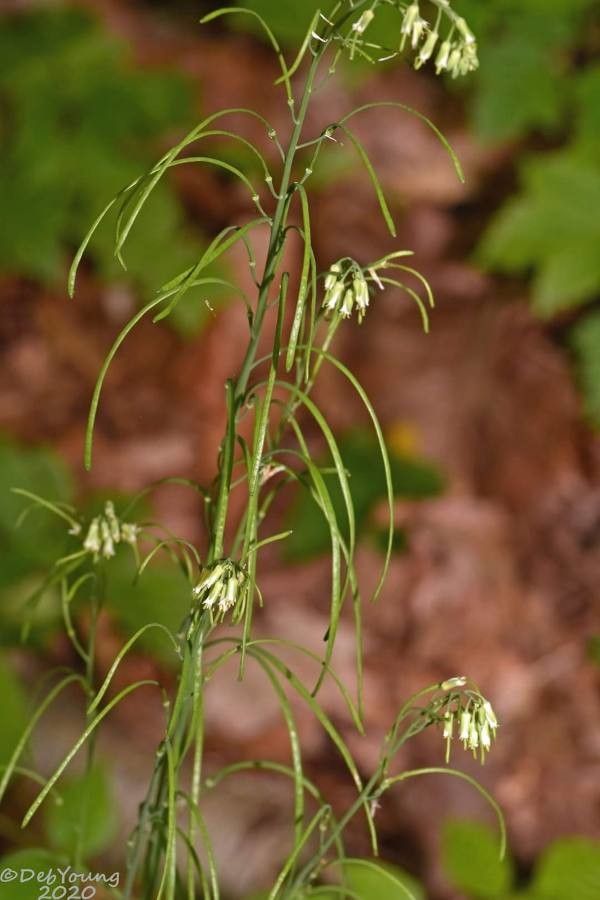
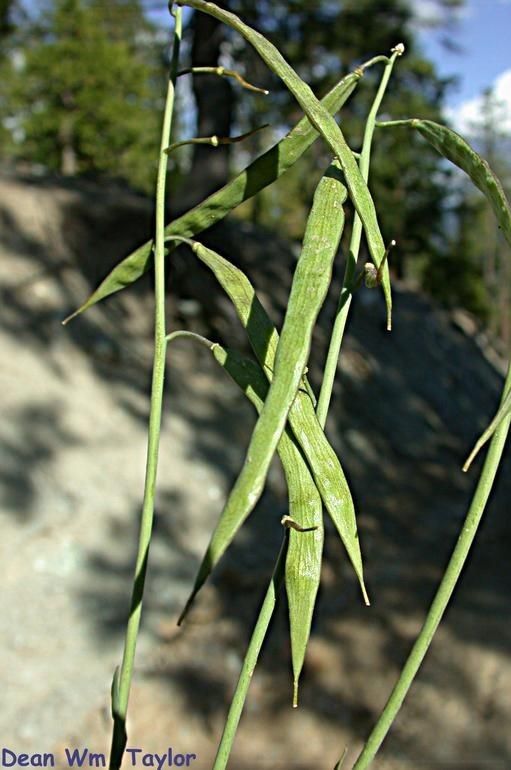
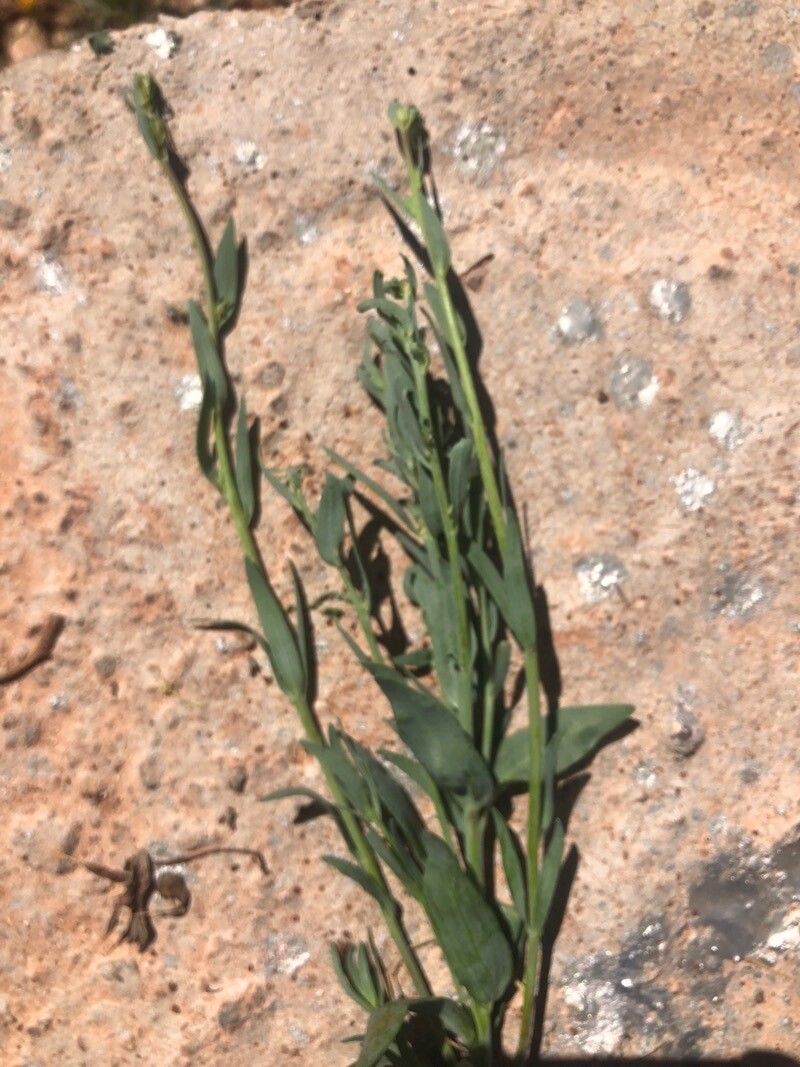
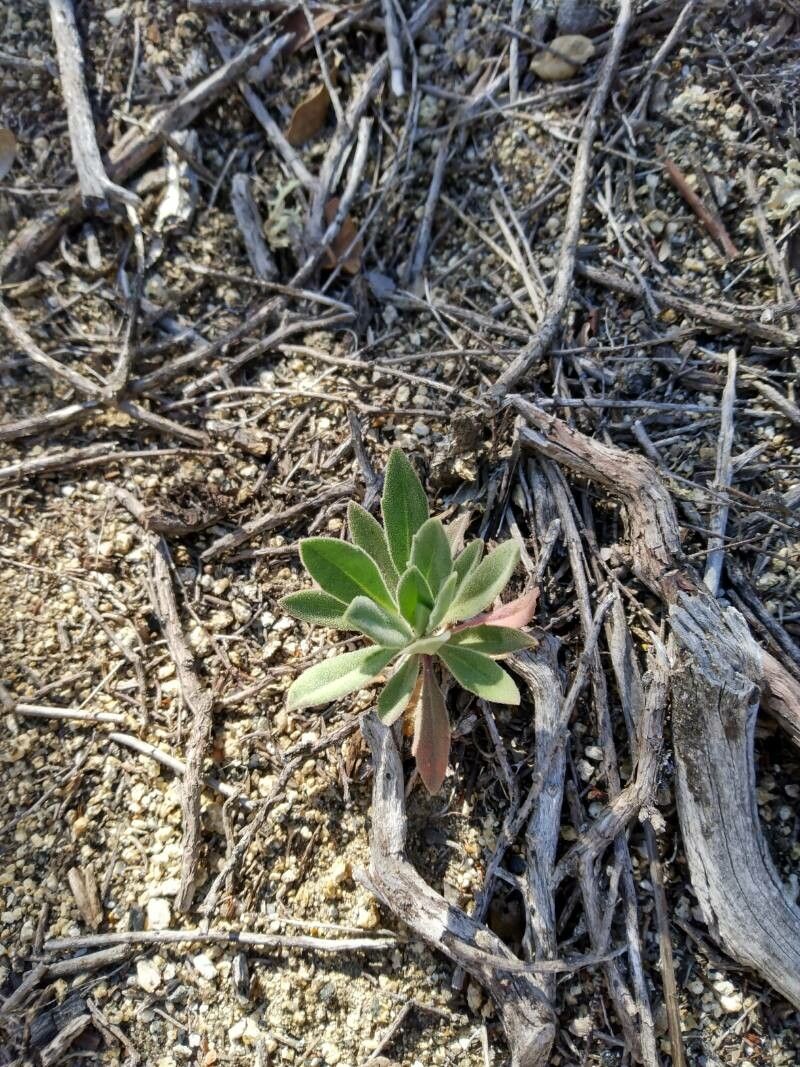
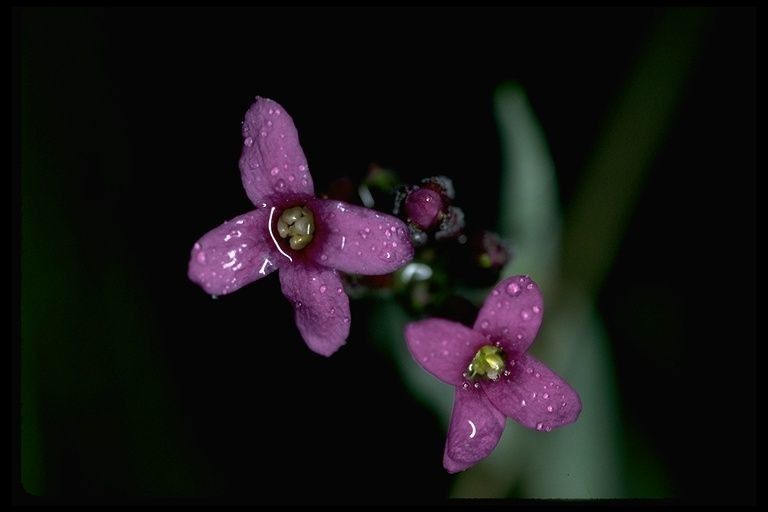
Boechera laevigata is a species of flowering plant in the mustard family known by the common name smooth rockcress. It is native to many areas of the eastern United States and Canada, where it grows in calcareous rocky woods and bluffs. It is moderately common throughout its range, although it is absent from the southeastern coastal plain and the far north. This species is a biennial herb growing from a single stem. It flowers in early spring and has persistent fruit. It is differentiated by other members of Boechera by its auriculate-clasping leaves, short white petals, and glaucous stem.
Smooth rockcress is fairly resistant to disease and typically does not suffer from many illnesses. That said, it can be affected by pests and diseases present in its environment, though such problems are generally mild. Regarding maintenance, this plant calls for a moderate level of care. It should be pruned on a regular basis to preserve an attractive form and encourage healthy growth. Applying fertilizer can also aid in increasing its flowering. Smooth rockcress is appropriate for anyone who has outdoor space, like a garden or patio, and does not demand extensive gardening experience. If grown indoors, it may need more attentive care.
How to keep Boechera Laevigata.
Light
Smooth rockcress thrives in full sun, though it can acclimate to and tolerate reduced or completely shaded light. Coming from environments with abundant illumination, its robust growth reflects that preference, yet too much sun can cause leaf scorch. Conversely, insufficient light can limit its optimal development.
Water
Smooth rockcress is well-suited for rocky terrains, thriving in both moderate and drier conditions. Despite its drought tolerance, it still benefits from weekly watering. This makes it an excellent choice for outdoor gardens in regions with variable rainfall.
Temperature
Smooth rockcress can tolerate a wide range of temperatures, though its distribution may be restricted by various combinations of moisture and heat. It performs best in warm summer conditions with sufficient rainfall or watering. Extended periods of cloudy, rainy weather and prolonged high temperatures can raise the risk of Smooth rockcress dying. In winter, providing adequate protection from cold can enhance the plant's chances of survival.
Fertilizer
Smooth rockcress are considered heavy feeders in terms of nutrients. They need frequent, low-dose applications of nitrogen and potassium fertilizers and periodic applications of phosphorus, micronutrients, sulfur, and magnesium to maintain healthy growth and bright coloration. Continuous fertilization throughout the growing season is required to prevent deficiency symptoms and maintain optimal growth.
Pruning
Smooth rockcress has delicate white flowers and glossy leaves. To promote growth and improve air circulation, prune the plant between early and late spring by removing any damaged stems. Pruning again after flowering can enhance blooms for the next season. For effective maintenance and better aesthetic appeal, make sure to use clean, sharp tools.
Botanical profile.
- Plant Type
- Herb
- Life Cycle
- Biennial
- Genus
- Boechera
- Family
- Brassicaceae
- Hardiness Zone
- 4-8
- Mature Height
- 30 cm to 91 cm
- Mature Spread
- 15 cm
- Leaf Color
- Green
- Leaf Type
- Evergreen
- Flower Color
- White
- Flower Size
- 0.51 cm
- Bloom Time
- Mid spring, Late spring, Early summer
- Planting Time
- Autumn, Winter, Spring
- Harvest Time
- Summer
Other names.
Reader questions.
What are the sunlight requirements for Smooth Rockcress?
Smooth Rockcress (Boechera laevigata) thrives best in full sun, requiring more than 6 hours of direct sunlight daily. However, it can also grow in partial sun or full shade conditions, which means it can adjust to about 3-6 hours of sunlight. It's essential to observe how sunlight moves through your garden to find spots that offer a perfect balance of light and shade, ensuring the plants' well-being. Originating from environments with significant light, its robust growth mirrors this need, though too much light can cause leaf scorch, and too little can impede its growth.
How can artificial lighting supplement natural sunlight for Smooth Rockcress indoors?
When natural sunlight is insufficient, especially during winter or in less sunny areas, artificial lighting becomes crucial for the optimal growth of indoor plants like Smooth Rockcress. LED lights are recommended due to their ability to provide specific light wavelengths needed by plants. Full sun plants require 30-50W/sq ft, partial sun plants 20-30W/sq ft, and full shade plants 10-20W/sq ft of artificial light. The light source should be placed 12-36 inches above the plant, mimicking natural sunlight as closely as possible. Most plants benefit from 8-12 hours of light daily, depending on their specific needs.
What symptoms indicate Smooth Rockcress is getting inadequate light?
When Smooth Rockcress is subject to insufficient light, it can show various symptoms including smaller new leaves, leggy or sparse growth, faster leaf drop, slowed or halted new growth, paler new leaves indicating a chlorophyll deficiency, and chlorosis where the leaves turn yellow. Too much light can cause symptoms like sunscald, leaf curling as a defense against overexposure, wilting due to excessive water loss, and leaf scorching, which appears as brown, dry patches on the leaves.
What are the solutions for Smooth Rockcress struggling with light conditions?
For indoor plants, gradually relocating them to sunnier spots to ensure at least 6 hours of direct sunlight daily is recommended, utilizing a south-facing window for maximum exposure. If moving the plant isn't feasible, supplementing with artificial light, such as keeping a lamp on for at least 8 hours a day or using professional grow lights, can help. Outdoors, gradually moving plants to optimal sunlight locations and avoiding sudden, drastic changes in light intensity is key. If trees block sunlight, prune them to improve sunlight penetration. For smaller plants, consider transplanting during their dormant period in late winter or early spring to a sunnier location with good drainage.