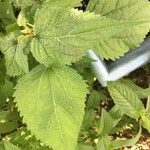
Boehmeria cylindrica
Smallspike false nettle · Bog-hemp · False nettle · Bog nettle · Small-Spike False Nettle
Description
Source: leafsnapBoehmeria cylindrica, commonly known as false nettle or bog hemp, is a perennial herbaceous plant belonging to the Urticaceae family. Native to North America, it thrives in wetlands, meadows, and forests. The plant can reach a height of 1-2 meters and features a slender stem with alternate leaves that are ovate or lanceolate in shape. False nettle produces small greenish-white flowers arranged in clusters on the upper part of the stem. These flowers bloom from June to September and are followed by small fruits containing seeds. For centuries, Native Americans have utilized this plant for medicinal purposes, treating ailments such as fever, diarrhea, dysentery, and skin irritations. Boehmeria cylindrica is also an essential food source for wildlife, including deer and rabbits. Additionally, it plays a significant ecological role by stabilizing soil erosion along riverbanks. Overall, Boehmeria cylindrica is an intriguing plant with various medicinal and ecological uses, contributing significantly to the conservation efforts of North America's flora biodiversity.
💡 False nettle, known scientifically as Boehmeria cylindrica, belongs to the same family as stinging nettle but does not have the stinging hairs that define its relative. This perennial plant produces small spikes of tiny green flowers and is widely distributed across the United States.
🌳 False nettle functions as an important host plant for the larvae of the red admiral butterfly. This unexpected connection between the insect and plant worlds not only helps sustain the species but also supports biodiversity. The plant has also been examined for potential fiber production, making it an unassuming option for sustainable textile development.
🎭 Expelling spirits, Safeguarding, Restoration
Care Guide
💧 Water Every 7 days
False nettle thrives in moist woodlands and prefers soil that remains evenly moist. It exhibits moderate tolerance to drought. To maintain adequate moisture levels, water the plant weekly, ensuring the soil stays hydrated but not waterlogged. When grown indoors, higher humidity levels will promote lush growth. During the active growing season, it's important to provide sufficient water to ensure vibrant and robust growth cycles.
How should I water my False nettle?
To properly water the False nettle, it is recommended to use filtered water at room temperature or slightly warmer. Tap water should be avoided as it can contain harmful particles. This plant prefers a warm environment, so cold water might not be ideal as it can be a shock. Additionally, it is advised to avoid overhead watering, which can lead to foliage issues. Instead, thoroughly soak the soil with filtered room temperature water. This helps moisturize the roots and allows them to spread and absorb necessary nutrients.
What do I need to do if I give my False nettle too much water or not enough water?
Overwatering is a more common issue and can cause wilted and yellowed stems and leaves in False nettle. It can also lead to diseases like root rot, mold, and mildew that can be fatal for the plant. Underwatering is less common but can cause brittle and brown leaves. It's important to notice signs of overwatering early and reduce watering immediately. If the soil drains poorly, replace it with a well-draining mix. If underwatering is detected, increase watering until signs improve.
How often should I give water to my False nettle plant?
If your False nettle is in a pot, the most precise way to determine if it needs water is to stick your finger in the soil. If the top two to three inches are dry, then it's time to water it. The same method applies if you're growing the False nettle outdoors in the ground – if the top few inches of soil are dry, give it some water. Usually, during spring and early fall, watering once a week is sufficient. However, when it gets really hot, you might need to increase watering to twice a week or even more. That being said, mature and well-established False nettles have an impressive ability to survive drought.
How much water does the False nettle require?
When watering your False nettle, don't be afraid to give it plenty of water. Make sure the top few inches of soil are dry, and then water the plant thoroughly so that the soil is completely soaked. The water should be enough to cause excess water to drain out through the bottom of the pot. If you don't see any excess water draining, it means you haven't watered enough. However, be careful not to let the water accumulate in the soil, as this can be harmful to the plant. On the other hand, if water is not draining from the pot, it may indicate that the soil doesn't drain well, which is not good for the plant's health. If the plant is outdoors, about 1 inch of rain per week should be enough.
How do I water my False nettle as it grows?
The water requirements of the False nettle can vary depending on its growth stages. When the plant is in its early years or has just been transplanted, it will need more water than usual. During these stages, the False nettle focuses on developing new roots to support future growth, and these roots perform best with slightly more moisture. As the plant matures, it will require less water. Additionally, during the blooming period, the False nettle may need more water as flower development utilizes a significant amount of moisture.
☀️ Light Full sun
The false nettle flourishes in locations that receive sunlight steadily throughout the day. Such exposure supports healthy growth from the earliest stages. It can tolerate reduced light, but ideal conditions call for ample sun. Care should be taken, though, because both excessive and insufficient light can potentially harm growth.
What are the sunlight requirements for False Nettle (Boehmeria cylindrica)?
False Nettle requires full sun, meaning it should receive above 6 hours of sunlight daily for optimal growth. It can also tolerate partial sun, about 3-6 hours of sunlight. However, it's crucial to watch how sunlight moves through your garden and select locations that provide a mix of light and shade, ensuring the plants' well-being. The plant thrives best in areas exposed to consistent sunlight throughout the day, promoting healthy development from early stages. While it can tolerate lower light levels, substantial sun exposure is preferred for the False Nettle to flourish.
How does artificial lighting support False Nettle's growth indoors?
When natural sunlight is insufficient, especially during winter or in less sunny spaces, artificial lights become essential for the growth of indoor plants like False Nettle. LED lights are recommended because they can be customized to provide specific wavelengths needed by the plants. For full-sun plants, 30-50W/sq ft of artificial light is needed; partial sun plants require 20-30W/sq ft, and full shade plants need 10-20W/sq ft. The artificial light source should be placed 12-36 inches above the plant, mimicking the natural sunlight. The duration of artificial lighting should align with natural daylight hours, generally 8-12 hours per day, to support the plant's growth adequately.
What symptoms indicate insufficient or excessive sunlight for False Nettle?
Symptoms of insufficient sunlight include small or lighter-colored new leaves, leggy or sparse growth, faster leaf drop, slower or halted growth, indicating the plant is in survival mode. Excessive sunlight can cause chlorosis, where leaves lose their green color and turn yellow, sunscald with damaged plant tissues, leaf curling as a defense mechanism against water loss, wilting from increased transpiration, and leaf scorching characterized by brown, crispy leaf edges. These signs highlight the delicate balance needed in managing sunlight exposure for False Nettle.
How can I address inadequate sunlight for my False Nettle, both indoors and outdoors?
To combat insufficient sunlight, gradually acclimate your False Nettle to brighter conditions. For indoor plants, move them closer to south-facing windows or provide supplemental light with artificial grow lights for at least 8 hours a day. Outdoors, choose the best sunny spot and shift your plants incrementally each week to prevent sunburn. If your plants are overshadowed, prune surrounding foliage or relocate them to sunnier spots. Remember, parts of the plant already affected by low light may not recover, but adapting these practices can promote healthy new growth.
🌡️ Temperature 5–35°C
False nettle thrives at temperatures between 41 and 95 ℉ (5 to 35 ℃) and is commonly found in temperate climates. In winter, it may benefit from some protection against frost.
What temperature range is ideal for False Nettle?
False Nettle thrives in temperatures ranging from 41 to 95°F (5 to 35°C), which is typical for temperate climates. It has strong cold resistance, allowing it to usually withstand winter without needing special frost protection measures. However, protection from frost might be beneficial, especially if winter temperatures are expected to fall below -30°C.
How should False Nettle be protected during winter?
To protect False Nettle during winter, especially if temperatures are expected to drop below -30°C, it's recommended to cover the plant with materials such as soil or straw for cold protection. Before the first freeze in autumn, watering the plant abundantly ensures the soil remains moist and enters a frozen state, which helps prevent drought and water scarcity during the winter and early spring.
What should be done if False Nettle is exposed to temperatures below -25°C?
If False Nettle is exposed to temperatures below -25°C, although it may not show noticeable changes during the winter, there could be a decrease in sprouting or even no sprouting at all during springtime. In spring, it's advised to remove any parts of the plant that have failed to sprout, aiding in its recovery and continued growth.
How does high temperature affect False Nettle and how can it be mitigated?
High temperatures, especially above 38°C, can cause the leaves of False Nettle to become lighter, prone to curling, susceptible to sunburn, and in severe cases, lead to the entire plant wilting and drying out. To mitigate this, trimming away the sunburned and dried-up parts is recommended. Moreover, moving the plant to a shaded area during the midday and afternoon sun or using a shade cloth can be beneficial. Additionally, watering the plant in the morning and evening to keep the soil moist helps in dealing with the heat.
💨 Humidity
🪴 Soil 6-7
🌱 Fertilizer
Typically, one spring application of fertilizer is enough for False nettle, although repeated feedings can maximize growth. Apply fertilizer about once every month to month and a half. Fertilization improves leaf appearance and function, supporting uniform color and a healthy texture. It also encourages root development and nutrient uptake, which benefits the plant's long-term health.
🪴 Pot & Repot
✂️ Pruning
🌿 Propagating
🐛 Diseases & pets
☠️ Toxicity
Characteristics
- Plant Type
- Herb
- Life Cycle
- Perennial
- Genus
- Boehmeria
- Family
- Urticaceae
- Hardiness Zone
- 4-9
- Mature Height
- 0.49 m to 1.52 m
- Mature Spread
- 30 cm to 91 cm
- Leaf Color
- Green, Red
- Leaf Type
- Deciduous
- Flower Color
- White, Green, Yellow
- Flower Size
- 1.02 cm to 3.05 cm
- Bloom Time
- Early summer, Mid summer
- Planting Time
- Spring
- Harvest Time
- Mid summer
- Native Area
- Colombia, Cuba, Honduras, Mexico, Guatemala, Bolivia, Venezuela, Brazil, Nicaragua, Costa Rica, Panama, Jamaica