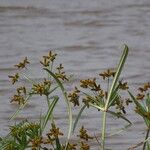
Bolboschoenus fluviatilis
River Club-Rush · River bulrush
Description
Source: leafsnapBolboschoenus fluviatilis, the river bulrush, is a species of flowering plant in the sedge family, Cyperaceae. Its range includes Australia, New Zealand, New Caledonia, Canada, the United States, and northeastern Mexico. B. fluviatilis and its fruits are important as food sources for waterfowl such as geese, ducks, bitterns, and swans. It also provides cover and nesting sites for these and other species of birds, as well as small mammals. Like other Bolboschoenus species, B. fluviatilis has strong tubers and rhizomes which help to stabilize intertidal habitats by preventing erosion.
Care Guide
💧 Water
River bulrush thrives in wetland environments, favoring consistently moist soil and needing weekly watering. As an aquatic plant, its strong roots help stabilize soil and support ecosystems. Its growth cycle is closely tied to seasonal water levels, flourishing during times of high water.
☀️ Light Full sun
River bulrush requires continuous sunlight to maintain optimal growth and health. It is native to habitats where direct, unshaded sun is common. Throughout every stage of development, the plant depends on plentiful light. However, excessive sun can cause stress-related damage, while too little light diminishes its vigor.
What are the sunlight requirements for River Bulrush?
River Bulrush, or Bolboschoenus fluviatilis, thrives under full sun exposure, necessitating above 6 hours of sunlight daily for optimum health and growth. It's naturally adapted to environments with unobstructed sunlight, which is crucial throughout all its growth stages. However, both excessive and insufficient sunlight can cause stress or vitality issues in the plant. To ensure your plants are happy, observe your garden's sunlight pattern and choose spots that strike the perfect balance of light and shade.
How can artificial lighting support River Bulrush indoors?
When natural sunlight is insufficient, especially during winter or in less sunny spaces, artificial lighting becomes a critical solution for River Bulrush. Indoor plants benefit from artificial lights, promoting faster and healthier growth. Opt for LED lights as they can be customized to provide the specific wavelengths your plants need. Full sun plants require 30-50W/sq ft, partial sun plants 20-30W/sq ft, and full shade plants 10-20W/sq ft of artificial light. The light source should be placed 12-36 inches above the plant, mimicking natural sunlight, and provided for 8-12 hours per day.
What are the symptoms of poor lighting conditions for River Bulrush?
River Bulrush displays several symptoms when exposed to inadequate lighting, including smaller new leaves, leggy or sparse growth, faster leaf drop, slower or no new growth, lighter-colored new leaves, chlorosis (leaves turning yellow), sunscald, leaf curling, wilting, and leaf scorching. These symptoms indicate either a deficiency or excess of sunlight, affecting the plant's health and growth.
What solutions are recommended for River Bulrush experiencing poor lighting conditions?
To address poor lighting conditions for River Bulrush, gradually move plants to sunnier locations until they receive at least 6 hours of direct sunlight. For indoor plants, consider using south-facing windows or artificial grow lights for at least 8 hours daily. For outdoor plants, avoid sudden changes in light exposure to prevent sunburn. If obstructions like trees block sunlight, prune them or consider transplanting smaller plants to better-lit areas, ensuring they are moved during their dormant period for optimal results. Note that parts of the plant affected by insufficient sunlight might not recover, but new growth should be healthy with improved light conditions.
🌡️ Temperature 0–32.2°C
River bulrush occurs naturally in environments with temperatures from 32 to 90°F (0 to 32 ℃). It favors a temperate climate and may require adjustments to survive extreme cold or heat. Seasonal changes should involve gradual shifts in temperature.
What is the ideal temperature range for River bulrush?
River bulrush, botanically known as Bolboschoenus fluviatilis, thrives in temperatures ranging from 32 to 90°F (0 to 32°C). It is well-suited to temperate climates and requires adjustments to endure extreme cold or heat. The species is characterized by its strong resistance to cold, although measures may be necessary when temperatures are expected to fall below -35°C to prevent damage during winter.
How should River bulrush be cared for in winter?
During winter, River bulrush typically does not require special frost protection due to its strong cold resistance. However, in regions where temperatures are anticipated to drop below -35°C, it's important to ensure the plant is sufficiently protected by covering it with soil or straw. Additionally, watering the plant abundantly before the first freeze in autumn helps keep the soil moist, which is crucial for preventing drought and ensuring the plant has access to water during the colder months.
What are the symptoms of River bulrush experiencing low temperatures?
When River bulrush is exposed to temperatures below its tolerance level, particularly under -30°C, there may not be noticeable changes during the winter. However, the plant could face difficulties in sprouting or fail to sprout at all during spring if temperatures fall below -35°C. In such cases, removing parts that have failed to sprout in spring is advisable for promoting healthy growth.
How does high temperature affect River bulrush and what are the solutions?
High temperatures, especially above 32°C, can have detrimental effects on River bulrush. Symptoms include leaves becoming lighter in color, prone to curling, susceptibility to sunburn, and in extreme cases, the plant wilting and drying out. To combat these issues, trim away sunburned and dried parts. Consider moving the plant to a shaded area or using a shade cloth to protect it from intense midday and afternoon sun. Ensure the soil remains moist by watering the plant in the morning and evening.
💨 Humidity
🪴 Soil
🌱 Fertilizer
🪴 Pot & Repot
✂️ Pruning
River bulrush is a resilient perennial plant that thrives in wetlands. To maintain its health and appearance, prune river bulrush in early spring. Use clean tools to remove dead stems, manage its spread, and improve air circulation. Regular pruning not only enhances its beauty but also promotes robust growth for the coming season.
🌿 Propagating
🐛 Diseases & pets
☠️ Toxicity
Characteristics
- Plant Type
- Grass
- Life Cycle
- Perennial
- Genus
- Bolboschoenus
- Family
- Cyperaceae
- Hardiness Zone
- 3-8
- Mature Height
- 0.91 m to 1.83 m
- Mature Spread
- 49 cm to 91 cm
- Leaf Color
- Green
- Leaf Type
- Deciduous
- Flower Color
- Yellow, Red, Brown
- Flower Size
- 1.27 cm to 2.54 cm
- Bloom Time
- Early summer, Mid summer
- Planting Time
- Spring, Summer, Autumn
- Harvest Time
- Late summer, Early fall
- Native Area
- Mexico