Boscia senegalensis
Aizen · Mukheit · Senegal boscia
Description
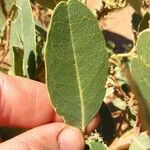
Source: leafsnapBoscia senegalensis, commonly known as hanza, is a member of the family Capparaceae. The plant originated from West Africa. Still a traditional food plant in Africa, this little-known fruit has potential to improve nutrition, boost food security, foster rural development and support sustainable landcare.Boscia senegalensis is a perennial woody plant species of the genus Boscia in the caper family, Capparaceae. This plant is classified as a dicot. Native to the Sahel region in Africa, this evergreen shrub can grow anywhere from 2 to 4 m (6 ft 7 in to 13 ft 1 in) in height under favourable conditions. The leaves of the plant are small and leathery, reaching 12 cm × 4 cm (4.7 in × 1.6 in). B. senegalensis produces fruits, clustered in small bunches, in the form of yellow spherical berries, up to 1.5 cm (0.59 in) in diameter. These fruits contain 1–4 seeds, which are a greenish hue when mature. Boscia senegalensis is recognized as a potential solution to hunger and a buffer against famine in the Sahel region due to the variety of useful products it yields. It produces products for consumption, household needs, and medicinal and agricultural uses. Common names include: aizen (Mauritania and Western Sahara), mukheit (Arabic), hanza (Hausa), bere (Bambara), ngigili (Fulani), mandiarha (Berber), anza (Zarma) and 'taedent (Tamasheq). The fruits are also known as dilo (Hausa), bokkhelli (Arabic), gigile (Fulani) and kanduwi (Tamasheq).
Care Guide
💧 Water
☀️ Light Full sun
Senegal boscia is native to open habitats, such as sunny meadows and forest edges, which provide abundant light. It performs best in Full Sun but can tolerate Partial Sun, adjusting well to various sunlight conditions.
What are the sunlight requirements for Senegal boscia (Boscia senegalensis)?
Senegal boscia (Boscia senegalensis) thrives in various sunlight conditions. It requires full sun, which means it needs above 6 hours of sunlight a day, to flourish. However, it can also tolerate partial sun, getting about 3-6 hours of sunlight daily. It's important to watch how sunlight moves through your garden to find spots that offer the perfect balance of light and shade. This consideration ensures your Senegal boscia plants are happy and healthy.
🌡️ Temperature 20–37.8°C
Senegal boscia is native to environments where temperatures range from 68 to 100 °F (20 to 38 ℃). It is suited to warm climates and achieves best growth within that range. In colder seasons, make sure the temperature does not fall below 68 °F (20 ℃).
What is the optimal temperature range for Senegal boscia growth?
The Senegal boscia, or Boscia senegalensis, thrives in temperatures ranging from 68 to 100 °F (20 to 38 °C). This indigenous plant is well-adapted to warm climates, showing optimal growth within this temperature spectrum. It's important to protect the plant from colder conditions, ensuring temperatures do not fall below 68 °F (20 °C) during the cooler seasons.
💨 Humidity
🪴 Soil 6-7
🌱 Fertilizer
Fertilizing is essential for the care of Senegal boscia. Regular feeding during the growing season maintains the energy needed for its showy leaves and supports overall growth. Failing to fertilize can cause unhealthy leaves, reduced ornamental value, and stunted or weak growth that is more likely to break.
🪴 Pot & Repot
✂️ Pruning
Senegal boscia benefits greatly from annual pruning during its dormant season, which occurs from early to late winter. By removing dead branches, you can improve air circulation and help prevent pest infestations. Thinning the plant also promotes healthy growth, enhances its shape, and maintains its vibrancy. For the best results, consult local horticultural guides for care tips specific to your area.
🌿 Propagating
🐛 Diseases & pets
☠️ Toxicity
Characteristics
- Plant Type
- Tree
- Life Cycle
- Perennial
- Genus
- Boscia
- Family
- Capparaceae
- Hardiness Zone
- 10-12
- Mature Height
- 2.13 m to 3.96 m
- Mature Spread
- 2.13 m to 3.96 m
- Leaf Color
- Green
- Leaf Type
- Evergreen
- Flower Color
- White, Cream
- Flower Size
- 0.51 cm to 0.76 cm
- Bloom Time
- Mid spring, Late spring, Early summer
- Planting Time
- Spring, Summer, Autumn
- Harvest Time
- Mid summer, Late summer, Early fall
- Native Area
- Mali, Burkina Faso, Egypt, Cameroon, Chad, Mauritania, Senegal, Ethiopia, Eritrea, Algeria, Nigeria, Morocco, Guinea, Niger, Central African Republic