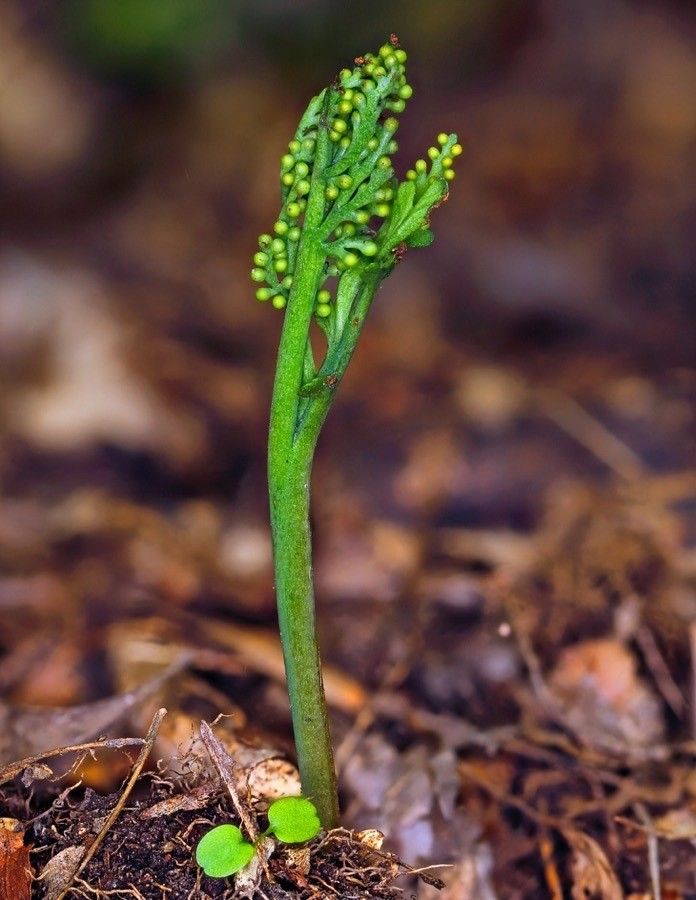
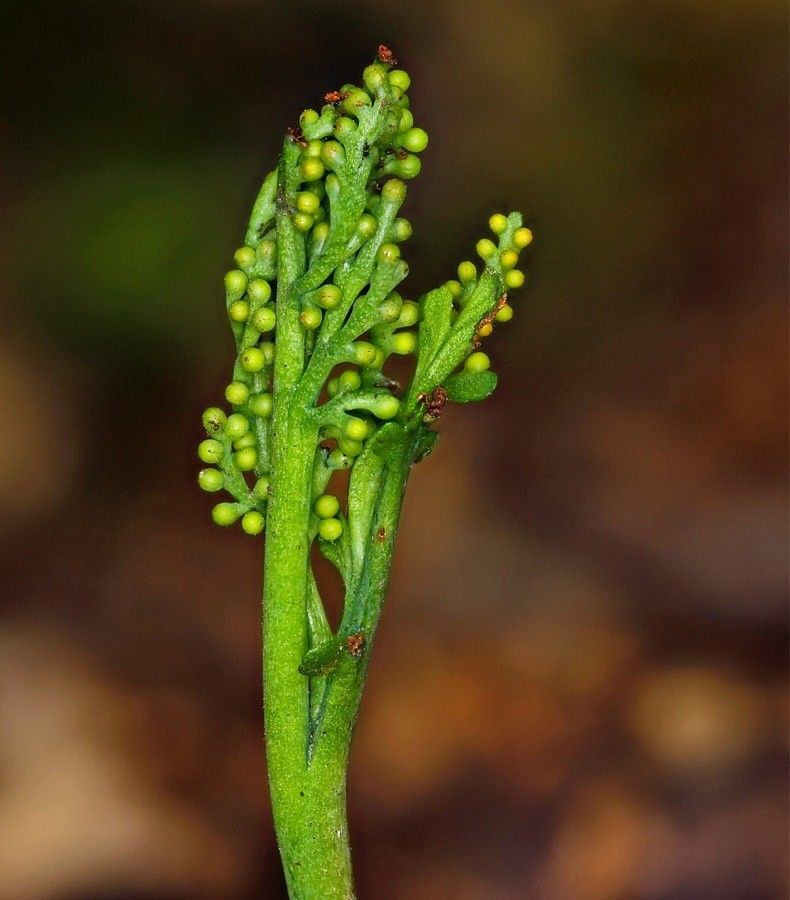
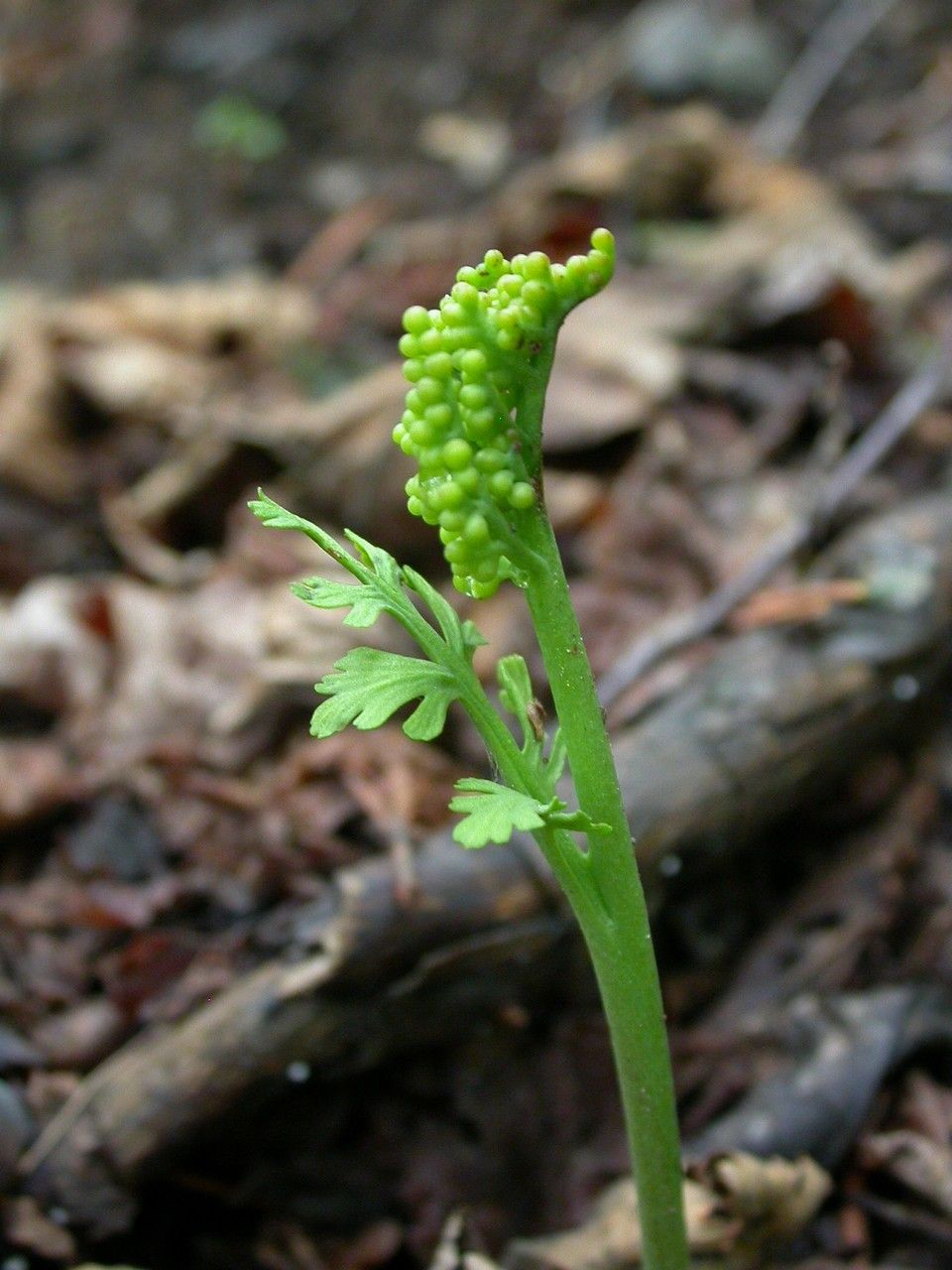
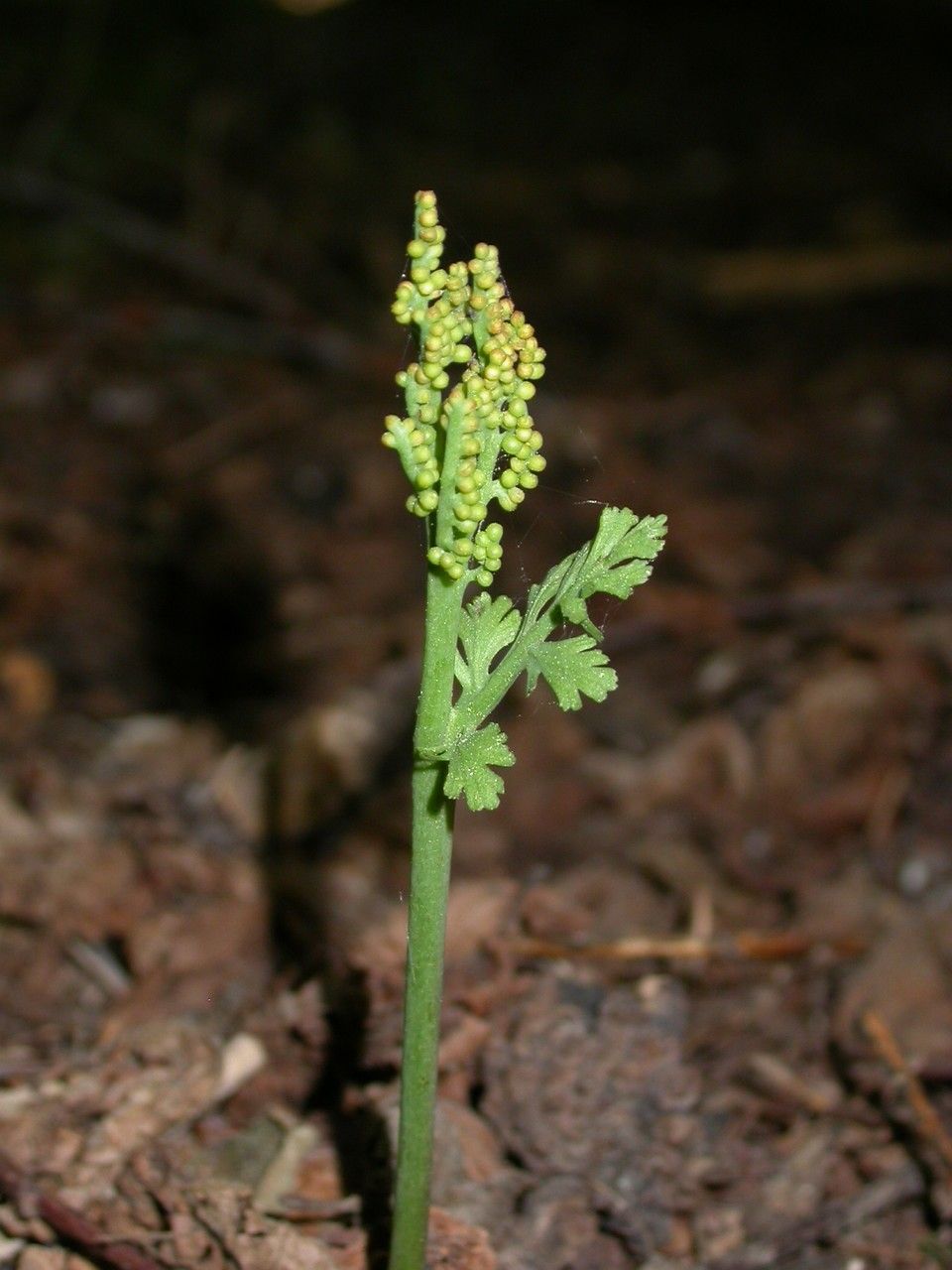
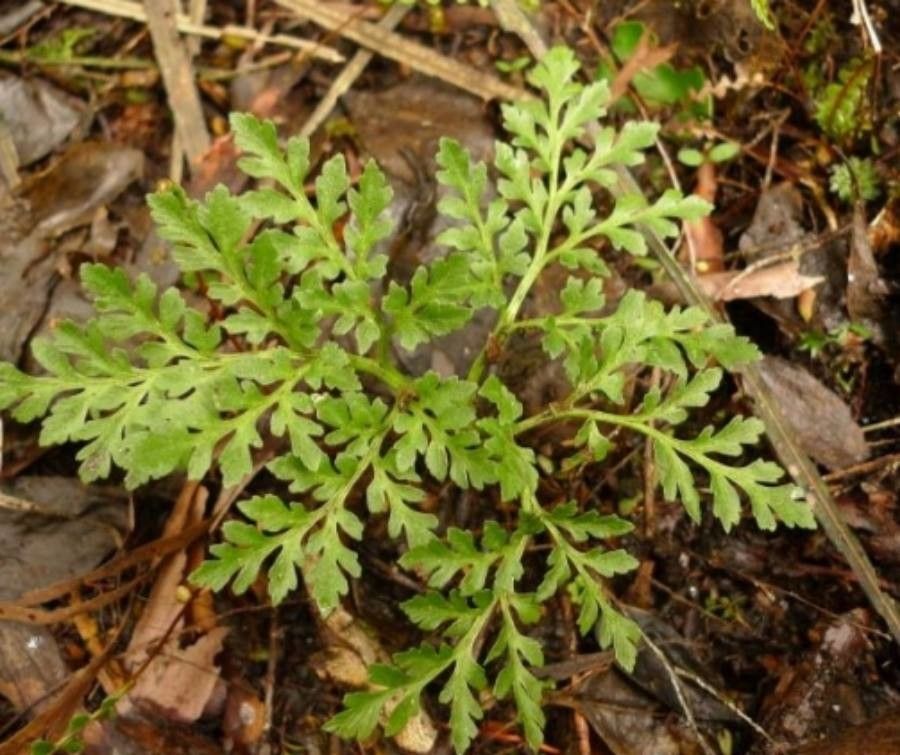
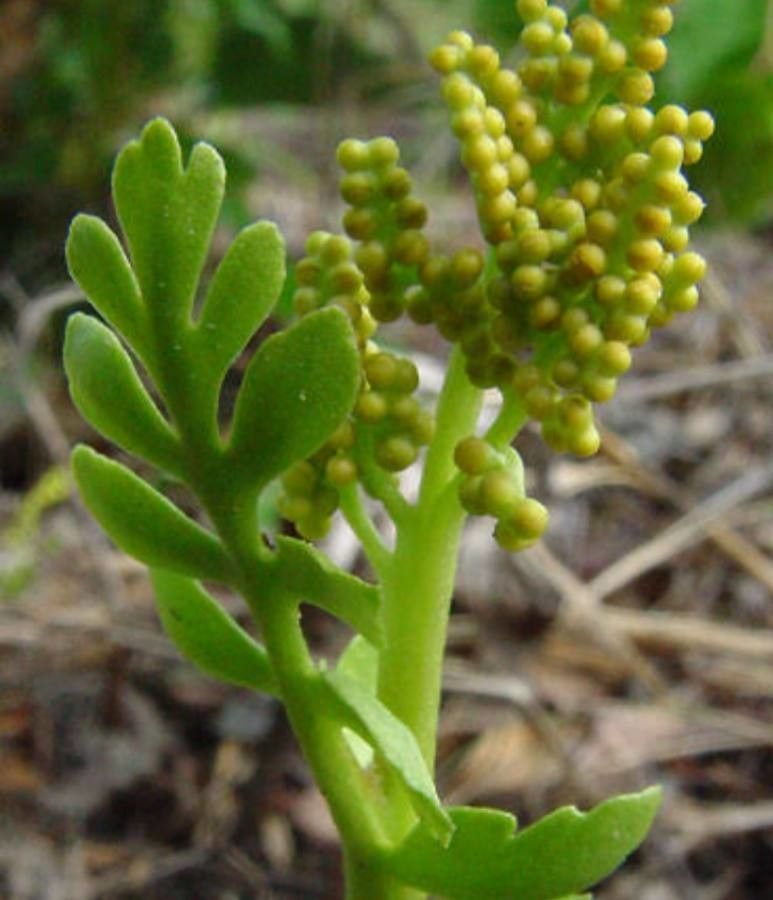
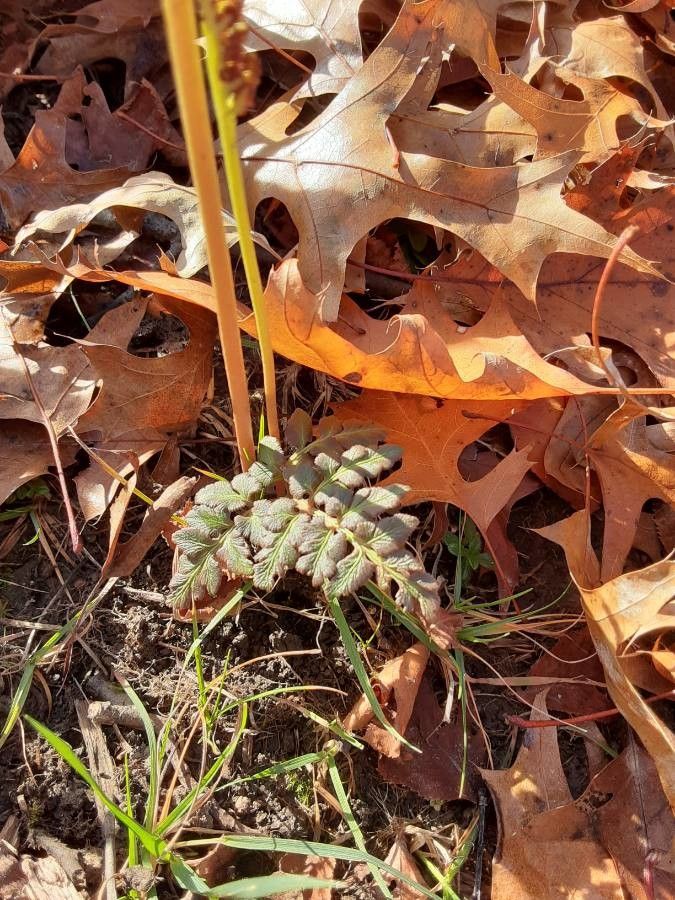
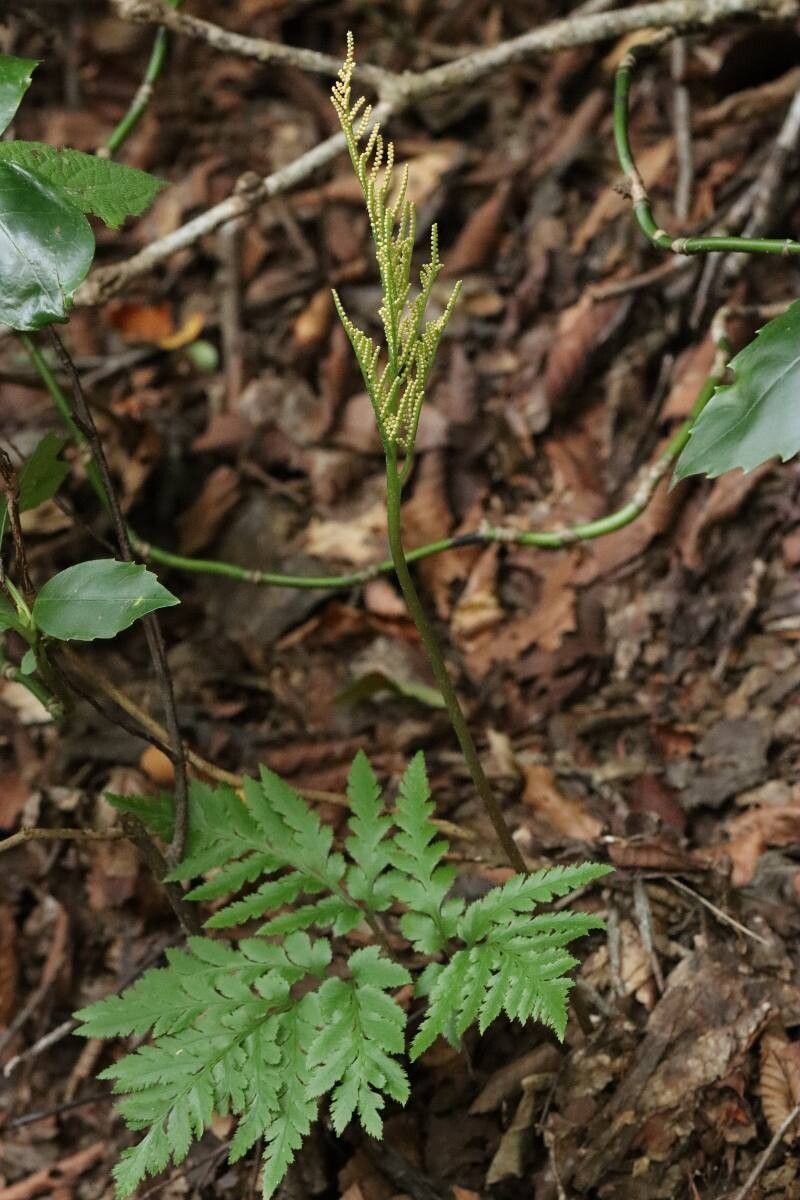
Botrychium matricariifolium (orth.var. B. matricariaefolium) is a species of fern in the Ophioglossaceae family. It is referred to by the common names chamomile grape-fern, daisyleaf grape-fern, and matricary grape-fern. It is native to Europe and parts of eastern North America, including eastern Canada and parts of the United States.This fleshy fern grows up to 30 centimeters tall. It produces dull green sterile leaf blades up to 10 centimeters long by 9 wide divided into a few pairs of segments. The fertile leaves are a bit longer and bear the spores.
Chamomile grape-fern is fairly disease-resistant and generally not susceptible to illnesses. However, it can still be affected by pests and diseases present in its environment, although such issues are typically mild. As for care, the plant requires a moderate level of maintenance. It should be pruned regularly to preserve its appearance and support healthy growth. Fertilizing can also help encourage flowering. This plant is well suited to anyone with outdoor space like a garden or patio and does not demand extensive plant-care experience. When grown indoors, it may need more attentive care.
How to keep Botrychium Matricariifolium.
Light
Chamomile grape-fern naturally occurs in places like forest understories or rocky areas, where it is subject to natural shade. It prefers partial sun but can tolerate both full sun and full shade, demonstrating that it is versatile and hardy.
Water
Chamomile grape-fern thrives in moist meadows and prefers soil that remains consistently moist. It can tolerate short periods of dryness, but it's best to water it weekly. As an herbaceous perennial, chamomile grape-fern benefits from the natural rainfall during its active growth cycles.
Temperature
Chamomile grape-fern can tolerate a wide range of temperatures, though its distribution may still be restricted by different combinations of moisture and heat. It performs best in warm summer conditions with sufficient rainfall or irrigation. Extended periods of cloudy, rainy weather or prolonged high temperatures raise the risk of Chamomile grape-fern dying. In winter, adequate protection from cold can increase the plant's survival rate.
Fertilizer
One fertilizer application in spring is generally sufficient for Chamomile grape-fern, though multiple feedings can maximize growth. Feed it every one to one and a half months. Fertilization improves the leaves' appearance and function, helping maintain uniform color and a healthy texture. It also encourages root development and better nutrient uptake for the plant's long-term health.
Pruning
Chamomile grape-fern needs only minimal pruning, which should be done from early to late spring. Start by removing any dead fronds to improve airflow and prevent disease. Light pruning will also encourage bushier growth and enhance the plant’s appearance. By following these practices, you can ensure the plant's optimal health and vitality while preserving its delicate structure.
Botanical profile.
- Plant Type
- Herb
- Life Cycle
- Perennial
- Genus
- Botrychium
- Family
- Ophioglossaceae
- Hardiness Zone
- 3-8
- Mature Height
- 3 cm to 25 cm
- Mature Spread
- 5 cm to 10 cm
- Leaf Color
- Dark Green, Forest Green
- Leaf Type
- Deciduous
- Bloom Time
- Spring, Summer
- Planting Time
- Spring, Summer, Autumn
- Native Area
- Sweden, Austria, Czech Republic, Slovakia, Montenegro, Poland, Croatia, Slovenia, Belarus, Ukraine, Russia, Lithuania, Norway, Hungary, Germany, Italy, Spain, Switzerland, Denmark, Netherlands, Estonia, Finland, Albania, Romania, Latvia, France
Other names.