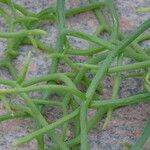
Bowiea volubilis
Climbing-onion · Climbing-potato · Zulu-potato
Description
Source: leafsnapBowiea volubilis, commonly known as the climbing onion or sea onion, is a unique and fascinating plant native to South Africa. It belongs to the Asparagaceae family, the same family as asparagus. The plant has an unusual appearance, characterized by long, thin stems that can grow up to 6 feet in length. These green stems are twisted or spiraled, giving them a distinctive texture. The plant's leaves are small and inconspicuous, often falling off early in its life. One of the most intriguing features of Bowiea volubilis is its bulbous root system, which can grow up to 12 inches in diameter. These bulbs store water for extended periods, allowing the plant to survive through droughts. Bowiea volubilis is frequently grown as an indoor houseplant due to its unique appearance and ease of care. It thrives in bright, indirect light and well-draining soil, requiring only occasional watering during its active growth periods. In traditional medicine, Bowiea volubilis has been used for various medicinal purposes, including treating headaches, fever, stomach ailments, and respiratory problems, among others. Overall, Bowiea volubilis is a fascinating plant with unique features that make it stand out from other houseplants. Its medicinal properties also add to its appeal, making it a worthwhile addition to your collection!
Care Guide
💧 Water Every 7 days
The climbing onion, native to the arid regions of Africa, is known for its ability to tolerate drought and store water in its bulbous shape. Water the climbing onion every 2 to 3 weeks, making sure the soil completely dries out between waterings. It thrives in well-draining soil, which mimics its natural low-humidity habitat.
☀️ Light Full sun
The climbing onion grows best with prolonged exposure to sunlight and can also tolerate periods of moderate light. Its light requirement reflects its native habitat, where it thrived in plentiful illumination. Too little or too much sun can damage its growth, resulting in poor health or discoloration.
What are the sunlight requirements for climbing onion plants?
Climbing onion plants, or Bowiea volubilis, thrive best in environments with extensive sun exposure, reflecting their native habitats which are abundant in sunlight. To flourish, these plants require more than 6 hours of full sun daily but can also manage in partial sun conditions, experiencing about 3-6 hours of sunlight. It's crucial to observe how sunlight traverses your garden, selecting locations that provide an ideal mix of light and shade to ensure the plants' optimal growth and happiness. The plant's health and coloration can be adversely affected by both insufficient and excessive sun exposure.
How can artificial lighting support climbing onion plant growth indoors?
For indoor climbing onion plants lacking sufficient natural sunlight, especially during winter or in less sunny locales, artificial lighting serves as an excellent alternative to promote their growth. By choosing the right type of light, such as LED lights which can be tailored to specific plant needs, you can create an effective indoor growing environment. The required intensity of artificial light varies depending on the plant's natural sunlight needs: 30-50W/sq ft for full sun plants, 20-30W/sq ft for partial sun plants, and 10-20W/sq ft for full shade plants. Position the light source 12-36 inches above the plant, simulating natural sunlight conditions, and ensure the lights are on for 8-12 hours per day to mimic the plant's specific daylight needs.
What are the symptoms of improper lighting for climbing onion plants?
Climbing onion plants exhibit several signs when subjected to poor lighting conditions, indicating a need for better sun exposure or artificial lighting solutions. Symptoms include leggy or sparse growth, where the spaces between leaves or stems elongate causing plants to appear thin and stretched. Slow or ceased growth is another sign, with plants halting leaf production. Chlorosis, or the yellowing of leaves due to inadequate sunlight, affects the plant's ability to photosynthesize. Sunscald reflects damage from intense sunlight, resulting in bleached areas on the plant. Leaf curling serves as a defense mechanism against excessive sun by reducing surface area exposed. Wilting indicates a loss of turgor pressure from overexposure, while leaf scorching presents as brown, dry edges on leaves due to excessive light.
What solutions are available for light-related issues in climbing onion plants?
To address light-related issues in climbing onion plants, follow different strategies based on the plant's location. Indoors, gradually relocate plants weekly until they receive at least 6 hours of direct sunlight daily, utilizing south-facing windows. For large or immovable plants, consider artificial lighting, such as desk or ceiling lamps, for at least 8 hours daily or invest in professional grow lights. Outdoors, it is essential to acclimate plants to brighter conditions gently to prevent sunburn. If sunlight is obstructed, prune trees or move plants to sunnier spots. Importantly, while some affected plant parts may not recover, new growth following increased light exposure will be healthy. This gradual adaptation and optimization of light exposure are key to reviving and enhancing the climbing onion's growth.
🌡️ Temperature 20–37.8°C
The climbing onion is a climber native to the arid parts of South Africa, where temperatures during the growing season range from 20 to 38 ℃ (68 to 100.4 ℉). The plant prefers warm conditions and must be kept away from frost. In winter, it is important to cut back on watering and lower temperatures to 5 to 15 ℃ (41 to 59 ℉) to encourage dormancy and get it ready for the growing season.
What are the ideal growing conditions for Climbing Onion?
The Climbing Onion, native to the arid regions of South Africa, thrives in warm temperatures, specifically between 20°C to 38°C (68°F to 100.4°F) during its growing season. It requires protection from frost and lower watering in winter to encourage dormancy. The plant's growth is optimal when temperatures are maintained above 20°C. In colder climates, particularly when the outdoor temperature falls below 0°C, it's advisable to move the plant indoors to a well-lit area. If necessary, create a makeshift greenhouse for additional warmth and protection while ensuring the soil remains adequately moist.
How should I manage Climbing Onion in extremely cold temperatures?
Climbing Onion is sensitive to freezing temperatures, showing the best growth between 20°C and 38°C. Should the temperature drop below -5°C, the plant can experience water-soaked necrosis, wilting, and leaf drop, often following a period of apparent normalcy if the damage is due to mild frost. In such events, it's critical to trim the frost-damaged sections and move the plant to a warmer, preferably sunny indoor space. For outdoor overwintering, consider utilizing a southeast-facing location or set up a temporary greenhouse to shield it from the cold, ensuring the space is well-ventilated to prevent decay from poor air flow.
What is the response of Climbing Onion to high temperatures?
During the peak of summer, Climbing Onion should ideally be kept at temperatures below 38°C. Exposure to temperatures over 43°C will cause the plant to enter a dormant state, making it particularly susceptible to rot in high humidity conditions. To mitigate the risk of damage in such high temperatures, it's advisable to remove any dry or rotten parts, relocate the plant to a cooler, partially shaded area, and withhold watering until conditions improve, ensuring direct sunlight is avoided during the most intense midday and afternoon heat.
💨 Humidity dry (<40%)
This plant prefers dry conditions, so don't mist it. However, watering it less often can also thrive in higher humidity.
🪴 Soil 6-7
🌱 Fertilizer
For climbing onion, light applications of fertilizer once or twice a year during the growing season are enough. Do not fertilize in winter or summer when the plant is dormant. Cut back on fertilizer for plants that have been repotted and wait a couple of months after repotting before feeding. Fertilizing promotes healthy growth and encourages blooms.
🪴 Pot & Repot 2-3 years
Repot your climbing onion every 2 to 3 years in early spring. Choose a snug, well-draining container that is slightly larger than the plant's bulbous base. After repotting, place the plant in bright, indirect light and water it sparingly until you see new growth. This will help ensure a strong recovery and support its climbing development.
✂️ Pruning
Plants of the Bowiea genus have thin, woody stems that are easy to prune. If the plant's growth becomes too dense or tall, use sharp shears to chop it back by roughly two-thirds of its overall height. Remove any yellowing leaves that are preventing sunlight from reaching other sections of the plant.
🌿 Propagating
🐛 Diseases & pets
☠️ Toxicity
If consumed in excessive quantities, it is toxic. Some of its symptoms include: Skin irritation that only lasts a few minutes Nausea Vomiting Diarrhea Abdominal pain Cramps Sluggish pulse
Characteristics
- Plant Type
- Succulent, Herb
- Life Cycle
- Perennial
- Genus
- Bowiea
- Family
- Asparagaceae
- Hardiness Zone
- 9-11
- Mature Height
- 61 cm
- Mature Spread
- 10 cm to 20 cm
- Leaf Color
- Green
- Leaf Type
- Deciduous
- Flower Color
- White, Green
- Flower Size
- 1.02 cm to 1.52 cm
- Bloom Time
- Summer
- Planting Time
- Summer, Autumn
- Harvest Time
- Late summer, Early fall, Mid fall
- Native Area
- South Africa, Zimbabwe, Zambia, Tanzania, Uganda, Kenya, Mozambique, Malawi, Angola