Bowlesia incana
Hoary bowlesia · Hairy bowlesia
Description
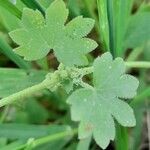
Source: leafsnapBowlesia incana is a small, herbaceous plant that belongs to the Apiaceae family. Native to South America, it can be found in Argentina, Bolivia, Chile, and Peru. The plant typically reaches a height of up to 30 cm and features a woody stem that branches into several thin stems with small leaves. The leaves of Bowlesia incana are alternately arranged on the stem and are deeply divided into several lobes. The plant's flowers are small, white, or yellowish-green, and grow in clusters at the end of each stem. Bowlesia incana commonly grows on rocky slopes or dry hillsides at high altitudes, ranging from 2,000 to 4,000 meters above sea level. Indigenous communities have traditionally used it for medicinal purposes, such as treating respiratory problems like asthma and bronchitis. Due to its delicate appearance, with white flowers contrasting against green foliage, Bowlesia incana has potential as an ornamental species. However, it remains relatively unknown outside of its native South America.
Care Guide
💧 Water Every 7 days
Hoary Bowlesia thrives best with a consistent watering schedule, preferring soil that remains evenly moist. It benefits from being watered weekly. Although it has moderate drought tolerance, it flourishes in high humidity. For indoor care, regularly misting the plant helps simulate rainforest conditions, which enhances leaf vitality and promotes growth.
How should I water my Hoary Bowlesia plant in the best way?
There are a few different ways to water Hoary Bowlesia. You can use a garden hose with a spray nozzle, a watering can, or any other common watering tool. This plant is not too picky about the type of water it receives, so rainwater, tap water, or filtered water will all work. However, it's best not to water the plant from overhead because it can damage the leaves and flowers and potentially cause disease. Instead, setting up a drip irrigation system is often the most effective method for watering Hoary Bowlesia. These systems apply water evenly and directly to the soil. If you have a Hoary Bowlesia in a container, you can use a cup, watering can, or tap to water it directly to the soil in a similar way.
What should I do if I give my Hoary Bowlesia plant too much water or too little water?
If your Hoary Bowlesia is not getting enough water, the solution is simple. Start watering it more regularly when you notice that it is dry. Overwatering, on the other hand, is a more serious issue. It can lead to diseases and the eventual death of your plant. To prevent this, choose a growing location with plenty of sunlight and good drainage. If you have overwatered your Hoary Bowlesia in a pot, you may need to repot it. Make sure to use a pot with proper drainage and loose soil.
How often do I need to give water to my Hoary Bowlesia plant?
To keep your Hoary Bowlesia healthy, it is important to water it regularly. During the growing season, which starts in spring, water the plant once a week. However, as the weather gets warmer, you may need to increase the watering to two or three times a week. Be careful not to exceed this frequency as it can harm the plant. It is crucial to maintain moist soil without letting it become wet, regardless of how often you water. When it comes to potted Hoary Bowlesia, the watering routine is a bit different. The soil in pots tends to dry out faster, so you should water them more frequently. In most cases, watering a potted Hoary Bowlesia a few times per week is necessary, compared to just once a week for an in-ground plant.
How much water does my Hoary Bowlesia plant need?
There are several ways to determine the appropriate amount of water for your Hoary Bowlesia plant. One method involves feeling the moisture in the soil and watering until the top six inches are moist. Another approach is to use a specific measurement, such as two gallons per week, depending on temperature and soil dryness. However, it's important to be flexible and avoid overwatering if your particular plant requires less. When growing Hoary Bowlesia in a container, you should water until all soil layers are moist or until you see a small amount of excess water draining from the pot's holes.
How do I know if I'm giving enough water to my Hoary Bowlesia plant?
Hoary Bowlesia plants can be challenging to water properly. While they have deep roots that need to be moistened weekly, overwatering can lead to root rot and browning. Underwatering is less of a concern as these plants can survive without frequent watering. However, if you wait too long to water, the plant may wilt and develop dry leaves.
☀️ Light Partial sun
Hoary Bowlesia grows best when given scattered light, which provides enough illumination for healthy growth. It can adjust to shadier conditions, though growth may be slower. Extreme exposure, such as intense sunlight, could potentially harm the plant. Its original habitat featured areas with mixed sun cover, which shaped its resilience to varying light conditions.
What are the sunlight requirements for Hoary Bowlesia?
Hoary Bowlesia thrives best in scattered light for optimal growth but can also adapt to more shaded conditions, albeit with slower growth rates. It's important to provide the plant with about 3-6 hours of sunlight daily for partial sun conditions, and less than 3 hours of sunlight for full shade conditions. The plant's happiness depends on finding the perfect balance of light and shade in your garden, observing how sunlight moves through your space to select the ideal location. Extreme sunlight exposure should be avoided, as it can harm the plant.
How does artificial lighting benefit Hoary Bowlesia, and how should it be used?
Artificial lighting is crucial for Hoary Bowlesia when natural sunlight is insufficient, especially during winter or in less sunny spaces. It promotes faster, healthier growth by providing the necessary light spectrum. LED lights are recommended because they can be customized to meet the specific light wavelength needs of plants. For plants requiring full sun, 30-50W/sq ft of light is needed, partial sun plants require 20-30W/sq ft, and full shade plants need 10-20W/sq ft. The artificial light source should be placed 12-36 inches above the plant to mimic natural sunlight and be kept on for 8-12 hours per day, depending on the plant species' light needs.
What symptoms indicate inadequate light for Hoary Bowlesia, and how can they be addressed?
Symptoms of inadequate light in Hoary Bowlesia include smaller new leaves, leggy or sparse growth, faster leaf drop, slower or no new growth, lighter-colored new leaves, chlorosis, sunscald, leaf curling, wilting, and leaf scorching. To address light deficiencies indoors, gradually shift plants to sunnier spots each week or use artificial light for at least 8 hours daily. Outdoors, gradually move plants to better-lit areas to prevent sunburn. Reducing obstructions like pruning trees or transplanting to sunnier locations can also help. While damaged parts may not recover, increased light exposure can promote healthy new growth.
What are some additional care tips for managing Hoary Bowlesia in different lighting conditions?
To ensure the health and growth of your Hoary Bowlesia, it's essential to manage its exposure to sunlight carefully. For indoor care, gradually increase exposure to natural or artificial light to adapt the plant to brighter conditions. Outdoor plants should be moved to progressively sunnier spots weekly, avoiding abrupt changes that could cause sunburn. If your plant is shadowed by trees or buildings, consider pruning or relocating smaller plants to areas with better sunlight and drainage, especially during their dormant periods in late winter or early spring.
🌡️ Temperature 15–32.2°C
Hoary Bowlesia does best in climates where temperatures range from 68 to 95 °F (20 to 35 °C). Seasonal adjustments may be necessary to satisfy its temperature requirements.
What are the ideal climate conditions for Hoary Bowlesia to thrive?
Hoary Bowlesia thrives best in climates with temperatures ranging from 68 to 95 °F (20 to 35 °C). Due to its strong cold resistance, it usually doesn't require special frost protection during winter. However, if temperatures are expected to drop below -10°C, it's important to provide cold protection, which can be accomplished by covering the plant with soil or straw. It is also recommended to water the plant abundantly before the first freeze in autumn, ensuring the soil remains moist throughout the winter and early spring for better cold resistance.
How does Hoary Bowlesia respond to low temperatures, and what measures should be taken?
Hoary Bowlesia is cold-tolerant and fares best when temperatures are kept above 20°C. It should remain above 0°C during winter. If temperatures fall below -10°C, the plant might not show immediate damage but could experience decreased sprouting or fail to sprout in the spring. In response to low sprouting in spring, any parts of the plant that have failed to sprout should be removed.
What are the effects of high temperatures on Hoary Bowlesia, and how can they be mitigated?
During summer, it's crucial to ensure Hoary Bowlesia's temperature doesn't exceed 35°C. Exposure to temperatures above 38°C can lead to leaves becoming lighter, prone to curling and sunburn, and in severe cases, the plant may wilt and become dry. To mitigate these effects, trim away the sunburned and dried-up parts of the plant. Additionally, moving the plant to a shade or applying a shade cloth can protect it from the harsh midday and afternoon sun. Keeping the soil moist by watering in the morning and evening is also essential.
💨 Humidity dry (<40%)
This plant prefers dry conditions, so don't mist it. However, watering it less often can also thrive in higher humidity.
🪴 Soil 6-7
🌱 Fertilizer
Hoary Bowlesia responds well to regular, low-strength fertilizer applications to encourage healthy leaf development. Fertilize Hoary Bowlesia about once a month during the summer. Nitrogen is important for foliage, and providing nitrogen-rich sources helps Hoary Bowlesia thrive.
🪴 Pot & Repot
✂️ Pruning
Hoary Bowlesia is a low-growing annual herb known for its finely divided leaves. To encourage healthy growth and maintain a compact form, it is best to prune this plant from early to late spring. Regular pruning helps remove dead foliage, improve air circulation, and increase light penetration, which reduces the risk of fungal diseases and enhances the plant's overall appearance.
🌿 Propagating
🐛 Diseases & pets
☠️ Toxicity
Characteristics
- Plant Type
- Herb
- Life Cycle
- Annual
- Genus
- Bowlesia
- Family
- Apiaceae
- Hardiness Zone
- 8
- Mature Height
- 30 cm to 91 cm
- Mature Spread
- 61 cm
- Leaf Color
- Green
- Leaf Type
- Semi-evergreen
- Flower Color
- White
- Flower Size
- 2.54 cm
- Bloom Time
- Mid spring, Late spring, Early summer
- Planting Time
- Spring, Summer, Autumn
- Harvest Time
- Early summer, Mid summer
- Native Area
- Mexico