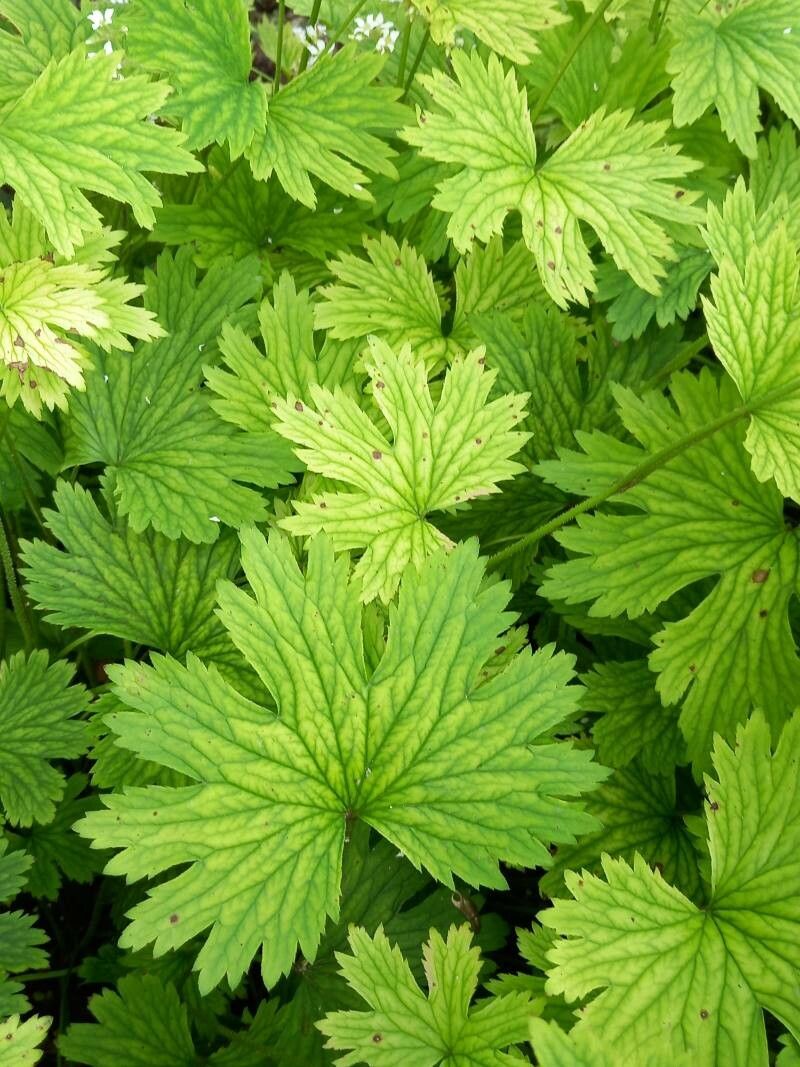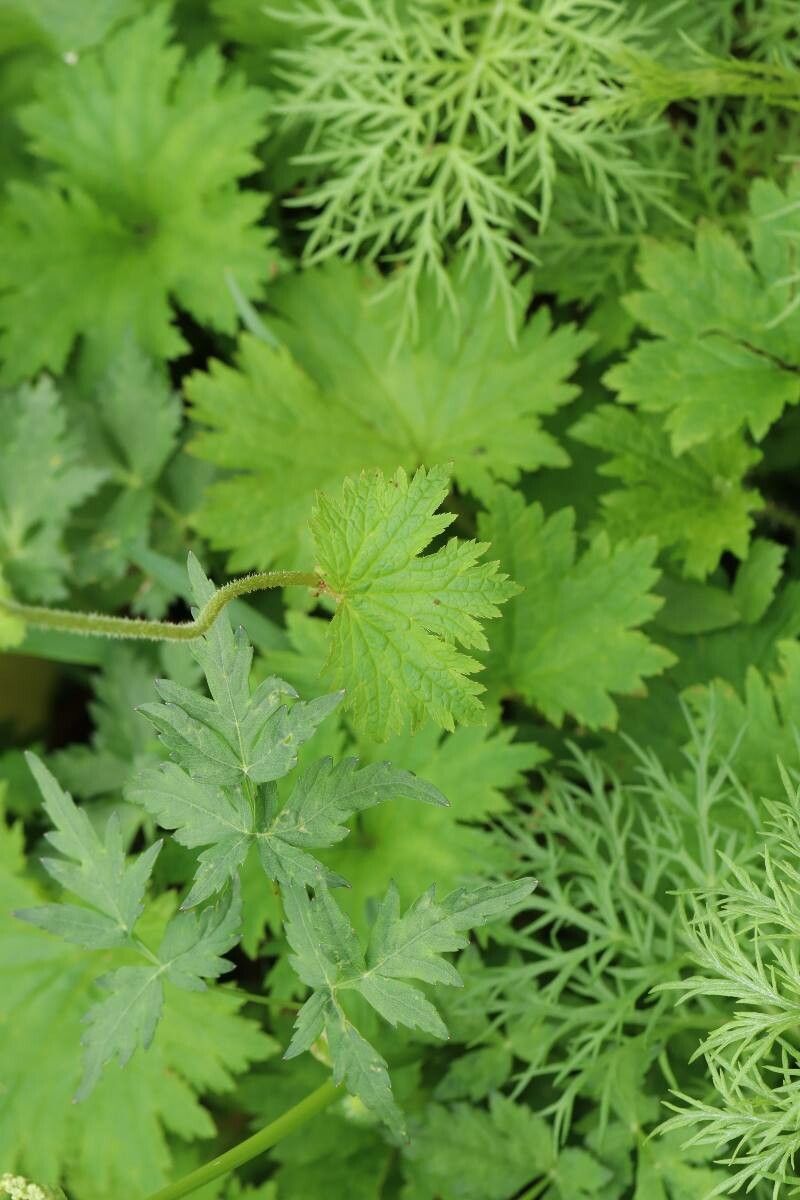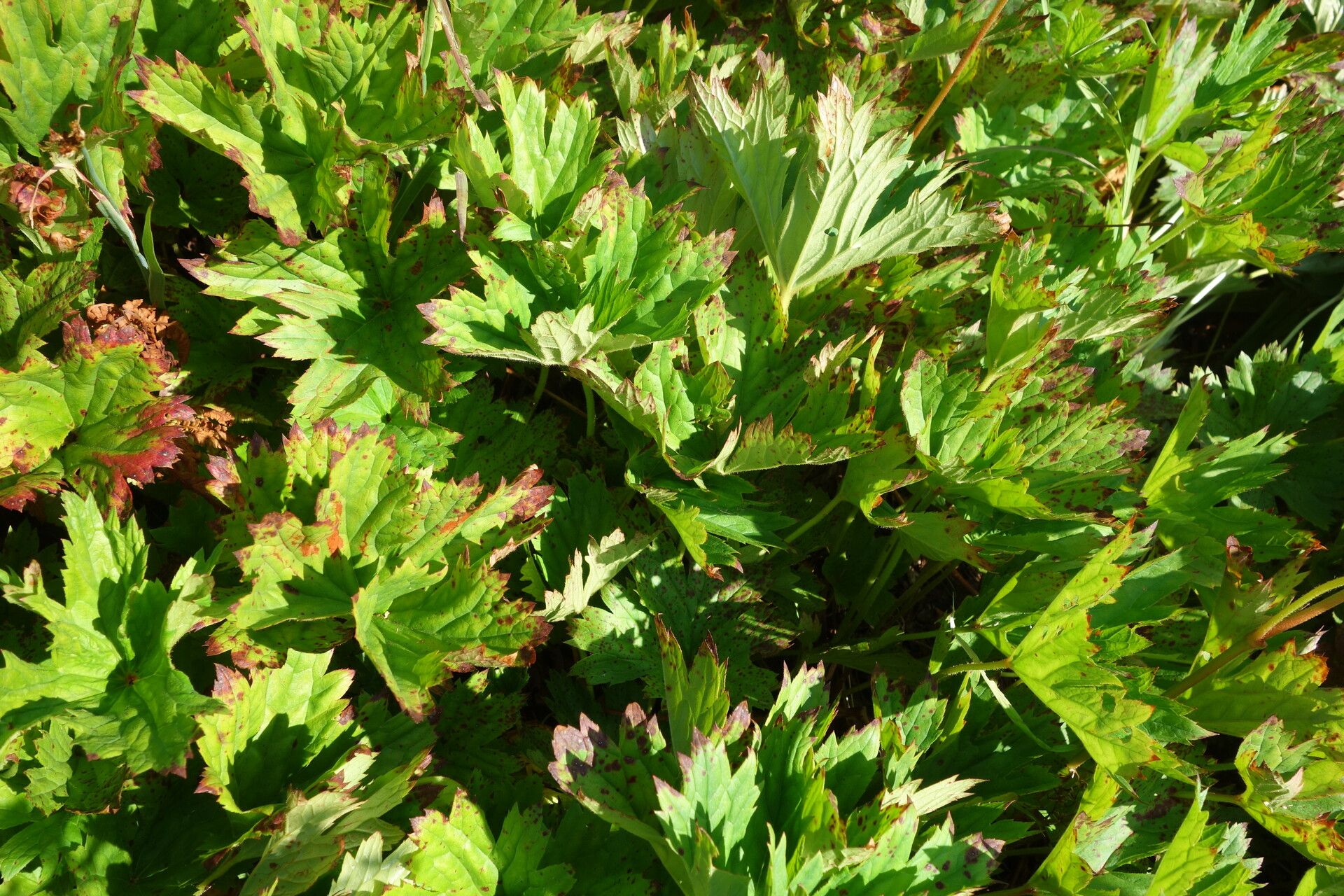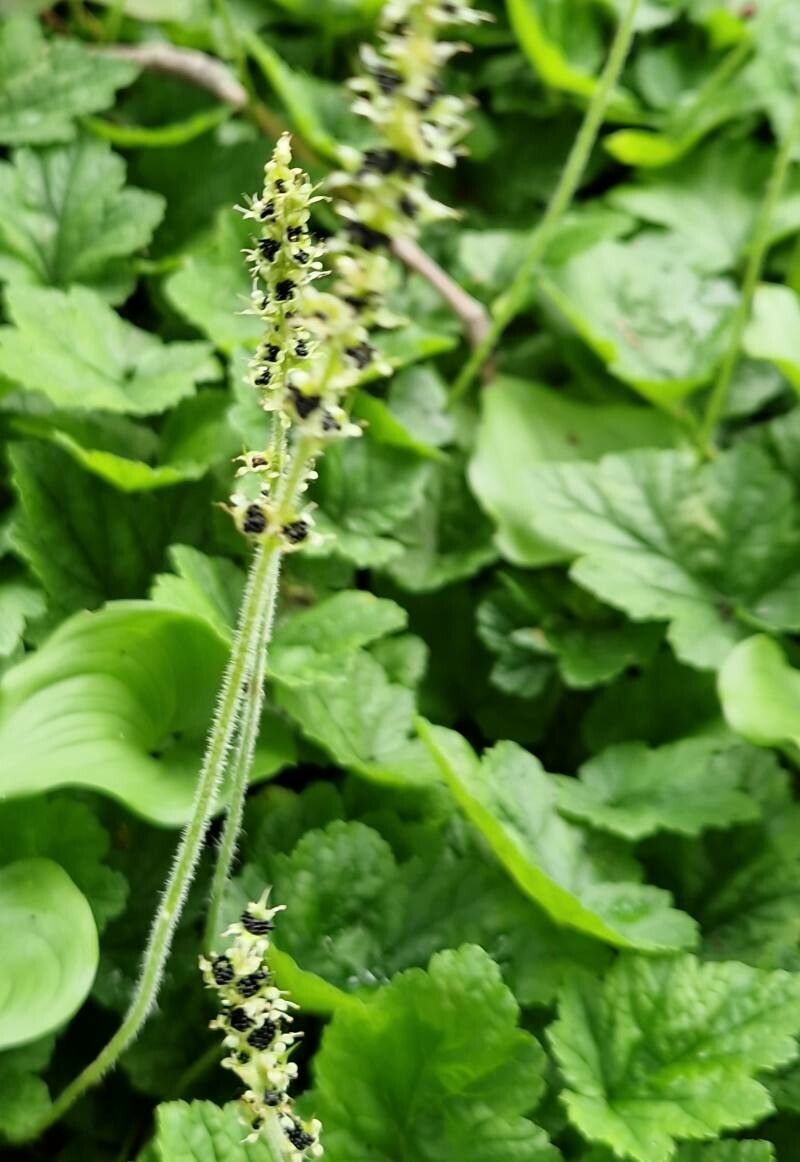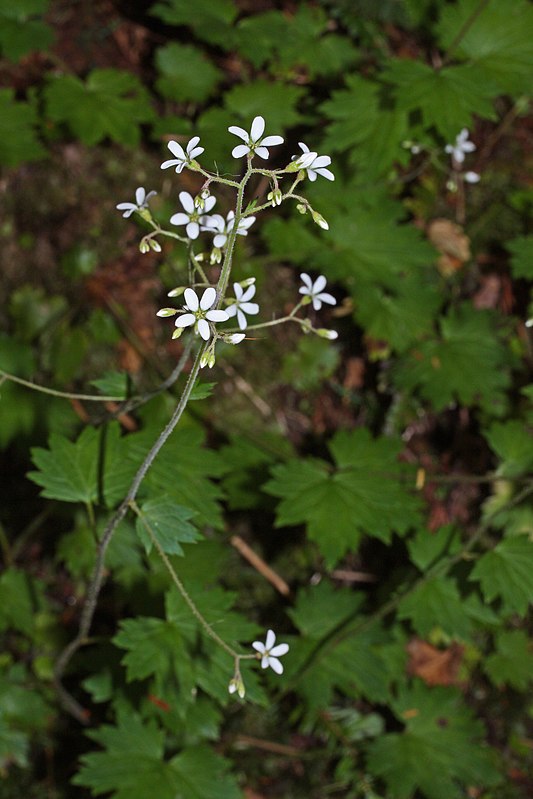
Boykinia occidentalis is a species of flowering plant in the saxifrage family known by the common name coastal brookfoam. It is native to the west coast of North America from British Columbia to California, where it grows in shady areas near riverbanks and streams. It is a rhizomatous perennial herb producing large, rounded leaves with blades up to 45 centimeters long and 12 wide, borne on petioles up to 30 centimeters in length. Each leaf has several rounded lobes with dull teeth along the edges. The inflorescence reaches 30 to 60 centimeters tall on a thin stem. It bears an open array of many small white flowers, each with five tiny pointed sepals and five larger oval petals.
Coastal brookfoam shows strong resistance to disease and is typically not susceptible to illnesses. However, it can be vulnerable to pests and diseases present in its environment. Such infections are generally mild. Regarding care, this plant needs moderate maintenance. It should be pruned regularly to preserve its appearance and encourage healthy growth. Applying fertilizer can also encourage flowering. Coastal brookfoam is well suited for anyone with outdoor space, such as a garden or patio, and does not demand extensive care experience. It may need more attention when grown indoors.
How to keep Boykinia Occidentalis.
Light
Coastal brookfoam occurs naturally in environments like forest understories or rocky sites, where it is subject to natural shade. It prefers partial sun but can tolerate both full sun and full shade, reflecting its hardy and adaptable nature.
Water
Coastal brookfoam flourishes in moist environments and prefers consistent weekly watering, although it can withstand brief periods of dryness. As an herbaceous perennial, it benefits from mulching to help retain soil moisture, particularly during the growing season.
Temperature
Coastal brookfoam can tolerate a wide range of temperature conditions, but its distribution may still be restricted by different combinations of water and heat conditions. It does best in warm summer climates with adequate rainfall or watering. Extended periods of cloudy, rainy weather or prolonged high temperatures can raise the likelihood of Coastal brookfoam dying. In winter, suitable protection from cold can improve the plant's survival rate.
Fertilizer
The best time to fertilize a Coastal brookfoam is in early spring, as it comes out of dormancy and starts active growth. Fertilization supplies essential nutrients for healthy development. While Coastal brookfoam has fairly low fertilizer needs, a yearly application can boost its survival and encourage better, longer-lasting flowers.
Pruning
Coastal brookfoam thrives in moist, shaded areas, displaying delicate white flowers. To encourage healthy growth and blooming, prune the plant from early to late spring. This will help remove damaged growth, improve air circulation, and enhance blooming. Use clean, sharp tools to make cuts above the leaf nodes, and regularly remove spent flowers to extend the blooming period.
Botanical profile.
- Plant Type
- Herb
- Life Cycle
- Perennial
- Genus
- Boykinia
- Family
- Saxifragaceae
- Hardiness Zone
- 5-9
- Mature Height
- 30 cm to 61 cm
- Mature Spread
- 30 cm to 46 cm
- Leaf Color
- Green, Blue
- Leaf Type
- Semi-evergreen
- Flower Color
- White
- Flower Size
- 0.51 cm to 1.02 cm
- Bloom Time
- Mid spring, Late spring, Early summer
- Planting Time
- Spring, Summer
- Harvest Time
- Summer