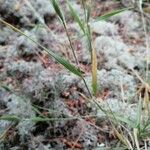
Brachypodium distachyon
نوعی چمن جار ی جنگلی · Purple false brome · Stiff Brome · False brome · Annual false brome
Description
Source: leafsnapBrachypodium distachyon, commonly called purple false brome or stiff brome, is a grass species native to southern Europe, northern Africa and southwestern Asia east to India. It is related to the major cereal grain species wheat, barley, oats, maize, rice, rye, sorghum, and millet. It has many qualities that make it an excellent model organism for functional genomics research in temperate grasses, cereals, and dedicated biofuel crops such as switchgrass. These attributes include small genome (~270 Mbp) diploid accessions, a series of polyploid accessions, a small physical stature, self-fertility, a short lifecycle, simple growth requirements, and an efficient transformation system. The genome of Brachypodium distachyon (diploid inbred line Bd21) has been sequenced and published in Nature in 2010.
Care Guide
💧 Water
Purple false brome thrives in moderately moist conditions and should be watered once a week. Although it can withstand short periods of drought, it remains healthy by efficiently using water during its growing season. This resilience helps it adapt to varying levels of rainfall.
What should I do if I give my Purple false brome plant too much water or too little water?
Proper watering is crucial for the growth and health of this beautiful ornamental grass. When it is planted in the ground, watering problems can be resolved. However, in a container, excessive or insufficient water can quickly kill Purple false brome. When Purple false brome does not receive the right amount of water, it may cease to grow. Overwatering can cause yellow leaves with brown tips, while underwatering can lead to drooping leaves, weak seed head production, and browned leaves. If you suspect that your Purple false brome has been watered improperly, the first step is to determine whether there is too much or too little water. If it is being overwatered, stop watering immediately. It may take some time for heavy soils to dry out, so be patient. Once you observe new growth, test the soil for moisture and decide if it requires more water. The solution for Purple false brome receiving insufficient water is simple: provide a thorough watering and observe if it regains its appearance. It is important to remember that deep watering is always better than shallow and frequent waterings. This promotes the growth of deep roots, making the grass more resistant to drought and less likely to be affected by watering issues.
How much water does my Purple false brome need?
The watering needs of Purple false brome depend on its planting location. In general, it should be watered weekly. However, in hot climates, watering once or twice a week in the summer may be necessary. In moderate climates, watering once every seven days or more may suffice. Grass in containers typically requires more frequent watering than grass planted in the ground. The location of the grass also matters, as shaded grass needs less water compared to grass planted in the ground. Only water Purple false brome when the soil is dry, which can be determined by pressing your finger into the soil or weighing the pot. Despite its drought tolerance, regular deep waterings will maintain its beautiful color. Although Purple false brome can survive in extreme heat and intermittent rain in the wild, it still needs care and attention, including consistent watering. Initially, it may require more frequent watering until it establishes deep roots. When grown in pots, the soil dries out quickly, especially in direct sunlight. Test the soil every 3 to 4 days and water only when it feels dry. Purple false brome planted in the ground generally requires less watering, but this depends on the type of soil. Clay holds water for longer periods, so surface dryness may not indicate actual moisture levels below the ground. Sandy soils that drain quickly will need to be watered more often.
What do I need to watch out for when watering my Purple false brome in different seasons, weather conditions, or during different stages of growth?
To determine if you are watering enough, pay attention to the rate of growth of your grass. Purple false brome tends to double in size during the hottest months. If the weather is hot and the grass isn't growing well, you may need to adjust your watering schedule. In winter, you could potentially water just once a month, but it's still important to check the soil for moisture. During the warmest months, the grass will require more water, while in winter and cooler months, the need for water will decrease significantly. Remember to let the soil dry out completely before watering Purple false brome.
☀️ Light Full sun
Purple false brome flourishes in light, unobscured habitats where it favors full sunlight. It can endure some shade, although it tends to prefer being directly under the sun for ideal development. Recognized for its solar affinity, this plant, which can be an annual or biennial, is native to these conditions.
What are the sunlight requirements for Purple false brome?
Purple false brome thrives in bright, open environments, requiring full sun, which means above 6 hours of sunlight daily, for optimal growth. It can also tolerate partial sun, about 3-6 hours of sunlight, but prefers full sun. Ensuring your garden spots provide a balance of light and shade is essential for the happiness of your plants.
How can artificial lighting support plant growth indoors?
Indoor plants, including Purple false brome, can benefit significantly from artificial lighting, especially when natural sunlight is insufficient. LED lights are a popular choice because they can offer specific wavelengths needed for plant growth. Full sun plants need 30-50W/sq ft, partial sun plants 20-30W/sq ft, and full shade plants 10-20W/sq ft. The light source should be placed 12-36 inches above the plant to mimic natural sunlight, and most plants require 8-12 hours of light per day to ensure healthy, faster growth.
What symptoms indicate Purple false brome is getting inadequate light?
When Purple false brome does not receive sufficient light, it may show several symptoms such as smaller new leaves, leggy or sparse growth, faster leaf drop, slower or no new growth, lighter-colored new leaves, chlorosis (yellowing of leaves), sunscald, leaf curling, wilting, and leaf scorching. These symptoms indicate a need for better light conditions to maintain plant health.
How can I address inadequate light for my Purple false brome both indoors and outdoors?
To address light deficiency for indoor plants, gradually move them to sunnier locations each week until they receive at least 6 hours of direct sunlight daily. Use south-facing windows and consider artificial light sources for plants that aren't easily moved. Outdoors, gradually acclimate your plants by moving them to sunnier spots weekly to prevent sunburn. In cases where trees or other large obstructions limit sunlight, consider pruning or transplanting your plants to a location with ample sunlight and good drainage. Note that damaged parts of the plant might not recover, but new growth will be healthy with improved light conditions.
🌡️ Temperature 10–35°C
The adaptability of Purple false brome allows it to thrive in diverse temperature conditions, but variations in heat and water levels can nonetheless constrain its spread. It prefers mild climates in the summer which have sufficient moisture either from rain or water supply. Lengthy spells of overcast and wet weather, along with sustained high temperatures, might heighten the chance of this plant's demise. During the winter months, offering the plant adequate protection from the chill can help boost its chances of survival.
💨 Humidity
🪴 Soil 6-7
🌱 Fertilizer
🪴 Pot & Repot
✂️ Pruning
Purple false brome, known for its purple hue and resilience, flourishes when pruned correctly. To maintain its health and improve air circulation, it is important to remove damaged stems and thin out crowded areas. Pruning should be done between early and late spring to coincide with its growth cycle, which enhances both the plant's health and its visual appeal.
🌿 Propagating
🐛 Diseases & pets
☠️ Toxicity
Characteristics
- Plant Type
- Grass
- Life Cycle
- Annual
- Genus
- Brachypodium
- Family
- Poaceae
- Hardiness Zone
- 6-9
- Mature Height
- 3 cm to 40 cm
- Mature Spread
- 15 cm to 25 cm
- Leaf Color
- Green
- Leaf Type
- Semi-evergreen
- Flower Color
- Yellow, Green, Brown
- Flower Size
- 2.03 cm to 10.16 cm
- Bloom Time
- Mid spring, Late spring
- Planting Time
- Spring, Autumn
- Harvest Time
- Early summer, Mid summer
- Native Area
- Libya, Djibouti, Egypt, Turkey, India, United Arab Emirates, Montenegro, Eritrea, Pakistan, Slovenia, Morocco, Croatia, Yemen, Uzbekistan, Russia, Iraq, Jordan, Oman, Ethiopia, Qatar, Portugal, France, Saudi Arabia, Tajikistan, Tunisia, Sudan, Cyprus, Bulgaria, Armenia, Greece, Ukraine, Serbia, Lebanon, Afghanistan, Syria, Italy, Spain, Israel, Iran, Albania, Azerbaijan, Algeria, Kuwait, Turkmenistan