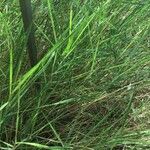
Brachypodium retusum
Ramose false brome
Description
Source: leafsnapBrachypodium retusum, commonly known as the broadleaf false brome, is a species of grass belonging to the Poaceae family. This plant is native to various regions across Europe, Asia, and North Africa, often thriving in open habitats such as meadows, pastures, and forest clearings. The broadleaf false brome exhibits a clumping growth habit, with stems that can reach heights of up to 60 cm. Its leaves are flat, broad, and have pointed tips, giving them a distinctive appearance. During the summer months, the plant produces small flowers on branched inflorescences. This grass species has garnered attention for its potential use as a model organism in genetic research due to its small genome size and ease of cultivation. Additionally, it holds promise in agricultural applications, being resistant to various pests and diseases. In summary, Brachypodium retusum is a fascinating plant species with unique characteristics. It is not only an important subject for scientific research but also has practical applications in agriculture.
Care Guide
💧 Water Every 7 days
☀️ Light Full sun
Ramose false brome is a sun-loving perennial herbaceous plant that comes from open habitats and is commonly found in meadows and grasslands. It favors full sun but can also tolerate partial sun conditions.
🌡️ Temperature 15–35°C
Ramose false brome can tolerate a wide range of temperatures, but its range may still be restricted by different combinations of moisture and heat. It performs best in warm summer climates with sufficient rainfall or irrigation. Long periods of cloudy, rainy weather or prolonged high temperatures can increase the chance of Ramose false brome dying. In winter, proper protection from cold can boost the plant's survival rate.
💨 Humidity
🪴 Soil 6-8
🌱 Fertilizer
Ramose false brome needs extra nutrients to encourage healthy new growth. In spring, putting some compost around the base of the plant will effectively supply the nutrition it requires. Fertilizing helps support vigorous growth and aids the plant in resisting diseases and pests.
🪴 Pot & Repot
✂️ Pruning
Ramose false brome has a dense, tufted look that benefits from pruning in early spring. To promote new growth and keep its shape, trim away any dead foliage and stray stems. Regular thinning is important as it improves air circulation, lowers the risk of disease, and enhances both the plant's resilience and visual appeal, all of which are crucial for a well-maintained garden.
🌿 Propagating
🐛 Diseases & pets
☠️ Toxicity
Characteristics
- Plant Type
- Grass
- Life Cycle
- Perennial
- Genus
- Brachypodium
- Family
- Poaceae
- Hardiness Zone
- 7-10
- Mature Height
- 30 cm to 61 cm
- Mature Spread
- 20 cm to 40 cm
- Leaf Color
- Light Green, Olive Drab
- Leaf Type
- Evergreen
- Flower Size
- 0.51 cm to 0.76 cm
- Bloom Time
- Late spring, Early summer
- Planting Time
- Spring, Summer, Autumn
- Harvest Time
- Mid summer, Late summer
- Native Area
- Saudi Arabia, Libya, Tunisia, Turkey, Greece, Croatia, Morocco, Yemen, Syria, Portugal, Italy, Spain, Albania, Ethiopia, Algeria, France