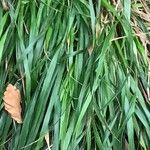
Brachypodium sylvaticum
False Brome · Slender false brome · False broom · Slender false bromegrass · Wood False-Brome
Description
Source: leafsnapBrachypodium sylvaticum, commonly known as false brome or wood false brome, is a perennial grass species belonging to the Poaceae family. Native to Europe and Asia, it thrives in various habitats, including woodlands, meadows, and grasslands. Typically, the plant grows up to 1 meter in height, featuring slender stems that often bend near the base. Its leaves are narrow, flat, and exhibit a bluish-green hue. The inflorescence of Brachypodium sylvaticum consists of spikelets arranged in loose panicles at the top of the stem. Brachypodium sylvaticum serves multiple purposes, such as providing forage for livestock and aiding in erosion control. Its deep root system helps stabilize soil on slopes, enhancing its utility in conservation efforts. Furthermore, it has been extensively studied by researchers due to its genetic similarity to important cereal crops like wheat. Overall, Brachypodium sylvaticum is significant both ecologically and agriculturally. Its adaptability and genetic potential make it a valuable species for research and practical applications.
Care Guide
💧 Water Every 7 days
Slender false brome flourishes in moist woodland environments and requires consistent watering, ideally on a weekly basis. This plant is not drought-tolerant and thrives in the humid conditions of the forest understory. Its growth cycle is synchronized with seasonal rainfall, allowing it to make the most of available water throughout its life cycle.
What should I do if I give too much or too little water to my Slender false brome plant?
Proper watering is essential for the growth of this beautiful ornamental grass. When planted in the ground, watering issues can be resolved easily. However, in a container, both overwatering and underwatering can quickly kill the Slender false brome. Insufficient water can cause the grass to stop growing and lead to drooping leaves, weak seed head production, and browning. On the other hand, overwatering can result in yellow leaves with brown tips. If you suspect that your Slender false brome has been watered improperly, the first step is to determine whether it's receiving too much or too little water. If it's getting too much water, stop watering immediately and allow the soil to dry out. Once new growth appears, test the soil for moisture before deciding whether to water again. If the grass is receiving too little water, simply give it a deep drink to see if it rejuvenates. In general, it's better to water deeply instead of frequently, as this encourages the growth of deep roots, making the grass more resistant to drought and less susceptible to watering-related issues.
How frequently do I need to water my Slender false brome?
The watering needs of Slender false brome vary depending on where it is planted. Generally, watering this grass every week is recommended. In hot climates, watering once or twice a week in the summer may be necessary. In moderate climates, watering once every seven days or more may be enough. Grass in containers generally needs more frequent watering compared to those planted in the ground. However, the location of the grass also matters, as shaded grasses require less frequent watering than those planted in the ground. Only water Slender false brome when the soil is dry, and you can determine this by pressing your finger a couple of inches into the soil. Potted grass can be checked by weighing the pot or by feeling if it is light. If the grass lacks sufficient water, the blades may appear folded along their centers and thinner than usual. Although Slender false brome is drought-tolerant, regular and deep waterings will result in a beautiful color. In its natural habitat, Slender false brome grows in open scrubland where it is exposed to extreme heat, bright sun, and intermittent rain. Despite its ability to withstand dry conditions, this grass still requires care and attention. When first planted, Slender false brome needs more frequent watering until it establishes deep roots. Potted Slender false brome dries out quickly, especially when exposed to hot, direct sun. Test the soil every 3 to 4 days and water only when it feels dry. Ground-planted Slender false brome generally requires less watering, but this depends on the type of soil. Clay soil holds water for longer periods, so it may feel dry at the surface while retaining moisture underground. Sandy soils that drain quickly will need more frequent watering.
What do I need to watch out for when I water my Slender false brome in different seasons, climates, or during different growing stages?
To determine if you are watering enough, observe the rate of growth of your grasses. Slender false brome tends to double in size during the hottest months of the year. If the weather is hot but the grass is not growing vigorously, consider adjusting your watering schedule. In winter, watering once a month may be sufficient, but it is still advisable to check the soil for moisture. During the grass's growth cycle in the warmest months, it will require more water. However, during winter and cooler months, the water needs will be significantly lower. It is crucial to remember that the soil should always be allowed to completely dry out before adding water when dealing with Slender false brome.
☀️ Light Partial sun
Slender false brome does best in a mix of sun and shade, reflecting its origins in forested habitats. Moderate sunlight during key growth periods benefits the plant. Excessive light can make it unhealthy, while too little may stunt its growth and development.
What are the sunlight requirements for Slender false brome?
Slender false brome requires partial sun, meaning it thrives best with about 3-6 hours of sunlight daily. It is essential to observe how sunlight moves through your garden to choose spots that offer a balance of light and shade, ensuring the plant's well-being. Originating from forested areas, Slender false brome benefits from a mix of sun and shade, especially during vital growth stages. However, excessive sunlight can harm the plant, while insufficient light may hinder its growth and development.
How can artificial lighting be used for Slender false brome indoors?
Indoor plants like Slender false brome require adequate lighting for optimal growth, which can be supplemented with artificial lights when natural sunlight is insufficient. LED lights are recommended because they can be tailored to provide specific light wavelengths needed by plants. For full sun plants, 30-50W per square foot is needed; partial sun plants require 20-30W per square foot, and full shade plants need 10-20W per square foot. The light source should be placed 12-36 inches above the plant, for 8-12 hours per day to mimic natural sunlight conditions.
What are the symptoms of light deficiency in Slender false brome?
When Slender false brome is grown indoors under insufficient light, it may exhibit symptoms such as small or lighter-colored new leaves, leggy or sparse growth, faster leaf drop, slower or no new growth, chlorosis, sunscald, leaf curling, wilting, and leaf scorching. These symptoms indicate either a lack of sufficient sunlight or overexposure to it, affecting the plant's health and ability to photosynthesize properly.
What solutions are available for addressing insufficient sunlight for Slender false brome?
For indoor Slender false brome plants, you can gradually shift them to sunnier spots each week until they receive the required 3-6 hours of direct sunlight daily or use artificial light sources like desk or ceiling lamps for at least 8 hours daily. For outdoor plants, the gradual relocation to sunnier spots is recommended to prevent sunburn. Minimizing obstructions by pruning trees or relocating the plant to sunnier areas can also help. It's important to note that parts of the plant that have been already affected by insufficient light may not recover, but new growth should be healthy after adjusting the light conditions.
🌡️ Temperature 5–35°C
Slender false brome is suited to a variety of climates, typically occurring where temperatures range from 41 to 95 degrees Fahrenheit (5 to 35 degrees Celsius). It originates in temperate regions, so seasonal temperature adjustments may be necessary for optimal growth.
What are the optimal growth temperatures for slender false brome?
Slender false brome thrives in a range of climates, with optimal growth temperatures generally falling between 41 to 95 degrees Fahrenheit (5 to 35 degrees Celsius). Originating from temperate climates, this plant has a strong tolerance to cold weather, so special frost protection measures are not usually needed during winter months. However, in extremely cold conditions where temperatures are expected to drop below -25°C, it's important to take steps to protect the plant, such as covering it with soil or straw and watering it abundantly before the first freeze in autumn to ensure the soil remains moist throughout the winter.
How does slender false brome respond to low temperatures?
Slender false brome is notably cold-tolerant, performing best when temperatures stay above 5°C. During winter, it's vital to maintain temperatures above -20°C. If temperatures fall below -25°C, the plant may not show immediate damage but might experience reduced sprouting or fail to sprout at all come springtime. In such cases, removing parts that have failed to sprout in the spring is recommended as a recovery solution.
What should I do if slender false brome experiences high temperatures?
During the summer, slender false brome should ideally be kept below 35°C. Exposing the plant to temperatures above 38°C can lead to symptoms such as lighter-colored leaves, curling, susceptibility to sunburn, and in severe cases, wilting and drying out of the entire plant. To mitigate these issues, trim away the sunburned and dried parts of the plant. Moving the plant to a shaded location or using a shade cloth to protect it from the midday and afternoon sun can also be beneficial. Additionally, watering the plant in the morning and evening will help keep the soil moist and assist in preventing these high temperature-induced issues.
💨 Humidity dry (<40%)
This plant prefers dry conditions, so don't mist it. However, watering it less often can also thrive in higher humidity.
🪴 Soil 5-7
🌱 Fertilizer
Slender false brome needs extra nutrients to encourage healthy new growth. In spring, placing compost around the plant's base will effectively supply the nutrition it requires. Fertilizing supports vigorous growth and helps the plant resist diseases and pests.
Why is it necessary to put fertilizer on my Slender false brome?
Fertilizing Slender false brome is necessary for a simple reason - your plant requires additional nutrients for healthy new growth. These extra nutrients not only support the health of older growth but also aid in the plant's defense against diseases and pests.
When should I fertilize my Slender false brome?
To ensure the survival of Slender false brome in your garden, it's important to understand when to fertilize it. This plant doesn't require a lot of nutrients and doesn't need additional fertilizer when it's dying back. While you can use diluted fertilizer at the beginning of the growing season, it's actually not recommended. Instead, a better approach is to add mulch or compost around the base of the plant.
When is the best time to not give fertilizer to my Slender false brome?
If you choose not to use packaged fertilizers, there's no need to worry about when to stop feeding Slender false brome. Simply apply a layer of compost or mulch in the spring, and it will be sufficient to keep the plant happy all year round. During the dormant winter period, there's no need to concern yourself with mulching or composting.
What kind of fertilizer does my Slender false brome plant need?
Instead of rushing to buy fertilizer at the garden center for slender false brome, there's a simpler solution. In the spring, you can just use compost to provide the necessary nutrients. If you regularly mulch your garden, the bark will also keep the plant well-fed and happy.
How do I add fertilizer to my Slender false brome?
When dealing with Slender false brome, whether you choose to use mulch or compost, the steps are the same. Start by placing a layer of the chosen material, ensuring that it covers the base of the plant. If you decide to use both mulch and compost, reduce the amount of compost used. Adding a layer of mulch can accomplish two things - it helps the soil retain moisture and provides nourishment for your plant.
🪴 Pot & Repot
✂️ Pruning
The slender false brome has narrow, arching leaves and benefits from pruning in early spring. To maintain its health, cut back the dead stems and thin out dense areas to improve airflow. Be sure to avoid heavy pruning outside of its growth periods. Always use clean tools to minimize the risk of disease and to support healthy recovery.
🌿 Propagating
🐛 Diseases & pets
☠️ Toxicity
Characteristics
- Plant Type
- Grass
- Life Cycle
- Perennial
- Genus
- Brachypodium
- Family
- Poaceae
- Hardiness Zone
- 5-9
- Mature Height
- 61 cm to 91 cm
- Mature Spread
- 40 cm
- Leaf Color
- Green, Yellow
- Leaf Type
- Deciduous
- Flower Color
- Green
- Flower Size
- 6.35 cm to 20.32 cm
- Bloom Time
- Early summer, Mid summer
- Planting Time
- Spring, Summer, Autumn
- Harvest Time
- Late summer, Early fall
- Native Area
- Turkey, Sweden, India, Austria, United Arab Emirates, Slovakia, Pakistan, Slovenia, Morocco, Croatia, Uzbekistan, Russia, Iraq, Germany, Indonesia, Estonia, Romania, Belgium, Moldova, Portugal, Nepal, Saudi Arabia, Netherlands, France, Tajikistan, Tunisia, Czech Republic, Philippines, Cyprus, Bulgaria, Poland, Greece, Ukraine, Serbia, Lebanon, Lithuania, Norway, China, Syria, Kyrgyzstan, Kazakhstan, Italy, Spain, Switzerland, Denmark, Japan, Finland, Israel, Papua New Guinea, Bhutan, Iran, Albania, Ireland, United Kingdom, Hungary, Algeria, Azerbaijan, Turkmenistan