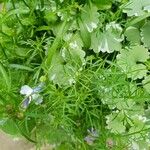
Brachyscome iberidifolia
Swan River daisy
Description
Source: leafsnapBrachyscome iberidifolia, commonly known as Swan River Daisy, is a small perennial plant in the Asteraceae family. Native to Australia, it is widely cultivated as an ornamental addition to gardens and landscapes. The plant grows up to 30 cm in height and features small, daisy-like flowers in shades of blue, pink, white, or purple. Its narrow green leaves have a slightly hairy texture. Swan River Daisy thrives in well-drained soil with full sun exposure but can also tolerate partial shade. It requires moderate watering during the growing season but is drought-tolerant once established. In addition to its ornamental appeal, the plant has several medicinal properties. It exhibits anti-inflammatory effects, making it useful for treating skin conditions such as eczema and psoriasis when applied topically. Its antibacterial properties also make it effective for treating infections. Overall, Brachyscome iberidifolia is an attractive plant that adds vibrant color to any garden or landscape while offering medicinal benefits for various skin conditions and infections.
🌳 The Swan River daisy is primarily admired for its bright, daisy-like blooms that decorate gardens in many regions. Yet, beyond its ornamental use, the Swan River daisy fulfills an important ecological role by drawing pollinators, notably butterflies. The striking flowers supply nectar for these insects, helping to sustain local biodiversity. Although it is not widely used in commercial products, its contribution to maintaining insect populations is essential to the ecosystem.
Care Guide
💧 Water Every 3 days
The Swan River daisy is native to Australia and thrives in well-drained, semi-arid soils. It prefers drier conditions and has a moderate tolerance for drought. Watering it once a week is sufficient. Often used in rockeries, the plant benefits from rainwater and experiences peak growth during warm, moist seasons.
How should I water my Swan river daisy for best results?
To water Swan river daisy, there are a few options you can choose from. You can use a garden hose with a spray nozzle, a watering can, or any other common watering tool. This plant is not too fussy about how it receives water and can thrive on rainwater, tap water, or filtered water. However, it's best not to water this plant from overhead as it can damage the leaves and flowers and potentially cause disease. Instead, setting up a drip irrigation system is often the most effective way to water Swan river daisy. These systems distribute water evenly and directly to the soil. If you have a container-grown Swan river daisy, you can use a cup, watering can, or direct tap water to water the plant, making sure to apply water directly to the soil.
What should I do if I give my Swan river daisy too much water or not enough water?
If you notice that your Swan river daisy is lacking moisture, the solution is simple: water it more regularly. Overwatering, on the other hand, can be a bigger problem that can lead to diseases and the plant's decline. To prevent this, choose a location with plenty of sunlight to dry the soil and good drainage to prevent water from pooling. If your potted Swan river daisy is overwatered, it may be necessary to change to a new pot with better drainage. When repotting, make sure to use loose soil and an efficient draining pot.
How often do I need to water my Swan river daisy?
To keep your Swan river daisy healthy, make sure to water it consistently throughout the growing season. In the spring, watering once a week should suffice. But as the weather gets hotter, you may need to water two to three times per week. Just remember not to go overboard with watering, as it can harm the plant. Additionally, it's important to keep the soil moist but not overly wet, regardless of how often you water. If your Swan river daisy is in a pot, you'll need to water it more frequently compared to if it were planted in the ground. Potted plants tend to dry out faster, so watering a few times per week should be sufficient.
How much water does my Swan river daisy require?
To determine how much water to give your Swan river daisy, there are a few different approaches you can take. One option is to assess the soil moisture by feeling it with your hands. In this method, you would water until the top six inches of soil feel damp. Alternatively, you can use a specific measurement as a guideline. Generally, giving your Swan river daisy about two gallons of water per week should suffice. However, factors such as temperature and soil dryness rate can affect this amount. Be cautious not to overwater if your plant requires less than two gallons per week. When cultivating Swan river daisy in a container, you need to approach watering differently. In this case, ensure that all layers of soil are moistened, which can be determined by inserting your finger into the soil. Another indication is when you observe a slight trickle of excess water draining from the pot's holes.
How can I know if I'm giving enough water to my Swan river daisy?
Avoiding overwatering your Swan river daisy can be a bit challenging. On one hand, these plants need weekly watering to keep their deep roots moist. However, they are highly prone to root rot if overwatered, which can cause browning of the plant. Underwatering is less of a concern for Swan river daisies, as they are capable of surviving without supplementary watering for some time. Nonetheless, if you neglect to water them for too long, they may wilt and display dry leaves.
☀️ Light Full sun
Being native to sun-drenched environments, the swan river daisy does best with plentiful sunlight. This light is essential for its healthy development, especially while it is flowering. If light is limited, the plant may have difficulty producing as many blooms. Conversely, excessive exposure combined with extreme heat can lead to wilting and other problems for the swan river daisy.
What are the sunlight requirements for Swan River Daisy?
Swan River Daisy thrives in full sun, requiring more than 6 hours of sunlight daily for healthy growth and abundant flowering. It is important to observe the movement of sunlight through your garden to ensure that plants are placed in locations that provide an ideal balance of light and shade. This careful placement is crucial for the plant’s happiness and overall health. However, while ample sunlight is essential, it's also important to protect the plant from extreme heat, which can lead to wilting and other issues.
How does sunlight affect the growth of Swan River Daisy?
As a plant native to sun-drenched habitats, Swan River Daisy requires abundant sunlight exposure, especially during the flowering stage, for optimal growth. Insufficient light can hinder the plant's ability to bloom profusely. Conversely, too much exposure to extreme heat can cause issues such as wilting. For indoor plants, artificial lighting can be a crucial supplement during less sunny seasons or in locations with inadequate natural light. LED lights, positioned 12-36 inches above the plant and turned on for 8-12 hours per day, can provide the necessary wavelengths of light for healthy indoor plant growth.
What symptoms indicate inadequate sunlight for Swan River Daisy?
Symptoms of inadequate light for Swan River Daisy include smaller new leaves, leggy or sparse growth, faster leaf drop, slower or halted growth, paler new leaves, and conditions such as chlorosis, sunscald, leaf curling, wilting, and leaf scorching. These signs suggest the plant is struggling with light deficiency, affecting its overall health and ability to photosynthesize. Addressing these symptoms early by adjusting the plant's light exposure is essential for preventing long-term damage and promoting vigorous growth.
What solutions can improve sunlight exposure for Swan River Daisy?
To improve sunlight exposure for Swan River Daisy, gradually relocate the plant to sunnier spots, ensuring it receives at least 6 hours of direct sunlight daily. For indoor plants, this can involve using south-facing windows or supplementing with artificial light for at least 8 hours daily. Outdoors, avoid sudden changes in light intensity to prevent sunburn. If natural light is blocked, consider pruning to reduce shade or transplanting to a brighter location. Note that parts of the plant damaged by inadequate sunlight may not recover, but new growth should thrive with better light conditions.
🌡️ Temperature 20–37.8°C
Swan river daisy originates from temperate regions where normal temperatures range from 68 to 100 °F (20 to 38 ℃). The plant does well in warm settings, although seasonal adjustments may be necessary during extreme heat or cold to promote optimal growth.
What is the ideal temperature range for Swan river daisy?
Swan river daisy, known botanically as Brachyscome iberidifolia, flourishes in temperate environments, favoring temperatures between 68 to 100°F (20 to 38°C). It is a heat-loving plant that requires careful attention to maintain optimal growing conditions, especially in extreme weather. During colder months, it's recommended to bring the plant indoors, placing it near a bright window while ensuring it is not too close to heaters to avoid damage. Keeping the temperature above 20°C during winter is crucial for the plant's health, as it is not tolerant of cold and temperatures approaching 0°C can be harmful.
How does low temperature affect Swan river daisy and what are the solutions?
Swan river daisy is not tolerant of low temperatures and thrives best when it's above 20°C. It requires temperatures to be kept above 0°C during winter to avoid damage. Exposure to temperatures below -5°C may lead to a lightening of leaf color, eventually turning brown or black as frost damage becomes evident, accompanied by wilting and drooping. To mitigate frost damage, it's advisable to trim off the frost-damaged parts and move the plant indoors to a warmer setting. Placing the plant near a south-facing window ensures ample sunlight, and it's important to avoid placing it near heaters or air conditioning vents to prevent air dryness.
How does high temperature affect Swan river daisy and what are the remedies?
During the summer, it's crucial to ensure that the Swan river daisy does not remain in temperatures exceeding 38°C. Should the temperature surpass 43°C, the plant's leaves may lighten in color, making it prone to sunburn. In such situations, removing sunburned and dried parts of the plant is recommended. To protect the plant, relocate it to a spot that offers shade, especially during the peak sun of midday and afternoon. Ensuring the soil remains moist by watering the plant in the morning and evening is also beneficial in high temperature conditions.
💨 Humidity high (>60%)
This plant needs special care because it loves high humidity levels of 60-80% or more. The best way to achieve this is by placing a humidifier near the plant. Daily misting is also essential! Make sure the room has good ventilation.
🪴 Soil 6-7
🌱 Fertilizer
Once the Swan river daisy has opened most of its blooms to full size, resume fertilizing. Around the time the blooms are at peak output, feed it every three to four weeks, weather permitting. Then, when the Swan river daisy begins producing fewer new blooms, stop fertilizing; there's no need to feed the plant when it can no longer produce more blooms.
Why should I put fertilizer on my Swan river daisy?
Plants, including Swan river daisy, require nutrients to survive. It is common knowledge among gardeners that without food, the Swan river daisy will perish shortly after its first pollination. Therefore, it is essential to provide the correct type and amount of nutrients to ensure the plant's vitality throughout its blooming season and promote the growth of large, beautiful flowers. Fertilizer is particularly beneficial for the Swan river daisy as it helps develop a robust and healthy root system. This is crucial because the plant naturally has a fragile and thin root system that is prone to damage. By fertilizing at the time of planting, the Swan river daisy can establish a strong root structure that not only provides stability but also sets the stage for an impressive flowering display. When done at the right time, fertilization can significantly prolong the Swan river daisy's flowering period.
When should I fertilize my Swan river daisy?
Swan river daisies grow quickly after the last frost. It is best to fertilize them when planting, whether in the ground or in planters. This initial dose of fertilizer will be enough until the blooms are at their peak later in the year. Once the daisies have fully bloomed and are at their largest size, it's time to fertilize again. This should be done every three to four weeks, depending on the weather. When the daisies start producing fewer new blooms, stop fertilizing as there is no need to continue when the plant can't produce any more blooms.
When is it not a good idea to fertilize my Swan river daisy?
Fertilizing the Swan river daisy is important, but it's crucial to apply it at the right time. There are certain situations when it's better to avoid fertilizing. These situations are usually related to the climate or controllable factors. When there are issues with the plant, soil, or climate, it's best to wait until everything has improved and the plant has recovered. For example, fertilizing should be avoided if there are sudden or severe changes in the weather. If there is a sudden cold snap in the middle of summer, it's better to wait until it warms up again before applying fertilizer. The same goes for situations where the soil is too dry or compacted to absorb anything. In these cases, the fertilizer will go directly to the roots instead of being distributed through the soil, which the roots of the Swan river daisy don't prefer. When temperatures are extremely high, such as reaching 90 degrees Fahrenheit during the hottest parts of the day, fertilizer should not be applied. This is because high temperatures can break down the fertilizer too quickly. It's especially important to wait for cooler temperatures to avoid this. Additionally, any pests or diseases should be addressed and cleared up before re-fertilizing the plant.
What kind of plant food should I use for my Swan river daisy?
Most types of Swan river daisy require a balanced nutrient composition in their fertilizer for optimal growth. It is recommended to use a high-yield blooming plant fertilizer that is specifically formulated for this purpose. The best choice is a fertilizer with a higher phosphorus level, indicated by a higher P number in its NPK number, such as 10-30-10. Many fertilizer brands offer options that are suitable for Swan river daisy and other blooming plants. Using a pre-mixed fertilizer is a convenient and hassle-free way to provide the necessary nutrients. To avoid over or under fertilizing the Swan river daisy, which can lead to poor growth or wilting, it is important to carefully follow the instructions provided on the fertilizer package.
How can I nourish my Swan river daisy?
Applying fertilizer to Swan river daisy can vary depending on the type of fertilizer you have. However, there are general tips that can be followed for most types of fertilizer. When first planting Swan river daisy, it is recommended to mix the recommended amount of fertilizer into the soil before planting and water it in. For subsequent fertilizing, the method may be slightly different depending on the fertilizer type. For pellet fertilizers, mix the pellets into the top inch of soil around the outer edge of the plant where the roots are located. Make sure to water them in well initially and continue to water them regularly afterwards. For other fertilizers, they can be mixed into a watering can and applied like regular watering. It is important to follow any instructions on the fertilizer packaging for consistency. If you prefer a regular schedule, aim for fertilizing every three to four weeks.
🪴 Pot & Repot
✂️ Pruning
The Swan River daisy is a hardy annual plant known for its bright, daisy-like flowers. To promote longer blooming periods, bushier growth, and prevent seed formation, be sure to pinch off spent blooms in the spring. Regular pruning also improves the plant's appearance and health, making the Swan River daisy a popular choice for colorful garden displays.
🌿 Propagating
🐛 Diseases & pets
☠️ Toxicity
Characteristics
- Plant Type
- Herb
- Life Cycle
- Annual, Biennial, Perennial
- Genus
- Brachyscome
- Family
- Asteraceae
- Hardiness Zone
- 9-11
- Mature Height
- 30 cm to 46 cm
- Mature Spread
- 30 cm to 46 cm
- Leaf Color
- Green, Blue
- Leaf Type
- Semi-evergreen
- Flower Color
- Lavender, White
- Flower Size
- 2.54 cm
- Bloom Time
- Mid spring, Late spring, Summer, Early fall
- Planting Time
- Spring, Summer
- Harvest Time
- Late spring, Summer, Fall
- Native Area
- Australia