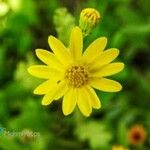
Bradburia pilosa
Soft goldenaster
Description
Source: leafsnapBradburia pilosa, the soft goldenaster, is a North American species of flowering plants in the family Asteraceae, native to the south-central United States, primarily the southeastern Great Plains and lower Mississippi Valley, in the states of Texas, Oklahoma, Kansas, Missouri, Arkansas, Louisiana, Tennessee, Mississippi, and Alabama. Additional populations are reported farther east (from Florida to Virginia) but these appear to be introductions. Its habitats include disturbed roadsides and pine-oak-juniper woods.Bradburia pilosa is an annual up to 80 cm (32 inches) tall with yellow flower heads. Disc florets are fertile, unlike in the closely related B. hirtella.
Care Guide
💧 Water
To thrive, soft goldaster needs consistent moisture and prefers soil that is evenly moist. It does best with weekly watering. This plant adapts well to indoor environments, where higher humidity helps maintain healthy foliage. To ensure optimal growth, it is important to follow a controlled watering schedule that mimics its natural habitat.
☀️ Light Full sun
Soft goldaster comes from bright, open habitats and does best in full sun. It can tolerate some partial shade but prefers direct sunlight for optimal growth. This annual and biennial plant is recognized for its sun-loving nature.
What are the sunlight requirements for growing Soft goldaster?
Soft goldaster thrives in conditions where it can receive full sun, defined as more than 6 hours of sunlight daily, making it perfect for bright, open environments. It can also grow under partial sun, which means about 3-6 hours of sunlight. However, for optimal growth, direct sunlight is preferred. Regardless of the spot you choose in your garden, it's important to observe how sunlight plays through the area to ensure there’s a healthy balance of light and shade to meet the needs of your plants.
How essential is sunlight for Soft goldaster, and what role does artificial lighting play?
Sunlight is crucial for the Soft goldaster's growth, especially being a plant that naturally originates from bright, open environments. In situations where natural sunlight is insufficient, such as during winter or in spaces that do not receive enough sunlight, artificial lighting becomes a vital solution. LED lights are particularly recommended for their customization to provide specific wavelengths that the plants need. Full sun plants like the Soft goldaster require 30-50W/sq ft of artificial light, while partial sun plants need 20-30W/sq ft. When setting up artificial lights, ensure they are placed 12-36 inches above the plant to mimic natural sunlight conditions and kept on for 8-12 hours per day to support the plant's growth needs.
What are the key symptoms of light deficiency in Soft goldaster?
When Soft goldaster is grown indoors or under inadequate light, several symptoms can manifest, indicating light deficiency. The plant may produce smaller new leaves compared to older ones, show leggy or sparse growth due to elongated spaces between leaves or stems, and experience faster leaf drop as it conserves resources. Growth may also become delayed or completely stop, and new leaves might appear lighter or exhibit chlorosis, losing their green color. Excessive sunlight exposure can lead to sunscald, leaf curling as a defense mechanism, wilting due to increased water loss, and leaf scorching, where leaves develop brown, crispy edges.
What are effective solutions for addressing the Soft goldaster's light requirements?
To ensure Soft goldaster receives optimal sunlight, gradually acclimate the plant to sunnier conditions, ideally aiming for at least 6 hours of direct sunlight when placed outdoors. For indoor plants, especially those that are large or not easily movable, consider supplementing with artificial light, keeping a lamp on for at least 8 hours daily or investing in professional plant grow lights. If your plants are outdoors, it's crucial to move them to sunnier spots gradually to prevent sunburn. Additionally, for plants blocked by obstructions, consider pruning trees or other barriers to sunlight or transplant smaller plants during their dormant period to a location with better sunlight and drainage. Remember, once parts of the plant have been affected by insufficient sunlight, they may not recover, but increasing light exposure can encourage healthy new growth.
🌡️ Temperature 15–35°C
Soft goldaster shows good temperature adaptability, able to withstand high heat and substantial temperature fluctuations. In hot weather, attention should be paid to watering and suitable shade provided to prevent sunburn. However, Soft goldaster is relatively intolerant of low temperatures. Although it can tolerate some cold, excessively low conditions can cause frost damage.
💨 Humidity
🪴 Soil 6-7
🌱 Fertilizer
Once Soft goldaster has opened most of its blooms to full size, resume fertilizing. Around the time the blooms are at peak output, fertilize every three to four weeks, as weather permits. Then, after Soft goldaster begins producing fewer new blooms, stop fertilizing; there's no need to fertilize when the plant can't produce any more blooms.
🪴 Pot & Repot
✂️ Pruning
The soft goldaster, known for its delicate golden flowers, benefits greatly from pruning, ideally carried out between early and late spring. This involves removing dead stems and shaping the plant to stimulate growth and enhance its blooms. Regular pruning not only supports the plant's overall health but also improves the beauty of the landscape.
🌿 Propagating
🐛 Diseases & pets
☠️ Toxicity
Characteristics
- Plant Type
- Herb
- Life Cycle
- Annual
- Genus
- Bradburia
- Family
- Asteraceae
- Hardiness Zone
- 7-10
- Mature Height
- 76 cm
- Mature Spread
- 20 cm to 40 cm
- Leaf Color
- Green
- Leaf Type
- Semi-evergreen
- Flower Color
- Yellow
- Flower Size
- 1.78 cm to 3.05 cm
- Bloom Time
- Mid spring, Late spring
- Planting Time
- Spring, Summer, Autumn
- Harvest Time
- Early summer, Mid summer