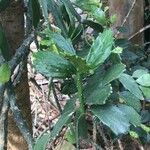
Brasiliopuntia brasiliensis
امیر حسین · زبان مادر شوهر · زبان مادر زن · Brazilian pricklypear · Leaf-paddle
Description
Source: leafsnapBrasiliopuntia brasiliensis, commonly known as the Brazilian prickly pear, is a cactus species native to Brazil. This shrubby plant can reach up to 2 meters in height and 3 meters in width. Its flattened pads are green and covered with spines. The Brazilian prickly pear produces yellow or orange flowers that bloom from late spring to early summer. This hardy cactus can tolerate drought conditions and poor soil quality. It prefers full sun exposure but can also thrive in partial shade. The plant yields edible fruits commonly used for making jams, jellies, and juices. In addition to its culinary uses, Brasiliopuntia brasiliensis has medicinal properties. Traditionally, it has been used to treat various ailments such as inflammation, fever, and wounds. Overall, this cactus species makes an interesting addition to any garden or landscape due to its unique appearance and versatility in both medicinal and culinary applications.
💡 Brazilian prickly pear cacti produce small, pear-like fruits that are edible when ripe. The wood from their trunks is used in making furniture. However, the spines of this cactus are extremely hazardous. In fact, they are among the sharpest of any cactus species. Therefore, if you are considering planting these cacti in areas where children and pets may roam, great caution should be exercised.
🌳 Brazilian prickly pear is more than a spiny desert decoration; it’s a plant with numerous unexpected abilities. Unknown to many, this tough species reaches beyond its native surroundings as a striking option for xeriscape plantings; it tolerates drought and needs very little maintenance, making it an eco-friendly choice for gardeners who want beauty without wasting water. Moreover, it’s not only visually appealing — brazilian prickly pear's fruit, known as
Care Guide
💧 Water Every 7 days
The Brazilian prickly pear thrives in a tropical climate that features both heavy rains and dry spells, showcasing its ability to withstand drought. Once established, it requires watering only every three weeks. It prefers well-draining soil to prevent root rot during the rainy seasons, while also ensuring it remains hydrated during its growth periods.
How should I water my Brazilian prickly pear plant?
- Water this species from the bottom to ensure proper absorption and circulation of nutrients. Avoid spilling water on the top to prevent disease and fungi development. - When using irrigation systems, use small revolving sprinklers for Brazilian prickly pear in your garden. Avoid sprinkling on windy days. The soak and dry method is recommended for both potted and garden plants for even moisture distribution and healthier growth. - Consider installing a built-in drainage system for your succulents using porous materials like recycled glass or hydro stones. Be cautious not to overwater these systems as they serve as reservoirs for excess water.
What do I need to do if I give my Brazilian prickly pear plant too much or too little water?
The Brazilian prickly pear can turn yellow due to either underwatering or overwatering. If the soil is too wet, it can lead to fungal infections, so it's important to allow everything to dry and avoid overwatering. Browning and dropping symptoms indicate that the plant is receiving too much moisture and water. On the other hand, if there is not enough water, you may notice yellow tips forming on stems and branches. Before buying a Brazilian prickly pear, make sure to inquire about the soil's drainage. If the topsoil does not drain properly, the plant may not receive enough water in the future. It's also crucial to note that constant overwatering or excessive rain can cause the plant to die. Opt for rainwater or distilled water, as the plant does not favor water with many minerals. Signs of too much moisture include squishy stems, drooping growth, and discolored parts. To help the species recover, allow the pot to dry and consider transferring it to a different container to prevent root rot and dripping. If the plant is planted outside, transferring it to a pot, especially during winter, can aid in its recovery.
How frequently should I water my Brazilian prickly pear?
Watering frequency for succulents can vary depending on the season. In the summer and spring, you typically only need to water them once every two to three weeks. However, during the winter and fall, it's best to reduce or avoid watering altogether since these plants become dormant. It's important to let the soil dry completely before watering again. It's better to slightly underwater than to overwater. When potted, deep watering at intervals promotes healthier soil growth. When planted outdoors, avoid watering lightly as this encourages shallow root growth. Instead, wait a few weeks and only water when the surrounding soil is too dry.
How much water does my Brazilian cactus need?
To efficiently water this succulent, begin by ensuring that the entire pot is covered. Place a saucer at the bottom of the pot to provide adequate moisture to the roots. Once you notice that the soil is becoming saturated, remove the saucer immediately. The frequency and amount of water needed for your plant will depend on the size of the pot and the number of holes in it. For Brazilian prickly pears in pots, a single can of water is often sufficient. However, when planting them in a garden or outdoors, you should also factor in rainfall. About an inch of rainwater will typically sustain them for a few weeks, so you should refrain from additional watering during this time. If they are outside, water them in the morning with around a gallon of water after the soil has become completely dry. This way, the excess moisture can be evaporated by the sunlight.
Why is it important to water my Brazilian prickly pear plant?
Watering the Brazilian prickly pear is crucial for delivering essential nutrients from the soil to the entire plant. Insufficient moisture can lead to poor health or malnourishment. It's important to water the plant when you observe signs of thirst, but be cautious not to overwater, as this can be harmful. The most effective watering method is the soak and dry approach. Once the soil becomes too dry, soak the plant until water starts to drip from the bottom of the pot. Then, allow the soil to rest for several weeks without further watering.
☀️ Light Full sun
To flourish healthily, Brazilian prickly pear needs abundant sunlight exposure. Its native habitat is inherently bright, further emphasizing its need for ample sunlight. It has the capacity to survive in environments with reduced light; however, any insufficiency can negatively affect its vitality. Likewise, an excessive fluctuation in light conditions can cause strain on the plant.
What are the sunlight requirements for the Brazilian prickly pear?
The Brazilian prickly pear requires full sun, which means it needs above 6 hours of sunlight daily, but it can also tolerate partial sun, about 3-6 hours of sunlight. Given its origin in a naturally luminous habitat, ample exposure to sunlight is crucial for its healthy growth. Insufficient light may lead to suboptimal growth, while too much direct light can stress the plant. It's important to watch how sunlight moves through your garden to select locations that offer a balance of light and shade, ensuring the plant's wellbeing.
How do I use artificial lighting for indoor Brazilian prickly pear plants?
Indoor Brazilian prickly pear plants require adequate lighting for optimal growth, especially when natural sunlight is insufficient. Artificial lights are an excellent solution, particularly during winter or in spaces that do not receive enough sunlight. LED lights are a popular choice for indoor lighting because they can be customized to provide the specific wavelengths of light needed by plants. For full sun plants, 30-50W/sq ft of artificial light is recommended, for partial sun plants 20-30W/sq ft, and for full shade plants 10-20W/sq ft. The light source should be placed 12-36 inches above the plant to mimic natural sunlight, with most plants requiring 8-12 hours of light per day.
What are the symptoms of inadequate light for a Brazilian prickly pear?
If a Brazilian prickly pear receives insufficient light, it may exhibit symptoms such as small leaves, leggy or sparse growth, faster leaf drop, slower or no new growth, lighter-colored new leaves, chlorosis, sunscald, leaf curling, wilting, and leaf scorching. Each of these symptoms indicates a level of light deficiency, from inadequate light leading to less robust growth and pale leaves to excessive light causing damage like chlorosis and sunscald.
What solutions can I apply for Brazilian prickly pear light-related issues?
To address light-related issues in Brazilian prickly pear, gradually increase the plant's exposure to direct sunlight to at least 6 hours daily. For indoor plants, consider moving them to a sunnier location or using a desk or ceiling lamp for at least 8 hours daily. Outdoor plants should be moved to sunnier spots gradually to avoid sunburn. If physical obstructions like trees block sunlight, consider pruning them. For plants affected by insufficient sunlight, parts that have been damaged may not recover, but new growth should be healthy once adequate light conditions are met. For smaller plants that can be moved, transplant them during their dormant period to a location with more sunlight and good drainage.
🌡️ Temperature 20–37.8°C
Brazilian prickly pear originates from habitats where temperatures range from 68 to 100 °F (20 to 38 ℃). These plants do best in warm climates. Adjusting temperatures during seasonal shifts is typically unnecessary unless conditions move beyond this optimal range.
What is the native environment of the Brazilian prickly pear?
The Brazilian prickly pear, botanically known as Brasiliopuntia brasiliensis, is native to environments where temperatures vary between 68 to 100 °F (20 to 38 °C). These plants thrive best in warm climates and do not require temperature adjustments during seasonal transitions unless temperatures fall outside this optimal range.
How does the Brazilian prickly pear react to temperature changes?
The Brazilian prickly pear is a heat-loving plant that gradually stops growing and enters a dormant state during winter. When outdoor temperatures drop below 5°C, it should be moved indoors for cultivation, ideally near a south-facing window for maximum sunlight. In case of insufficient natural light, supplemental lighting can be used. When the temperature falls below 20°C, its growth slows down, and watering should be reduced or ceased to prevent root rot. For outdoor plants, watering should stop during low temperatures. Additionally, a temporary greenhouse or protective wrapping with plastic film or fabric can help insulate the plant in cold temperatures.
How does low temperature affect Brazilian prickly pear and what are the solutions?
Brazilian prickly pear thrives in high temperatures and is not tolerant of low temperatures. It grows best when the temperature is above 20°C. During winter, it should be kept above 5°C. Exposure to temperatures below 1°C may cause the plant to weaken, wilt, and be prone to root rot. Mild frost damage might not show immediate symptoms, but the plant will gradually wither after a week. In such situations, frostbitten areas should be trimmed off, especially checking for rotted roots which should be cut off. The plant can then be propagated through cuttings. Moving the plant to a warmer indoor environment, preferably near a south-facing window with ample sunlight, is recommended. If natural light is insufficient, supplemental lighting can be used.
How should Brazilian prickly pear be cared for in high temperatures?
During summer, it is crucial to ensure that the Brazilian prickly pear's temperature does not exceed 38°C. Exposure to temperatures above 43°C halts the plant's growth, leading to water loss, wilting, and an increased risk of sunburn. To manage such conditions, sunburned and rotten parts should be removed, and the plant should be protected from afternoon sunlight until it recovers and resumes growth. If the plant suffers from root rot, watering should be discontinued until new roots form.
💨 Humidity dry (<40%)
This plant prefers dry conditions, so don't mist it. However, watering it less often can also thrive in higher humidity.
🪴 Soil 6-7
🌱 Fertilizer
The Brazilian prickly pear only requires small quantities of fertiliser 1-2 times annually in its growing season. Fertilizing should be avoided in the dormant summer and winter periods. After repotting, the quantity of fertilizer should be decreased and fertilizing should be postponed for a few months. Fertilizing aids in maintaining vigorous growth and promoting flowering.
Why should I use fertilizer on my Brazilian prickly pear plant?
Fertilizing Brazilian prickly pear is important for adding nutrients to the growing medium. While it already stores water and nutrients, applying plant food during the growing season helps promote healthy growth. Additionally, fertilizing can stimulate mature specimens to produce blooms in the growing season.
When should I put fertilizer on my Brazilian prickly pear plant?
Brazilian prickly pear plants require a small amount of fertilizer during the growing season, which should be applied 1-2 times a year. It is best to fertilize in the spring and autumn and avoid fertilizing in the winter and summer when the plant is dormant. If you have recently repotted the plant, be cautious and use less fertilizer. It is also recommended to wait a few months after repotting before applying fertilizer.
When is the best time to not add fertilizer to my Brazilian prickly pear?
The Brazilian prickly pear, like other plants, has a dormancy period that is the best time to stop using fertilizer. This occurs during the summer and winter when the plant stops growing. It is also wise to refrain from fertilizing for a few months after repotting in the spring.
What kind of fertilizer does my Brazilian prickly pear plant need?
When fertilizing Brazilian prickly pear, it's recommended to use a liquid plant food specifically made for succulents and cacti. Dilute the fertilizer by mixing it with water to half-strength, as you wouldn't want the fertilizer to accumulate in the soil. Apply the fertilizer to the base of the plant, making sure to water the plant thoroughly. This will help any excess moisture drain from the container or seep into the ground.
How can I provide nutrients for my Brazilian prickly pear plant?
When fertilizing Brazilian prickly pear, you have two options: liquid plant food or granules. If you choose to use liquid plant food, be sure to dilute it to half-strength according to the directions on the packaging. Whether you're using granules or liquid plant food, always apply it to the soil. For granules, cover them with a thin layer of soil and water the plant. Regardless of the type of plant food you choose, the same method of application applies.
🪴 Pot & Repot 2-3 years
Every 2-3 years in the spring, repot your Brazilian prickly pear into a slightly larger pot that has drainage holes. After repotting, place the plant in a bright location and wait to water it until the soil feels dry. This encourages healthy root growth.
✂️ Pruning
Brazilian prickly pear needs very little pruning. To promote healthy growth, regularly remove any withered flowers and branches so the plant can better allocate nutrients.
🌿 Propagating
🐛 Diseases & pets
☠️ Toxicity
Characteristics
- Plant Type
- Tree
- Life Cycle
- Perennial
- Genus
- Brasiliopuntia
- Family
- Cactaceae
- Hardiness Zone
- 10-11
- Mature Height
- 20.12 m
- Mature Spread
- 30 cm
- Leaf Color
- Green
- Leaf Type
- Deciduous
- Flower Color
- Yellow, Orange
- Flower Size
- 4.06 cm
- Bloom Time
- Late spring, Early summer, Mid summer
- Planting Time
- Spring, Autumn
- Harvest Time
- Mid summer
- Native Area
- Brazil to E. Peru and N. Argentina