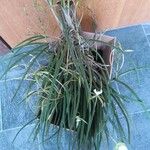
Brassavola perrinii
Clitoris orchid
Description
Source: leafsnapLady of the Night is a Brassavola orchid (Brassavola nodosa) recognized for its intense, lemony nocturnal aroma and heart-shaped white blossoms. These fast-growing plants are available all year. They bloom frequently, with the most abundant blooms in the fall and winter. What their flowers lack in size (in comparison to the more showy Cattleya and Phalaenopsis), they more than make up for in sheer abundance.
Care Guide
💧 Water 1 to 2 times a week
Brassavola's tubular leaves are engineered to limit water transpiration, making it drought resistant compared to many other orchids. As a result, unlike many other epiphytic orchids, the plants require less humidity and less frequent watering. Brassavola orchids are susceptible to chlorine and other contaminants in tap water, therefore use chlorine-free water when watering.
☀️ Light Full sun
🌡️ Temperature 20–37.8°C
Brassavola orchids love moderate to warm temperatures and will bloom more abundantly at the higher end of the temperature range. Daytime temperatures should be between 65 and 80 degrees Fahrenheit, with nighttime temperatures no lower than 55 degrees Fahrenheit, or the plant will not flower.
💨 Humidity
🪴 Soil 5-6
🌱 Fertilizer
Feed your orchid with a mild fertilizer solution all year (quarter-strength weekly). Many growers make "fertilizer balls" out of nylon hose and controlled-release pellets, then tie the pellet ball around the plant to provide a little dose of fertilizer every time it is watered. Nylon fertilizer balls have a short lifespan.
🪴 Pot & Repot
✂️ Pruning
Trim the spike only a modest amount if it is still green and healthy. Find the node beneath the lowest bloom and cut one inch below it. Cut back to the plant's root if the spike has become brown and mushy.
🌿 Propagating
🐛 Diseases & pets
☠️ Toxicity
While most domestic orchids are non-toxic, Brassavola orchids are slightly hazardous. They have the potential to produce contact dermatitis and other minor cutaneous responses.
Characteristics
- Life Cycle
- Perennial
- Genus
- Brassavola
- Family
- Orchidaceae
- Hardiness Zone
- 9-11